Indian Railways Clears Rs 12,360 Million For Kavach Expansion
RAILWAYS & METRO RAIL

Indian Railways Clears Rs 12,360 Million For Kavach Expansion

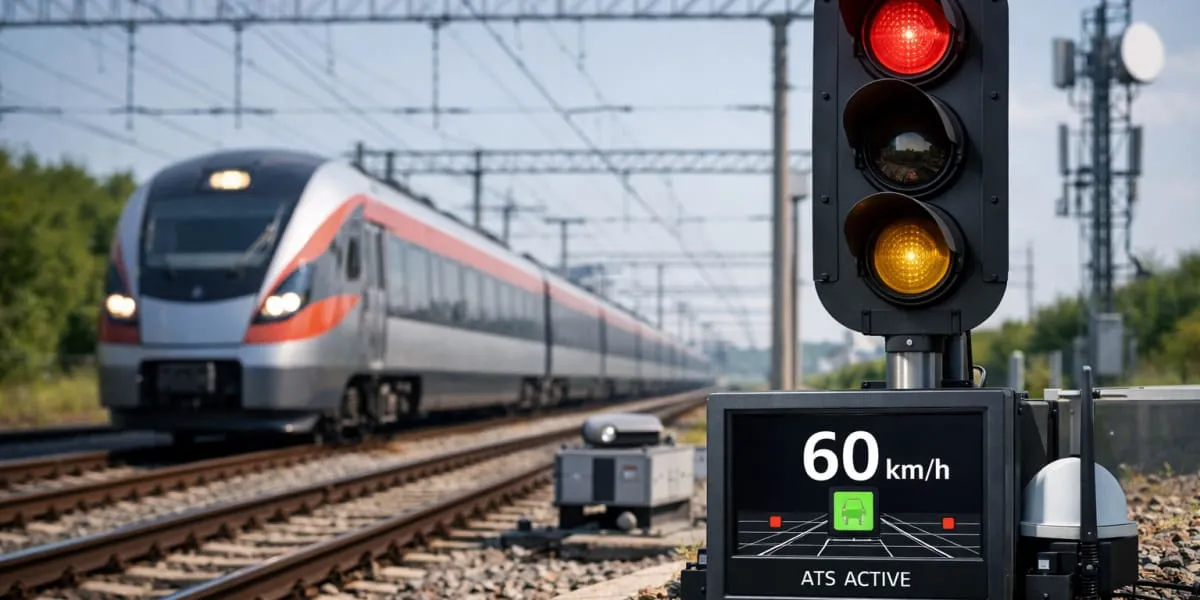
Indian Railways has approved Rs 1,236 crore, equivalent to 12,360 million (mn), for the expansion of the Kavach safety system and for upgrades to communication and signalling infrastructure. The allocation is intended to accelerate deployment of automatic train protection capabilities and to strengthen onboard and wayside communications across priority routes. The move forms part of a broader modernisation drive aimed at reducing collisions, enhancing operational reliability and improving passenger safety.

The authorised funds will support installation works, system integration, testing and associated training for staff, as well as replacement of ageing telecom equipment and expansion of fibre networks along key corridors. Implementation plans envisage phased rollouts coordinated with zonal railways to minimise disruption to services and to ensure interoperability with existing signalling arrangements. Procurement and work schedules are expected to follow standard tendering and quality assurance processes.

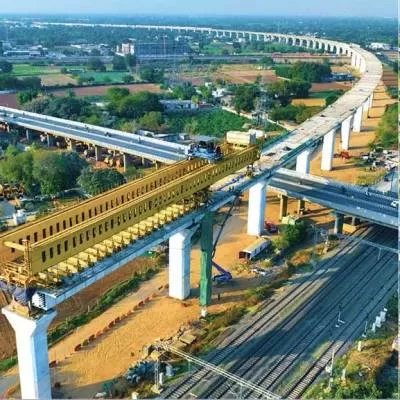
In a related development the Prime Minister flagged off the Delhi–Faridabad Metro extension that links Badarpur to Escorts Mujesar, enabling hassle free travel for around 0.2 mn daily commuters between the national capital and the industrial hub in Haryana. The Badarpur to Escorts Mujesar section has a total cost of nearly Rs 25,000 mn, of which the Haryana Government provided Rs 15,570 mn, the Centre contributed Rs 5,370 mn and the Delhi Metro covered Rs 4,000 mn. The extension comprises nine stations including Sarai, NHPC Chowk, Mewala Maharajpur, Sector 28, Badkal Mor, Old Faridabad, Neelam Chowk Ajronda, Bata Chowk and Escorts Mujesar. All stations are elevated and sit alongside the Delhi–Mathura Road (NH?2).

A Haryana government spokesperson noted that the nine?station corridor was 95 per cent indigenously built and would provide a safe, affordable, quick and sustainable transport option for commuters. The Haryana Chief Minister expressed gratitude to the Prime Minister and indicated that the Prime Minister would announce the go?ahead for connecting Gurgaon with Faridabad by Metro. The twin initiatives in rail safety and urban transit underscore an emphasis on modernisation and regional connectivity.

Indian Railways has approved Rs 1,236 crore, equivalent to 12,360 million (mn), for the expansion of the Kavach safety system and for upgrades to communication and signalling infrastructure. The allocation is intended to accelerate deployment of automatic train protection capabilities and to strengthen onboard and wayside communications across priority routes. The move forms part of a broader modernisation drive aimed at reducing collisions, enhancing operational reliability and improving passenger safety. The authorised funds will support installation works, system integration, testing and associated training for staff, as well as replacement of ageing telecom equipment and expansion of fibre networks along key corridors. Implementation plans envisage phased rollouts coordinated with zonal railways to minimise disruption to services and to ensure interoperability with existing signalling arrangements. Procurement and work schedules are expected to follow standard tendering and quality assurance processes. In a related development the Prime Minister flagged off the Delhi–Faridabad Metro extension that links Badarpur to Escorts Mujesar, enabling hassle free travel for around 0.2 mn daily commuters between the national capital and the industrial hub in Haryana. The Badarpur to Escorts Mujesar section has a total cost of nearly Rs 25,000 mn, of which the Haryana Government provided Rs 15,570 mn, the Centre contributed Rs 5,370 mn and the Delhi Metro covered Rs 4,000 mn. The extension comprises nine stations including Sarai, NHPC Chowk, Mewala Maharajpur, Sector 28, Badkal Mor, Old Faridabad, Neelam Chowk Ajronda, Bata Chowk and Escorts Mujesar. All stations are elevated and sit alongside the Delhi–Mathura Road (NH?2). A Haryana government spokesperson noted that the nine?station corridor was 95 per cent indigenously built and would provide a safe, affordable, quick and sustainable transport option for commuters. The Haryana Chief Minister expressed gratitude to the Prime Minister and indicated that the Prime Minister would announce the go?ahead for connecting Gurgaon with Faridabad by Metro. The twin initiatives in rail safety and urban transit underscore an emphasis on modernisation and regional connectivity.

Next Story
Infrastructure Transport

MMRDA advances 250 m on Orange Gate–Marine Drive tunnel

The Mumbai Metropolitan Region Development Authority (MMRDA) has completed 250 m of underground tunnelling for the Orange Gate–Marine Drive Urban Road Tunnel using India’s largest slurry shield tunnel boring machine (TBM) deployed for an urban road project.The project involves twin tunnels extending over 7 km beneath critical transport corridors, including Central Railway, Western Railway and Metro Line 3. The work requires high-precision engineering to navigate densely developed urban infrastructure.Once completed, the tunnel is expected to reduce travel time between Orange Gate and Marin..

Next Story
Infrastructure Urban

Hindustan Zinc Pays Rs 188.46 Billion in FY26

Hindustan Zinc contributed Rs 188.46 billion to the public exchequer in FY 2025-26, according to its 9th Tax Transparency Report. The contribution, equivalent to 46 per cent of the company’s revenue, included direct and indirect taxes, government royalties, dividends to the Government of India, withholding taxes and other statutory levies.The company’s five-year cumulative contribution to the exchequer stood at Rs 915.72 billion. In FY26, Hindustan Zinc reported revenue of Rs 408.44 billion, EBITDA of Rs 221.62 billion and profit after tax of Rs 138.32 billion. It also achieved its highest..

Next Story
Infrastructure Urban

World of Concrete India 2026 Opens in Mumbai

Informa Markets in India will host the 12th edition of World of Concrete India 2026 from 3–5 June 2026 at the Bombay Exhibition Centre, Mumbai. The specialised B2B exhibition will bring together manufacturers, suppliers, contractors, developers, architects, consultants, infrastructure companies, project leaders and government stakeholders.The event is expected to feature over 350 brands and more than 18,000 trade professionals. It will cover concrete and cement, dry mortar, precast technologies, formwork, construction chemicals, industrial and commercial flooring, scaffolding, safety solutio..

Advertisement

Subscribe to Our Newsletter

Get daily newsletters around different themes from Construction world.

STAY CONNECTED

Advertisement

Advertisement

Advertisement