

Kurla Gets New Elevated Harbour Line Station
RAILWAYS & METRO RAIL

Kurla Gets New Elevated Harbour Line Station

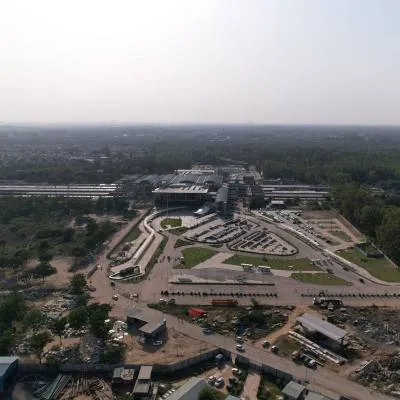
Mumbai’s suburban railway network has taken a major step forward with the construction of a new elevated Harbour Line station at Kurla, part of the 5th and 6th line corridor. Over the weekend, Central Railway conducted a 14.5-hour mega block to divert tracks between Kurla and Tilak Nagar, clearing the way for the project.
The tracks were shifted westwards to accommodate the elevated station, which will handle both regular Harbour Line services and trains originating or terminating at Kurla. Kurla, a key interchange hub, links the Harbour Line from CSMT to Navi Mumbai and Panvel with the Central Line serving the city’s eastern suburbs, while also connecting long-distance routes.
The Harbour Line carries millions of daily commuters, and the new alignment is expected to free up capacity for the 5th and 6th lines, helping separate suburban services from long-distance trains. The station will feature three platforms: one for CSMT-bound trains, one for Navi Mumbai services, and a central platform with reversal facilities at the Panvel end.
The elevated corridor will begin after Chunabhatti and rejoin ground-level tracks near Tilak Nagar, crossing the Santacruz–Chembur Link Road over specially treated marshland. Officials highlighted that the elevated structure will reduce delays caused by monsoon flooding, improving punctuality and streamlining Harbour Line operations.

Mumbai’s suburban railway network has taken a major step forward with the construction of a new elevated Harbour Line station at Kurla, part of the 5th and 6th line corridor. Over the weekend, Central Railway conducted a 14.5-hour mega block to divert tracks between Kurla and Tilak Nagar, clearing the way for the project.The tracks were shifted westwards to accommodate the elevated station, which will handle both regular Harbour Line services and trains originating or terminating at Kurla. Kurla, a key interchange hub, links the Harbour Line from CSMT to Navi Mumbai and Panvel with the Central Line serving the city’s eastern suburbs, while also connecting long-distance routes.The Harbour Line carries millions of daily commuters, and the new alignment is expected to free up capacity for the 5th and 6th lines, helping separate suburban services from long-distance trains. The station will feature three platforms: one for CSMT-bound trains, one for Navi Mumbai services, and a central platform with reversal facilities at the Panvel end.The elevated corridor will begin after Chunabhatti and rejoin ground-level tracks near Tilak Nagar, crossing the Santacruz–Chembur Link Road over specially treated marshland. Officials highlighted that the elevated structure will reduce delays caused by monsoon flooding, improving punctuality and streamlining Harbour Line operations.

Next Story
Infrastructure Transport

India Becomes First to Produce Bio-Bitumen for Roads

India has become the first country in the world to commercially produce bio-bitumen for use in road construction, according to Road, Transport and Highways Minister Nitin Gadkari. Bitumen, a black and viscous hydrocarbon derived from crude oil, is a key binding material in road building, and the bio-based alternative is expected to significantly improve the sector’s environmental footprint.Addressing the CSIR Technology Transfer Ceremony in New Delhi, Mr Gadkari congratulated Council of Scientific and Industrial Research on achieving the milestone, noting that the initiative would help curb ..

Next Story
Infrastructure Urban

HILT Policy Seen Boosting Telangana Revenue Sharply

The Hyderabad Industrial Land Transformation (HILT) Policy is expected to generate around Rs 1.08 billion in revenue for the Telangana state exchequer, according to Deputy Chief Minister Bhatti Vikramarka Mallu. Speaking in the Telangana Legislative Assembly, he said the policy would be implemented within a six-month timeframe in a transparent manner, with uniform rules applicable to all stakeholders. Mr Vikramarka noted that without the HILT Policy, the state would have earned only about Rs 1.2 million per acre. Under the new framework, however, revenue is projected to rise sharply to Rs 70 ..

Next Story
Infrastructure Urban

India Post, MoRD Tie Up to Boost Rural Inclusion

The Department of Posts and the Ministry of Rural Development have signed a Memorandum of Understanding to accelerate rural transformation and expand financial, digital and logistics services for Self-Help Groups (SHGs) and rural households across India. The agreement was signed in the presence of Union Minister of Communications and Development of North Eastern Region Jyotiraditya M. Scindia and Union Minister of Rural Development and Agriculture and Farmers’ Welfare Shivraj Singh Chouhan. The collaboration aligns with the government’s “Dak Sewa, Jan Sewa” vision and seeks to repositi..

Advertisement

Subscribe to Our Newsletter

Get daily newsletters around different themes from Construction world.

STAY CONNECTED

Advertisement

Advertisement

Advertisement

Advertisement

Open In App