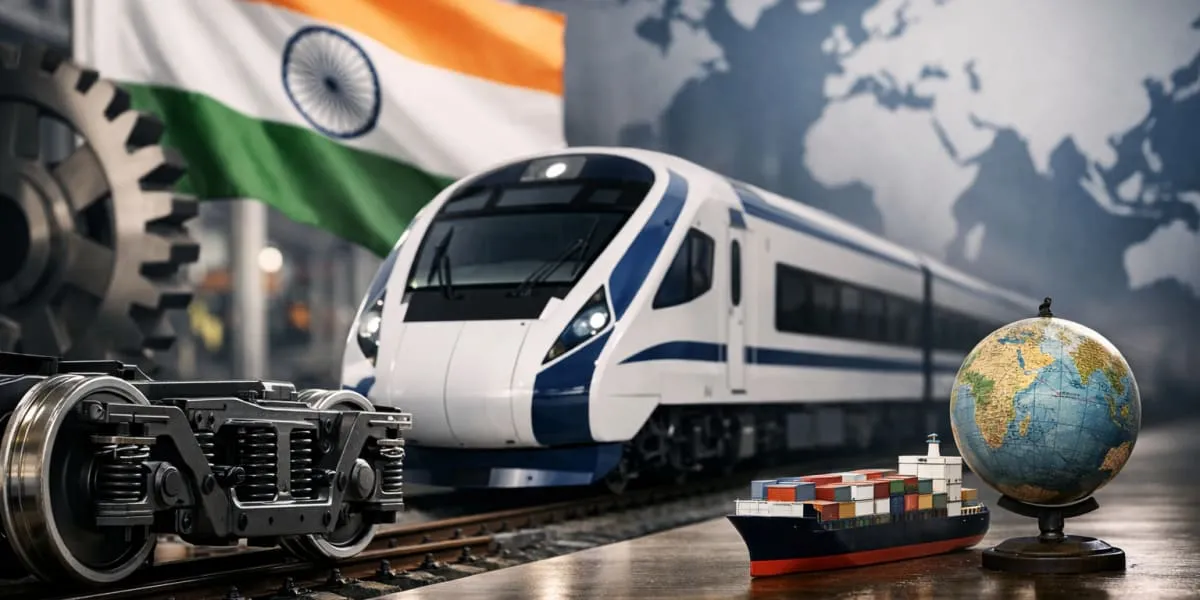
Make in India Boosts Railway Manufacturing And Exports
RAILWAYS & METRO RAIL

Make in India Boosts Railway Manufacturing And Exports

India is increasingly positioning itself as a global supplier of railway technology, with domestically designed and manufactured components now reaching advanced economies. Union Railway Minister Ashwini Vaishnaw has framed this shift as a result of the Make in India programme, which prioritises indigenous design, advanced manufacturing and quality. Officials say the railway manufacturing ecosystem has matured to produce complex systems that meet international standards and that this transition marks a strategic shift from import reliance to homegrown capability.

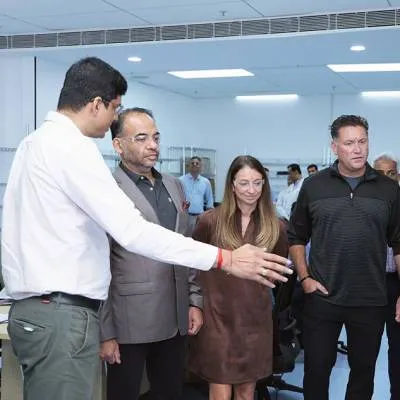
During a visit to the Medha Bogies Factory in Hyderabad, the minister reviewed stages of coach and component manufacture and examined production systems and quality control processes. He was accompanied by the Union Minister for Coal and Mines, G Kishan Reddy, and sought feedback from engineers and production teams on technical expertise and workforce training initiatives. Officials also reported a roundtable with the information technology industry that emphasised semiconductor design growth and the need to align supply chains with manufacturing quality objectives.

Vaishnaw indicated that propulsion systems and traction electronics, described as the heart of railway systems, are among the high-value components now designed and manufactured domestically and exported abroad. The ministry listed recipient markets as France, Germany, Switzerland, Italy, Poland, the US and Japan and said the quality of many components has proved to be world-class. Officials noted that developing globally competitive products requires sustained attention to design focus, manufacturing disciplines and supply chain integration.

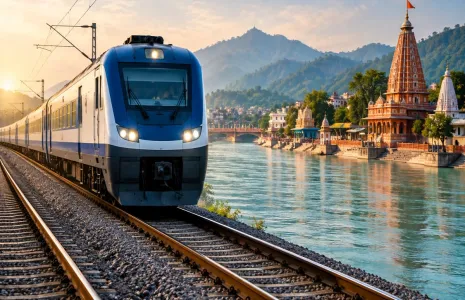
Over the past decade the domestic railway manufacturing sector has expanded significantly as policy and industry efforts encouraged localisation and technology development. Where the network once depended heavily on imported systems for critical technologies, domestic companies are now supplying coaches, wagons, signalling equipment, propulsion machinery and other components for both internal use and export. Officials expect continued expansion of rolling stock production and said workforce training and modern manufacturing practices are central to sustaining export growth.

India is increasingly positioning itself as a global supplier of railway technology, with domestically designed and manufactured components now reaching advanced economies. Union Railway Minister Ashwini Vaishnaw has framed this shift as a result of the Make in India programme, which prioritises indigenous design, advanced manufacturing and quality. Officials say the railway manufacturing ecosystem has matured to produce complex systems that meet international standards and that this transition marks a strategic shift from import reliance to homegrown capability. During a visit to the Medha Bogies Factory in Hyderabad, the minister reviewed stages of coach and component manufacture and examined production systems and quality control processes. He was accompanied by the Union Minister for Coal and Mines, G Kishan Reddy, and sought feedback from engineers and production teams on technical expertise and workforce training initiatives. Officials also reported a roundtable with the information technology industry that emphasised semiconductor design growth and the need to align supply chains with manufacturing quality objectives. Vaishnaw indicated that propulsion systems and traction electronics, described as the heart of railway systems, are among the high-value components now designed and manufactured domestically and exported abroad. The ministry listed recipient markets as France, Germany, Switzerland, Italy, Poland, the US and Japan and said the quality of many components has proved to be world-class. Officials noted that developing globally competitive products requires sustained attention to design focus, manufacturing disciplines and supply chain integration. Over the past decade the domestic railway manufacturing sector has expanded significantly as policy and industry efforts encouraged localisation and technology development. Where the network once depended heavily on imported systems for critical technologies, domestic companies are now supplying coaches, wagons, signalling equipment, propulsion machinery and other components for both internal use and export. Officials expect continued expansion of rolling stock production and said workforce training and modern manufacturing practices are central to sustaining export growth.

Next Story
Infrastructure Transport

Surya Roshni delivers customised lighting for NCRTC RRTS stations

Surya Roshni has supplied customised indoor lighting solutions for 18 elevated stations on the National Capital Region Transport Corporation's (NCRTC) Rapid Rail Transit System (RRTS), strengthening its presence in India's infrastructure lighting segment.The project involved the design and deployment of lighting systems for platforms, concourses, foot overbridges (FOBs) and back-of-house (BOH) areas. According to the company, the luminaires were developed specifically to meet NCRTC's design, operational and performance requirements rather than using standard products.Surya introduced two custo..

Next Story
Real Estate

Hilton debuts Tapestry Collection brand in Vietnam

Hilton has opened NHAAN Resort & Spa Hoi An, Tapestry Collection by Hilton, marking the debut of the Tapestry Collection brand in Vietnam and expanding its lifestyle hospitality portfolio in Southeast Asia.Located along the Co Co River in Cam Thanh village, the 174-key resort provides access to Hoi An Ancient Town, Cua Dai Beach and the Cam Thanh Nipa Forest. The property has been designed by Vietnamese architect Vo Trong Nghia, incorporating biophilic architecture, locally sourced materials and riverfront landscapes.The resort offers a mix of guest rooms and suites, including family-frien..

Next Story
Building Material

Electrent expands lithium energy storage system portfolio

Electrent Energy has expanded its lithium-based energy storage portfolio with the launch of the ESS 850 and ESS 1050, targeting compact and maintenance-free power backup solutions for Indian homes.The new systems integrate a Home UPS and a LiFePO4 lithium battery into a single unit, extending the company's product range following the launch of its ESS 1350 and ESS 2500 models.Designed for apartments and smaller homes, the ESS 850 provides up to 1 hour 15 minutes of backup, while the ESS 1050 offers up to 1 hour 45 minutes on a typical 400 W household load. The systems can power essential appli..

Advertisement

Subscribe to Our Newsletter

Get daily newsletters around different themes from Construction world.

STAY CONNECTED

Advertisement

Advertisement

Advertisement