+
Prime Minister Flags Off New Amrit Bharat And Express Trains
RAILWAYS & METRO RAIL

Prime Minister Flags Off New Amrit Bharat And Express Trains

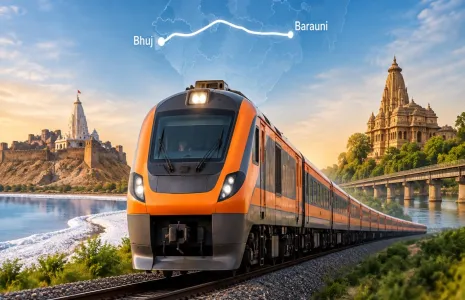
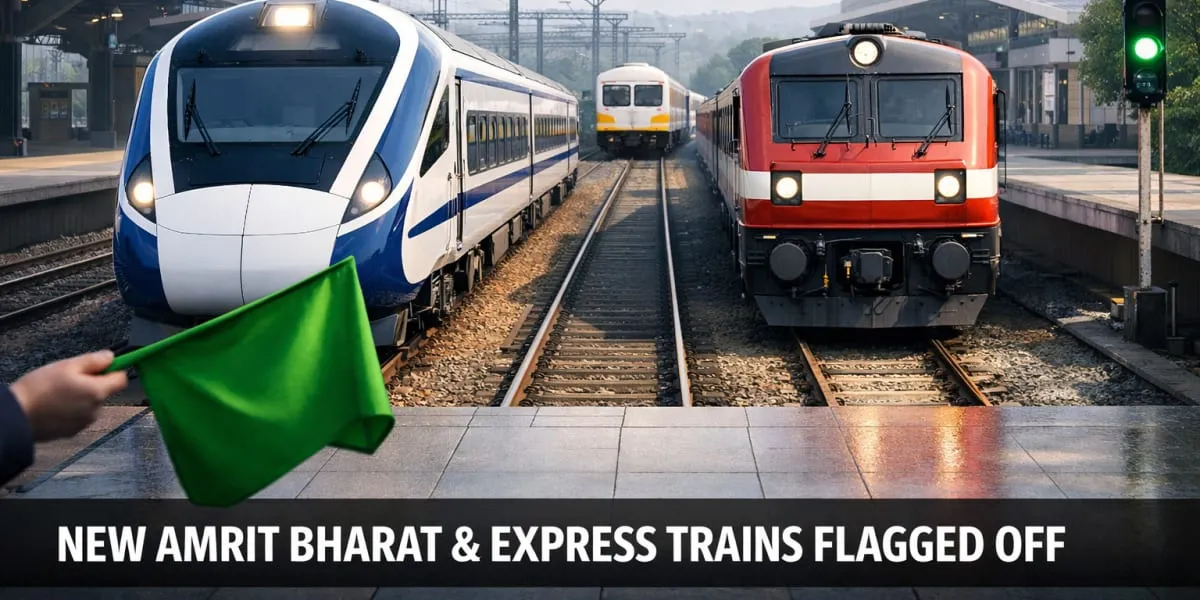
The Prime Minister will flag off two Amrit Bharat express services, two express trains and a passenger service from Tiruchirappalli and an additional passenger service from Ernakulam on 11 March 2026. The new services are expected to benefit millions of passengers across Tamil Nadu and neighbouring states. The event will include inauguration of three redeveloped Amrit Bharat stations in Kerala and dedication of the Shoranur–Nilambur electrification.

The Podanur–Dhanbad Amrit Bharat Express will provide a first direct link between Coimbatore's industrial belt and the coal and steel districts of eastern India, calling at Salem, Renigunta, Vijayawada, Jharsuguda, Ranchi and Bokaro. The weekly service will depart Podanur on Saturdays and reach Dhanbad by Monday, reversing on Monday, removing earlier long transits that required changes at Chennai or Vijayawada.

Amrit Bharat rakes are configured for affordability with non-air-conditioned sleeper and general coaches, a pantry car and accessibility features including two Divyangjan-accessible coaches. The rakes are built at the Integral Coach Factory in Chennai under Make in India and use a push-pull locomotive enabling speeds up to 130 km/h. The services aim to ease travel for inter-state migrant workers, students and traders.

The Nagercoil–Charlapalli Amrit Bharat Express will link the southernmost coastal belt with Telangana while the Rameswaram–Mangaluru and Tirunelveli–Mangaluru express trains will offer direct coastal options to Karnataka. Passenger services include Mayiladuthurai–Thiruvarur–Karaikkudi and Palakkad–Pollachi, improving daily commutes and access to education and healthcare. Three stations were redeveloped at a combined cost of Rs 520 million (520 mn) and the 65 kilometre Shoranur–Nilambur electrification was completed at a project cost of Rs 900 million (900 mn). The Amrit Bharat network currently has 54 trains in service and with the new additions operating four services the total will rise to 58.

The Prime Minister will flag off two Amrit Bharat express services, two express trains and a passenger service from Tiruchirappalli and an additional passenger service from Ernakulam on 11 March 2026. The new services are expected to benefit millions of passengers across Tamil Nadu and neighbouring states. The event will include inauguration of three redeveloped Amrit Bharat stations in Kerala and dedication of the Shoranur–Nilambur electrification. The Podanur–Dhanbad Amrit Bharat Express will provide a first direct link between Coimbatore's industrial belt and the coal and steel districts of eastern India, calling at Salem, Renigunta, Vijayawada, Jharsuguda, Ranchi and Bokaro. The weekly service will depart Podanur on Saturdays and reach Dhanbad by Monday, reversing on Monday, removing earlier long transits that required changes at Chennai or Vijayawada. Amrit Bharat rakes are configured for affordability with non-air-conditioned sleeper and general coaches, a pantry car and accessibility features including two Divyangjan-accessible coaches. The rakes are built at the Integral Coach Factory in Chennai under Make in India and use a push-pull locomotive enabling speeds up to 130 km/h. The services aim to ease travel for inter-state migrant workers, students and traders. The Nagercoil–Charlapalli Amrit Bharat Express will link the southernmost coastal belt with Telangana while the Rameswaram–Mangaluru and Tirunelveli–Mangaluru express trains will offer direct coastal options to Karnataka. Passenger services include Mayiladuthurai–Thiruvarur–Karaikkudi and Palakkad–Pollachi, improving daily commutes and access to education and healthcare. Three stations were redeveloped at a combined cost of Rs 520 million (520 mn) and the 65 kilometre Shoranur–Nilambur electrification was completed at a project cost of Rs 900 million (900 mn). The Amrit Bharat network currently has 54 trains in service and with the new additions operating four services the total will rise to 58.

Next Story
Infrastructure Urban

Implementation Status of Jal Jeevan Mission

Since August 2019 the Government has implemented Jal Jeevan Mission to provide assured potable water through household tap connections in rural India. At the start of the mission only 32.3 million (mn) rural households, representing 16.7 per cent, were reported to have tap water connections. States and union territories have reported that 125.8 mn additional rural households have since been provided with tap connections. As a result, of about 193.6 mn rural households roughly 158.2 mn, or 81.71 per cent, are reported to have tap water supply at home.\n\nThe State, district and village level st..

Next Story
Infrastructure Urban

Jal Jeevan Mission Reaches Eighty One Per Cent Rural Coverage

The Government reported substantial progress under the Jal Jeevan Mission, launched in August 2019 to provide tap water to every rural household. At launch only 32.3 million (mn) rural households had tap connections and states and Union territories reported provision of 125.8 mn additional households by March 2026. Consequently, out of about 193.6 mn rural households around 158.2 mn, or 81.71 per cent, are reported to have tap water at home. The Finance Minister announced extension of the mission until 2028 in the 2025-26 budget speech. The Swachh Bharat Mission Grameen, launched in October 20..

Next Story
Infrastructure Urban

Empowering Local Governance for Sustainable Rural Water Supply

The Ministry of Jal Shakti has aligned the Jal Jeevan Mission (JJM) with the 73rd Amendment to strengthen village level planning and community ownership of water supply. Gram Panchayats, village water and sanitation committees and Pani Samitis are to plan, implement, manage and maintain piped water systems, with gram sabha processes formalising handover and oversight. Implementation support agencies including non government organisations, community based organisations and self help groups have been empanelled to train local committees and promote women participation. Under JJM, the department ..

Advertisement

Subscribe to Our Newsletter

Get daily newsletters around different themes from Construction world.

STAY CONNECTED

Advertisement

Advertisement

Advertisement