+
Proposed 18 km Metro 12A to Boost Kalyan-Dombivli Connectivity
RAILWAYS & METRO RAIL

Proposed 18 km Metro 12A to Boost Kalyan-Dombivli Connectivity

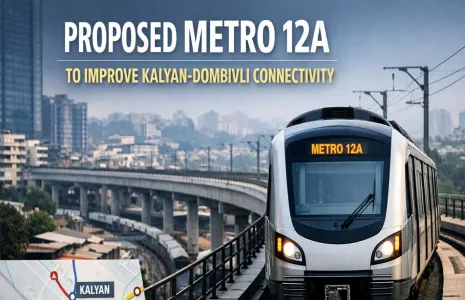
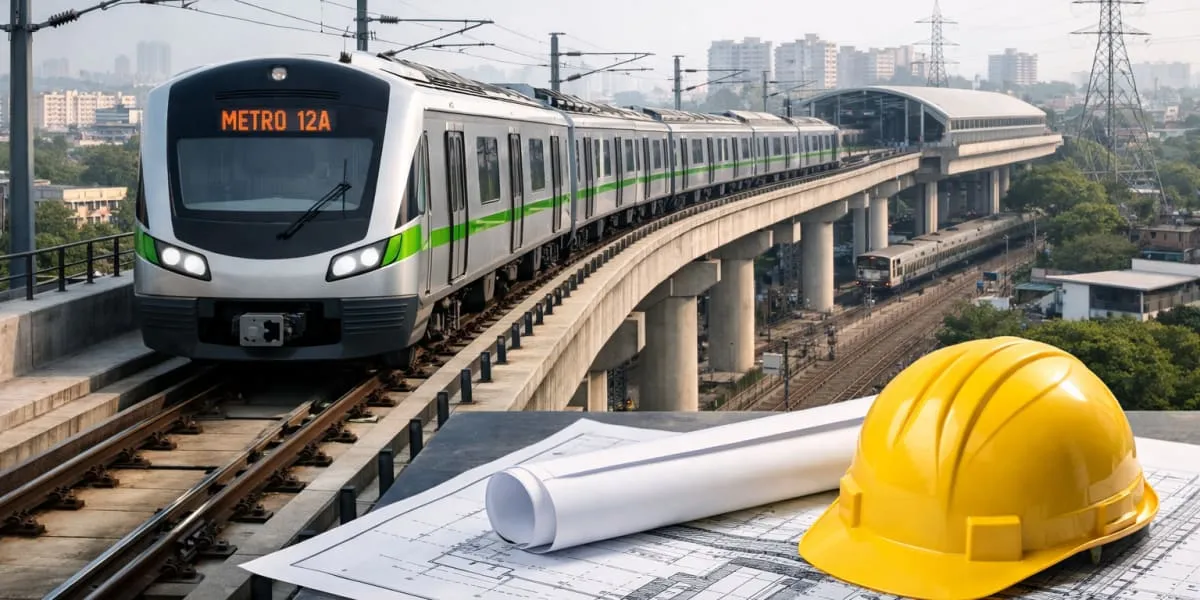
The Maharashtra government has proposed an 18 km Metro 12A line to strengthen public transport links in the Kalyan-Dombivli industrial and residential belt. The project is intended to interconnect major residential neighbourhoods, commercial centres and railway stations, and to provide seamless interchange with existing mass transit corridors. Planners say the new corridor will relieve pressure on suburban rail services and support more balanced urban growth. Technical feasibility studies and phased implementation planning are expected to guide the alignment and construction strategy.

The administration expects the line to reduce commuter travel times and to encourage a shift from private vehicles to public transport, thereby lowering traffic congestion and local air pollution. The scheme is also expected to improve last mile connectivity through integration with feeder services and pedestrian networks. Early assessments indicate potential gains in accessibility for workers, students and shoppers across the twin cities. Local small businesses are expected to benefit from improved footfall while residential property values may increase near stations.

Detailed planning will involve surveys, environmental assessments and stakeholder consultations before final approval and tendering for construction work. Funding models under consideration include public sector financing, central and state allocations and possible private participation in delivery and operations. Authorities have indicated that station locations, alignment adjustments and construction phasing will be published after completion of the detailed project report. Authorities plan to adopt measures to minimise disruption to commuters and to protect sensitive environmental features during construction.

City officials believe the Metro 12A line could catalyse transit oriented development, spur local investment and create employment opportunities during the construction phase. The project will proceed only after statutory clearances and land acquisition are secured and after commitments for finance and execution are finalised. Commuters and community groups will be invited to participate in consultations as the proposal moves into implementation planning. Regular public updates and monitoring mechanisms are expected to be put in place to keep residents informed of progress and timelines.

The Maharashtra government has proposed an 18 km Metro 12A line to strengthen public transport links in the Kalyan-Dombivli industrial and residential belt. The project is intended to interconnect major residential neighbourhoods, commercial centres and railway stations, and to provide seamless interchange with existing mass transit corridors. Planners say the new corridor will relieve pressure on suburban rail services and support more balanced urban growth. Technical feasibility studies and phased implementation planning are expected to guide the alignment and construction strategy. The administration expects the line to reduce commuter travel times and to encourage a shift from private vehicles to public transport, thereby lowering traffic congestion and local air pollution. The scheme is also expected to improve last mile connectivity through integration with feeder services and pedestrian networks. Early assessments indicate potential gains in accessibility for workers, students and shoppers across the twin cities. Local small businesses are expected to benefit from improved footfall while residential property values may increase near stations. Detailed planning will involve surveys, environmental assessments and stakeholder consultations before final approval and tendering for construction work. Funding models under consideration include public sector financing, central and state allocations and possible private participation in delivery and operations. Authorities have indicated that station locations, alignment adjustments and construction phasing will be published after completion of the detailed project report. Authorities plan to adopt measures to minimise disruption to commuters and to protect sensitive environmental features during construction. City officials believe the Metro 12A line could catalyse transit oriented development, spur local investment and create employment opportunities during the construction phase. The project will proceed only after statutory clearances and land acquisition are secured and after commitments for finance and execution are finalised. Commuters and community groups will be invited to participate in consultations as the proposal moves into implementation planning. Regular public updates and monitoring mechanisms are expected to be put in place to keep residents informed of progress and timelines.

Next Story
Building Material

NITI Aayog Unveils Cement Decarbonisation Roadmap

NITI Aayog has released a sector-specific decarbonisation roadmap for cement as part of three green transition reports covering cement, aluminium and MSMEs. The report projects cement production rising to around 2,100 million tonnes by 2070 from 391 million tonnes in 2023, while targeting a reduction in carbon intensity to 0.09–0.13 tCO₂e per tonne. It recommends clinker substitution, refuse-derived fuels, CCUS adoption and carbon trading mechanisms to enable deep decarbonisation. ..

Next Story
Technology

Genesys Launches Advanced GeoRadar System

Genesys International Corporation has launched an advanced Ground Penetrating Radar (GPR) solution from IDS GeoRadar for underground utility mapping in India. The system uses patented Equalised Scrambling Technology (EST) and Wide/Multi-Array Antenna Technology to deliver high-resolution three-dimensional imaging of subsurface infrastructure. The technology enables the detection and mapping of buried assets such as water pipelines, sewer networks, telecom cables and power lines. By providing detailed subsurface insights, the system aims to help urban authorities and infrastructure developers ..

Next Story
Infrastructure Urban

Hindustan Zinc Partners Virginia Tech to Boost Silver Recovery

Hindustan Zinc Limited recently signed a Memorandum of Understanding (MoU) with Virginia Tech to advance research aimed at improving silver recovery across its lead–zinc (Pb–Zn) concentrators. The collaboration will focus on refining flotation techniques and optimising reagent usage to improve concentrate quality and operational efficiency at processing plants.Virginia Tech, based in Blacksburg, Virginia, is globally recognised for its expertise in mining engineering, mineral processing and applied metallurgical research. Through this partnership, Hindustan Zinc will leverage global resear..

Advertisement

Subscribe to Our Newsletter

Get daily newsletters around different themes from Construction world.

STAY CONNECTED

Advertisement

Advertisement

Advertisement

Open In App