Railway Minister Orders AI Surveillance And Access Reforms
RAILWAYS & METRO RAIL

Railway Minister Orders AI Surveillance And Access Reforms

Union minister Ashwini Vaishnaw chaired a review with senior railway officials at Rail Bhawan to assess station access, passenger amenity upgrades and security reinforcements to improve the passenger experience. The meeting focused on access control, crowd management, technology driven surveillance and ease of movement within station premises. Reforms will be implemented first at New Delhi Railway Station and will be rolled out to other stations after lessons are learned.

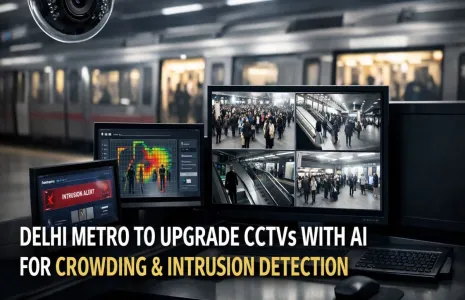
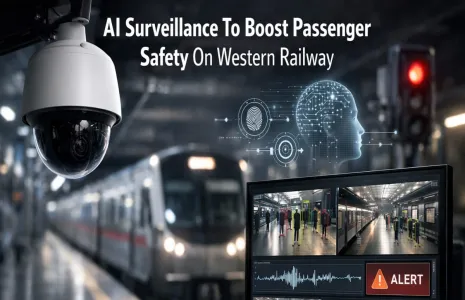
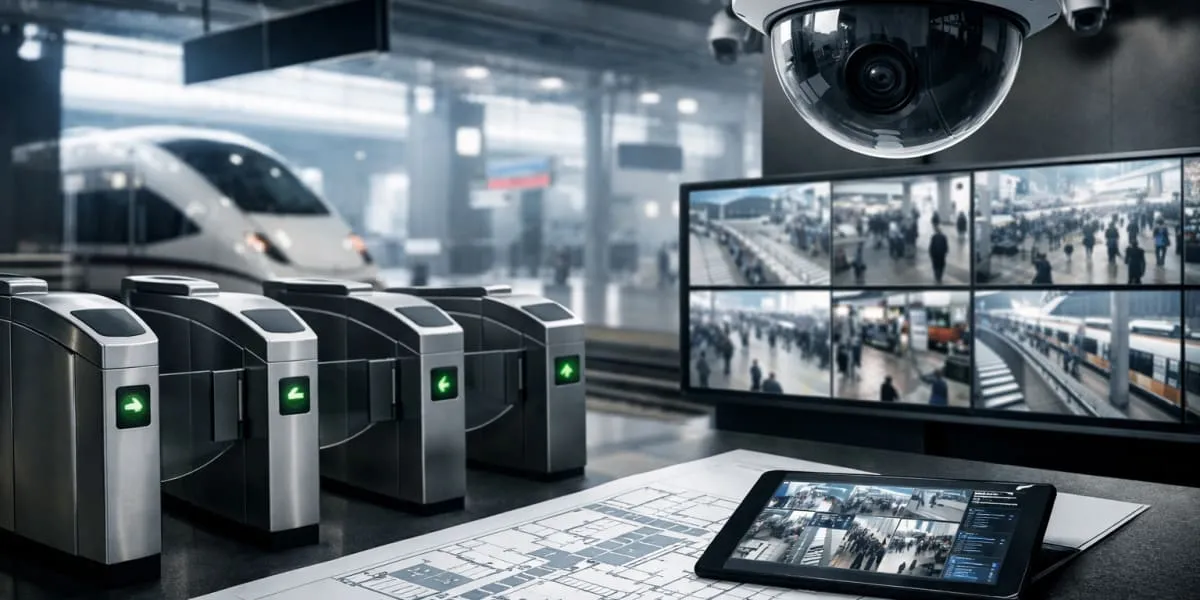
Comprehensive artificial intelligence powered cameras will cover platforms, concourses, entry and exit points and funnel areas prone to unauthorised entry, with live processing to alert monitoring staff to unusual events. An exception event display based control room will process feeds in real time and coverage zones will be properly lit to enhance detection. The Railway Protection Force will supplement surveillance based monitoring to ensure that only ticketed passengers enter station premises.

A colour coded identification system will require fluorescent jackets for railway employees and distinct jackets for non employees such as vendors, station sahayaks, contractual staff and IRCTC personnel to enable rapid recognition. ID cards with comprehensive details will be issued to all employees and non employees to strengthen accountability. The uniform regime will be progressively replicated across the North Zone with New Delhi serving as the model.

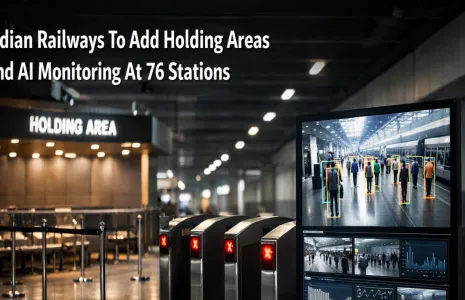
A QR code based entry management system will be piloted at New Delhi Railway Station ahead of the anticipated festival rush during Diwali and Chhath to regulate entry by ticket type and improve segregation of reserved, monthly season and unreserved passengers. The RailOne App will be integrated with Bharat Taxi, developed with RailTel, to provide reliable last mile connectivity and reduce congestion outside the station. Holding area upgrades across 76 railway stations will create designated external waiting spaces for unreserved travellers and signage and train information services will be improved. Direct monitoring by the ministry will continue to ensure sustained enhancement of passenger comfort at high footfall stations.

Union minister Ashwini Vaishnaw chaired a review with senior railway officials at Rail Bhawan to assess station access, passenger amenity upgrades and security reinforcements to improve the passenger experience. The meeting focused on access control, crowd management, technology driven surveillance and ease of movement within station premises. Reforms will be implemented first at New Delhi Railway Station and will be rolled out to other stations after lessons are learned. Comprehensive artificial intelligence powered cameras will cover platforms, concourses, entry and exit points and funnel areas prone to unauthorised entry, with live processing to alert monitoring staff to unusual events. An exception event display based control room will process feeds in real time and coverage zones will be properly lit to enhance detection. The Railway Protection Force will supplement surveillance based monitoring to ensure that only ticketed passengers enter station premises. A colour coded identification system will require fluorescent jackets for railway employees and distinct jackets for non employees such as vendors, station sahayaks, contractual staff and IRCTC personnel to enable rapid recognition. ID cards with comprehensive details will be issued to all employees and non employees to strengthen accountability. The uniform regime will be progressively replicated across the North Zone with New Delhi serving as the model. A QR code based entry management system will be piloted at New Delhi Railway Station ahead of the anticipated festival rush during Diwali and Chhath to regulate entry by ticket type and improve segregation of reserved, monthly season and unreserved passengers. The RailOne App will be integrated with Bharat Taxi, developed with RailTel, to provide reliable last mile connectivity and reduce congestion outside the station. Holding area upgrades across 76 railway stations will create designated external waiting spaces for unreserved travellers and signage and train information services will be improved. Direct monitoring by the ministry will continue to ensure sustained enhancement of passenger comfort at high footfall stations.

Next Story
Infrastructure Transport

AFCONS & Navayuga set world records with Missing Link Expressway

Maharashtra’s most ambitious greenfield bypass — a 13.3-km alignment carrying twin record-setting tunnels and India’s tallest cable-stayed road bridge — was thrown open to traffic on Maharashtra Day, finally completing the Mumbai–Pune Expressway after a 23-year wait. CW reports…The 650-m cable-stayed bridge over Tiger Valley at sunset — the package executed by Afcons Infrastructure Ltd carries 182-m pylons, the tallest on any Indian road bridge.On 1 May 2026, Chief Minister Devendra Fadnavis, flanked by Deputy Chief Ministers Eknath Shinde and Sunetra Pawar (representing the late..

Next Story
Infrastructure Transport

Mumbai–Pune Missing Link boosts realty prospects

The recently opened ‘missing link’ on the Mumbai–Pune Expressway is set to significantly transform connectivity between the two cities by reducing travel time and bypassing the challenging ghat section. The new alignment, featuring tunnels and viaducts, is designed to improve safety, ease congestion and ensure a smoother, faster commute for both passenger and commercial traffic.With improved travel efficiency, the corridor is expected to strengthen intercity movement, encouraging more frequent travel for work, leisure and logistics. This enhanced accessibility is likely to benefit real e..

Next Story
Infrastructure Urban

How Hormuz is Hijacking Indian Highways

At the recently held RAHSTA Round Table on 29th April in Pune, and earlier during our webinars for Cement Expo by Indian Cement Review and by FIRST Construction Council on manufacturing construction equipment for the world, one thread lay common: the industry is being subjected to a cost-push chain reaction moving from crude oil → freight/insurance → steel, cement fuel, bitumen, polymers, packaging, logistics and finally project margins. Indeed, the West Asia crisis caused by the war and the Hormuz Strait blockade, which does not directly concern us, has turned around and hit us. If the wa..

Advertisement

Subscribe to Our Newsletter

Get daily newsletters around different themes from Construction world.

STAY CONNECTED

Advertisement

Advertisement

Advertisement