Railways Launches Green Transport Plan For Fly Ash
RAILWAYS & METRO RAIL

Railways Launches Green Transport Plan For Fly Ash

In a review meeting chaired by Union Minister for Railways Ashwini Vaishnaw, the ministry outlined a plan to enable large-scale transportation of fly ash through the national railway network. The initiative is designed to move fly ash efficiently from thermal power plants to industries where it will be used in road construction, brick manufacture and cement production. Union Ministers of State V. Somanna and Ravneet Singh Bittu were present at the meeting. The ministry issued guidance for implementation across zones.

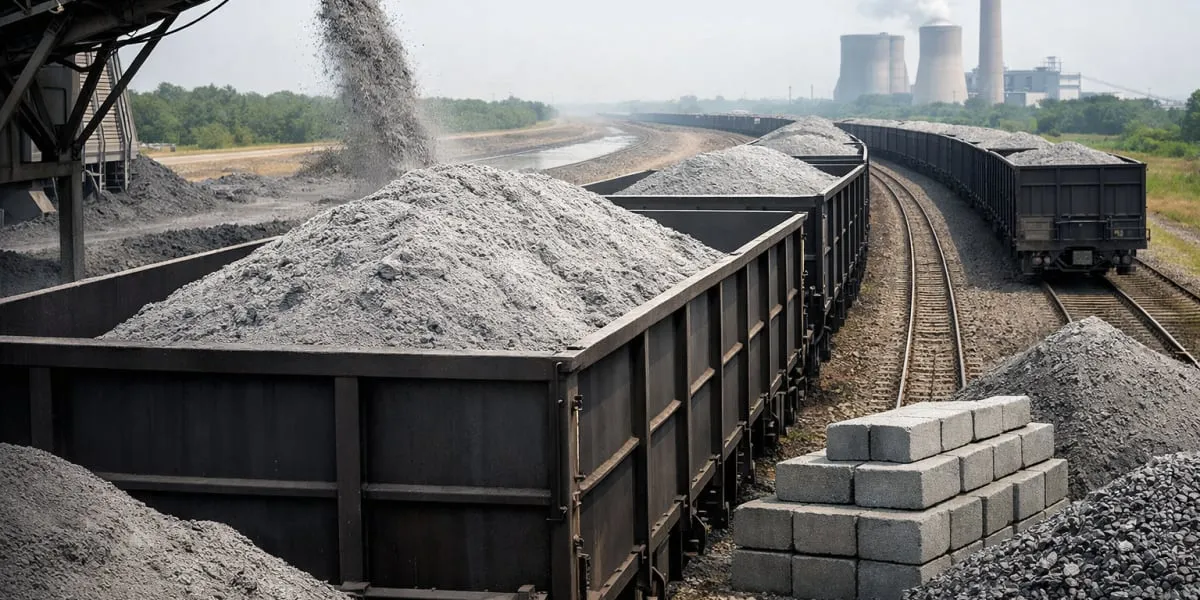
Nearly 340 million tonnes (mn t) of fly ash are generated every year by thermal power plants, and the volume has long presented logistical and environmental challenges. Indian Railways will create a dedicated logistics network of specialised containers and rail corridors to transport the material from generation points to consumption hubs. The network will link power stations with cement plants, brick manufacturers and construction yards across the country. The scheme will use scheduled freight services and dedicated rakes to ensure timely pickups and deliveries nationwide.

Fly ash is a usable raw material for cement, concrete, blocks and boards, and its systematic movement will improve material availability and affordability. More affordable fly ash will reduce the cost of bricks and lower cement prices, supporting wider access to housing across urban and rural India. Transport in sealed containers will also limit dust and contamination during transit and handling.

The programme reframes a waste management challenge as a circular economy opportunity in which discarded ash becomes a building resource for infrastructure development. Contained within rail wagons and purpose-built logistics systems, the material will travel cleanly to manufacturing sites and construction projects. Officials described the plan as a step towards aligning air and land transport policy with national infrastructure objectives. Coordination with industry partners will standardise collection points and optimise load factors.

In a review meeting chaired by Union Minister for Railways Ashwini Vaishnaw, the ministry outlined a plan to enable large-scale transportation of fly ash through the national railway network. The initiative is designed to move fly ash efficiently from thermal power plants to industries where it will be used in road construction, brick manufacture and cement production. Union Ministers of State V. Somanna and Ravneet Singh Bittu were present at the meeting. The ministry issued guidance for implementation across zones. Nearly 340 million tonnes (mn t) of fly ash are generated every year by thermal power plants, and the volume has long presented logistical and environmental challenges. Indian Railways will create a dedicated logistics network of specialised containers and rail corridors to transport the material from generation points to consumption hubs. The network will link power stations with cement plants, brick manufacturers and construction yards across the country. The scheme will use scheduled freight services and dedicated rakes to ensure timely pickups and deliveries nationwide. Fly ash is a usable raw material for cement, concrete, blocks and boards, and its systematic movement will improve material availability and affordability. More affordable fly ash will reduce the cost of bricks and lower cement prices, supporting wider access to housing across urban and rural India. Transport in sealed containers will also limit dust and contamination during transit and handling. The programme reframes a waste management challenge as a circular economy opportunity in which discarded ash becomes a building resource for infrastructure development. Contained within rail wagons and purpose-built logistics systems, the material will travel cleanly to manufacturing sites and construction projects. Officials described the plan as a step towards aligning air and land transport policy with national infrastructure objectives. Coordination with industry partners will standardise collection points and optimise load factors.

Next Story
Infrastructure Transport

Surya Roshni delivers customised lighting for NCRTC RRTS stations

Surya Roshni has supplied customised indoor lighting solutions for 18 elevated stations on the National Capital Region Transport Corporation's (NCRTC) Rapid Rail Transit System (RRTS), strengthening its presence in India's infrastructure lighting segment.The project involved the design and deployment of lighting systems for platforms, concourses, foot overbridges (FOBs) and back-of-house (BOH) areas. According to the company, the luminaires were developed specifically to meet NCRTC's design, operational and performance requirements rather than using standard products.Surya introduced two custo..

Next Story
Real Estate

Hilton debuts Tapestry Collection brand in Vietnam

Hilton has opened NHAAN Resort & Spa Hoi An, Tapestry Collection by Hilton, marking the debut of the Tapestry Collection brand in Vietnam and expanding its lifestyle hospitality portfolio in Southeast Asia.Located along the Co Co River in Cam Thanh village, the 174-key resort provides access to Hoi An Ancient Town, Cua Dai Beach and the Cam Thanh Nipa Forest. The property has been designed by Vietnamese architect Vo Trong Nghia, incorporating biophilic architecture, locally sourced materials and riverfront landscapes.The resort offers a mix of guest rooms and suites, including family-frien..

Next Story
Building Material

Electrent expands lithium energy storage system portfolio

Electrent Energy has expanded its lithium-based energy storage portfolio with the launch of the ESS 850 and ESS 1050, targeting compact and maintenance-free power backup solutions for Indian homes.The new systems integrate a Home UPS and a LiFePO4 lithium battery into a single unit, extending the company's product range following the launch of its ESS 1350 and ESS 2500 models.Designed for apartments and smaller homes, the ESS 850 provides up to 1 hour 15 minutes of backup, while the ESS 1050 offers up to 1 hour 45 minutes on a typical 400 W household load. The systems can power essential appli..

Advertisement

Subscribe to Our Newsletter

Get daily newsletters around different themes from Construction world.

STAY CONNECTED

Advertisement

Advertisement

Advertisement