Vaishnaw Reviews Progress Of Mumbai–Ahmedabad Bullet Train
RAILWAYS & METRO RAIL

Vaishnaw Reviews Progress Of Mumbai–Ahmedabad Bullet Train

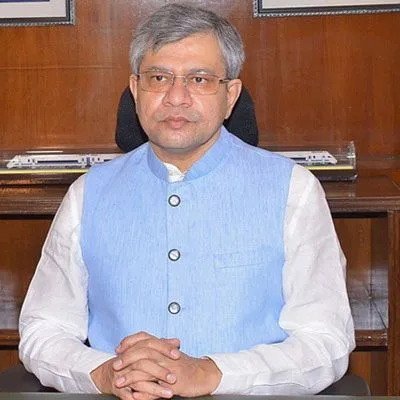
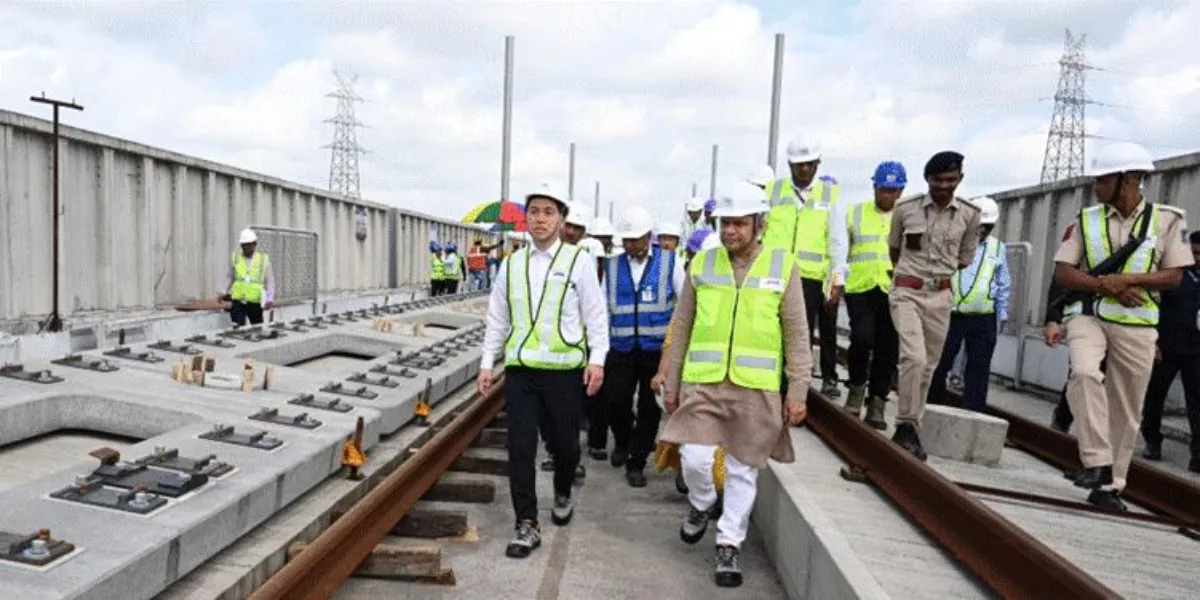
Union Minister for Railways Ashwini Vaishnaw visited major construction sites of the Mumbai–Ahmedabad High Speed Rail (MAHSR) project in Sabarmati, Ahmedabad, on Thursday. The minister reviewed progress at the Sabarmati High Speed Rail (HSR) Station, the HSR Multimodal Transport Hub, and the Rolling Stock Depot, all key components of India’s first bullet train corridor.

Sabarmati HSR Station

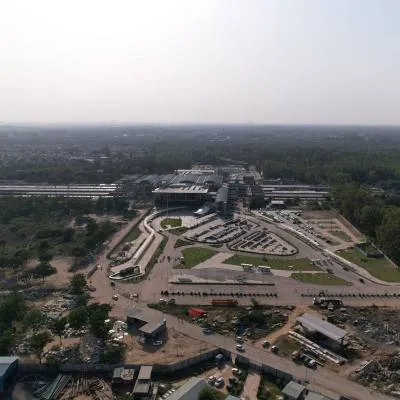
Serving as the terminal station for the Mumbai–Ahmedabad corridor, the Sabarmati HSR Station draws inspiration from Mahatma Gandhi’s Charkha at the Sabarmati Ashram. Spread over 45,000 sq. m., the station’s structural works up to the track floor are complete, while interior and MEP works are currently under way.

The facility will feature world-class passenger amenities, including waiting lounges, restrooms, nursery, retail and commercial spaces. It will also offer seamless connectivity with the existing railway, metro, and BRTS networks.

Sabarmati HSR Multimodal Hub

Designed as a state-of-the-art integrated complex, the hub will provide smooth interconnectivity between the HSR station, Sabarmati railway station, metro, and BRTS systems.

The hub’s façade features a stainless-steel mural of the Dandi March, symbolising Sabarmati’s historic legacy. It will house office spaces, hotel facilities, retail outlets, restaurants, and parking for around 1,200 vehicles. Sustainability features include solar panels, landscaped terraces, and energy-efficient systems.

Sabarmati HSR Rolling Stock Depot

Spanning 84 hectares, this is the largest of the three depots under the MAHSR project. It will support both light and heavy maintenance of trainsets through inspection, stabling, and workshop lines.

Construction of the administration building, inspection sheds, and track infrastructure is progressing rapidly. The depot adheres to environmental sustainability standards, with rainwater harvesting, solar installations, and zero liquid discharge systems.

Project Progress

The Mumbai–Ahmedabad Bullet Train project has achieved significant milestones. Of the total 508 km, around 325 km of viaduct and 400 km of pier work have been completed. Additionally, 17 river bridges, 5 PSC bridges, and 10 steel bridges are finished.

Track-laying has progressed across 216 km, and over 400,000 noise barriers have been installed. All stations in Gujarat are at advanced stages of construction, with rapid development also visible in the Mumbai underground section.

Minister Vaishnaw commended the progress and reaffirmed that the project remains on track for timely completion. He noted that India’s first bullet train project embodies Prime Minister Narendra Modi’s vision for world-class transport infrastructure and a ‘Viksit Bharat by 2047’.

Union Minister for Railways Ashwini Vaishnaw visited major construction sites of the Mumbai–Ahmedabad High Speed Rail (MAHSR) project in Sabarmati, Ahmedabad, on Thursday. The minister reviewed progress at the Sabarmati High Speed Rail (HSR) Station, the HSR Multimodal Transport Hub, and the Rolling Stock Depot, all key components of India’s first bullet train corridor. Sabarmati HSR Station Serving as the terminal station for the Mumbai–Ahmedabad corridor, the Sabarmati HSR Station draws inspiration from Mahatma Gandhi’s Charkha at the Sabarmati Ashram. Spread over 45,000 sq. m., the station’s structural works up to the track floor are complete, while interior and MEP works are currently under way. The facility will feature world-class passenger amenities, including waiting lounges, restrooms, nursery, retail and commercial spaces. It will also offer seamless connectivity with the existing railway, metro, and BRTS networks. Sabarmati HSR Multimodal Hub Designed as a state-of-the-art integrated complex, the hub will provide smooth interconnectivity between the HSR station, Sabarmati railway station, metro, and BRTS systems. The hub’s façade features a stainless-steel mural of the Dandi March, symbolising Sabarmati’s historic legacy. It will house office spaces, hotel facilities, retail outlets, restaurants, and parking for around 1,200 vehicles. Sustainability features include solar panels, landscaped terraces, and energy-efficient systems. Sabarmati HSR Rolling Stock Depot Spanning 84 hectares, this is the largest of the three depots under the MAHSR project. It will support both light and heavy maintenance of trainsets through inspection, stabling, and workshop lines. Construction of the administration building, inspection sheds, and track infrastructure is progressing rapidly. The depot adheres to environmental sustainability standards, with rainwater harvesting, solar installations, and zero liquid discharge systems. Project Progress The Mumbai–Ahmedabad Bullet Train project has achieved significant milestones. Of the total 508 km, around 325 km of viaduct and 400 km of pier work have been completed. Additionally, 17 river bridges, 5 PSC bridges, and 10 steel bridges are finished. Track-laying has progressed across 216 km, and over 400,000 noise barriers have been installed. All stations in Gujarat are at advanced stages of construction, with rapid development also visible in the Mumbai underground section. Minister Vaishnaw commended the progress and reaffirmed that the project remains on track for timely completion. He noted that India’s first bullet train project embodies Prime Minister Narendra Modi’s vision for world-class transport infrastructure and a ‘Viksit Bharat by 2047’.

Next Story
Infrastructure Urban

India Expands Semiconductor Training To 500 Institutions

Under the Chips to Startups programme of the India Semiconductor Mission, the Union minister responsible for Railways, Information and Broadcasting, and Electronics and IT reported notable progress in talent development. He indicated that over the past four years substantial steps have been taken towards a 10-year target of training 85,000 engineers in semiconductor design. World-class EDA tools have been deployed in 315 academic institutions across the country to provide students with practical exposure to chip design. These EDA tools are supported by leading global firms and are accessible t..

Next Story
Infrastructure Urban

Delhi Institutions Support India Semiconductor Mission

The Government of India has prioritised talent development through training, upskilling and workforce development under the Chips to Startups initiative of the India Semiconductor Mission, with officials noting progress in four years towards a 10-year target of training 85,000 engineers in semiconductor design. Electronic design automation tools provided by Synopsys, Cadence, Siemens, Renesas, Ansys and AMD have been deployed in 315 academic institutions, enabling students to gain practical chip design experience. Chips have been fabricated and tested at the Semiconductor Laboratory, Mohali, a..

Next Story
Infrastructure Urban

NHA Announces Winners Of NHCX Hackathon At IIT Hyderabad

The National Health Authority (NHA) has concluded the NHCX Hackathon under the Ayushman Bharat Digital Mission (ABDM) to stimulate innovation around the National Health Claims Exchange (NHCX). The winning teams presented their solutions at the NHCX Innovation Meet held at IIT Hyderabad during a two-day event in March 2026 that also served as the hackathon grand finale. The hackathon itself ran from 22 to 28 February 2026 and aimed to accelerate paperless, transparent claims processing across India. The event was organised with a range of ecosystem partners, including the Insurance Regulatory a..

Advertisement

Subscribe to Our Newsletter

Get daily newsletters around different themes from Construction world.

STAY CONNECTED

Advertisement

Advertisement

Advertisement