Indian Railways Drives Mega Projects To Boost Connectivity
WAREHOUSING & LOGISTICS

Indian Railways Drives Mega Projects To Boost Connectivity

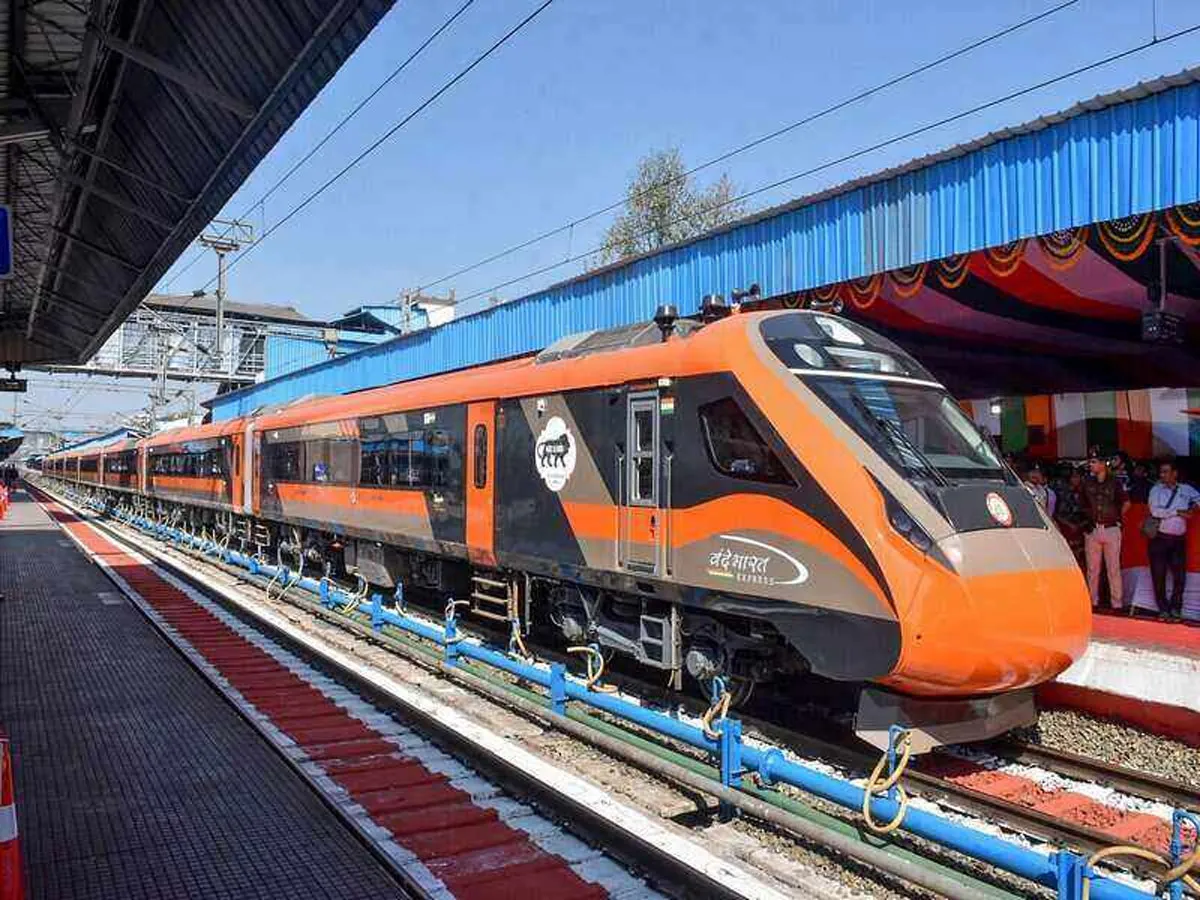
Indian Railways is executing some of the most ambitious infrastructure projects of the 21st century to strengthen national integration, improve logistics efficiency and expand its modern rail network, according to an official release.

A flagship initiative is the Udhampur–Srinagar–Baramulla Rail Link, a 272 km line built at an estimated cost of about Rs 440 billion through the Himalayan region. The project includes the iconic Chenab Rail Bridge, the world’s highest railway arch bridge, standing 359 metres above the river and higher than the Eiffel Tower. The 1,315-metre-long steel arch structure has been engineered to withstand seismic activity and extreme wind loads. The project also features India’s first cable-stayed railway bridge, the Anji Rail Bridge, spanning the Anji River. In total, the line includes 36 tunnels covering 119 km and 943 bridges, providing all-weather rail connectivity to the Kashmir Valley and supporting tourism, mobility and regional economic activity.

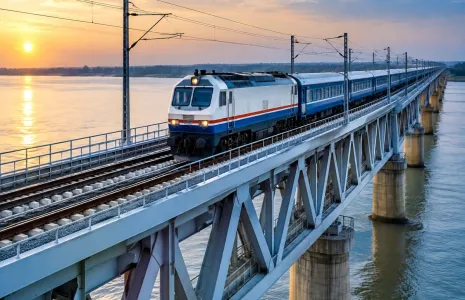
Another major milestone is the New Pamban Railway Bridge in Tamil Nadu. Built at a cost of around Rs 5.5 billion, the 2.08 km-long structure is India’s first vertical-lift sea railway bridge, comprising 100 spans—99 spans of 18.3 metres each and a central span of 72.5 metres. The bridge has a robust substructure with 333 piles and 101 pile caps, along with 99 approach girders to ensure efficient load distribution. Designed to withstand harsh marine conditions and strong coastal winds, the bridge incorporates advanced corrosion protection, extending its service life to 38 years without maintenance and up to 58 years with minimal maintenance. The bridge restores rail connectivity to Rameswaram and has won the Steel Structures & Metal Buildings Award 2024 in the Bridge Design category.

Indian Railways has also made substantial progress in addressing connectivity challenges in the Northeast. Since 2014, over 1,679 km of new railway track has been laid in the region, more than 2,500 route kilometres have been electrified, and over 470 road overbridges and underbridges have been constructed. The commissioning of the Bairabi–Sairang line has connected Aizawl to the national rail network for the first time, making it the fourth capital in the Northeast to gain rail connectivity. In addition, 60 stations are being redeveloped under the Amrit Bharat Station Scheme, while major projects such as Sivok–Rangpo, Dimapur–Kohima and Jiribam–Imphal are progressing steadily.

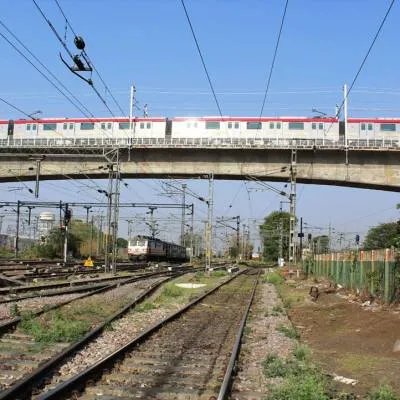
In freight transportation, Indian Railways is transforming logistics through the Dedicated Freight Corridor programme. The Eastern Dedicated Freight Corridor from Ludhiana to Sonnagar spans 1,337 km and has been fully commissioned. The Western Dedicated Freight Corridor, linking Jawaharlal Nehru Port Terminal with Dadri, is 1,506 km long, of which 1,404 km, or 93.2 per cent, has been commissioned. Together, the two corridors total 2,843 km, with 2,741 route kilometres—about 96.4 per cent—already operational, significantly reducing transit times, lowering logistics costs and improving reliability for industries and ports.

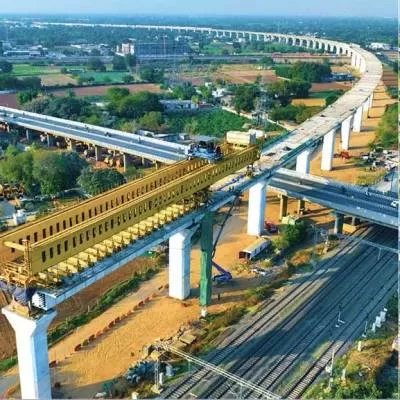
High-speed rail development is also advancing through the Mumbai–Ahmedabad High-Speed Rail Project, being implemented by the National High Speed Rail Corporation Limited. As of December 21, 2025, viaduct construction has been completed for 331 km of the 508 km alignment, while pier work covers 410 km. Seventeen river bridges, five PSC bridges and 11 steel bridges have been completed, alongside 272 km of RC trackbed and installation of over 4,100 overhead equipment masts. Major tunnelling works in Maharashtra and rolling stock depots at Surat and Ahmedabad are also under development.

According to the release, these landmark projects highlight Indian Railways’ role in national development through large-scale investment and advanced engineering, improving connectivity, supporting economic growth and strengthening unity across regions.

Indian Railways is executing some of the most ambitious infrastructure projects of the 21st century to strengthen national integration, improve logistics efficiency and expand its modern rail network, according to an official release. A flagship initiative is the Udhampur–Srinagar–Baramulla Rail Link, a 272 km line built at an estimated cost of about Rs 440 billion through the Himalayan region. The project includes the iconic Chenab Rail Bridge, the world’s highest railway arch bridge, standing 359 metres above the river and higher than the Eiffel Tower. The 1,315-metre-long steel arch structure has been engineered to withstand seismic activity and extreme wind loads. The project also features India’s first cable-stayed railway bridge, the Anji Rail Bridge, spanning the Anji River. In total, the line includes 36 tunnels covering 119 km and 943 bridges, providing all-weather rail connectivity to the Kashmir Valley and supporting tourism, mobility and regional economic activity. Another major milestone is the New Pamban Railway Bridge in Tamil Nadu. Built at a cost of around Rs 5.5 billion, the 2.08 km-long structure is India’s first vertical-lift sea railway bridge, comprising 100 spans—99 spans of 18.3 metres each and a central span of 72.5 metres. The bridge has a robust substructure with 333 piles and 101 pile caps, along with 99 approach girders to ensure efficient load distribution. Designed to withstand harsh marine conditions and strong coastal winds, the bridge incorporates advanced corrosion protection, extending its service life to 38 years without maintenance and up to 58 years with minimal maintenance. The bridge restores rail connectivity to Rameswaram and has won the Steel Structures & Metal Buildings Award 2024 in the Bridge Design category. Indian Railways has also made substantial progress in addressing connectivity challenges in the Northeast. Since 2014, over 1,679 km of new railway track has been laid in the region, more than 2,500 route kilometres have been electrified, and over 470 road overbridges and underbridges have been constructed. The commissioning of the Bairabi–Sairang line has connected Aizawl to the national rail network for the first time, making it the fourth capital in the Northeast to gain rail connectivity. In addition, 60 stations are being redeveloped under the Amrit Bharat Station Scheme, while major projects such as Sivok–Rangpo, Dimapur–Kohima and Jiribam–Imphal are progressing steadily. In freight transportation, Indian Railways is transforming logistics through the Dedicated Freight Corridor programme. The Eastern Dedicated Freight Corridor from Ludhiana to Sonnagar spans 1,337 km and has been fully commissioned. The Western Dedicated Freight Corridor, linking Jawaharlal Nehru Port Terminal with Dadri, is 1,506 km long, of which 1,404 km, or 93.2 per cent, has been commissioned. Together, the two corridors total 2,843 km, with 2,741 route kilometres—about 96.4 per cent—already operational, significantly reducing transit times, lowering logistics costs and improving reliability for industries and ports. High-speed rail development is also advancing through the Mumbai–Ahmedabad High-Speed Rail Project, being implemented by the National High Speed Rail Corporation Limited. As of December 21, 2025, viaduct construction has been completed for 331 km of the 508 km alignment, while pier work covers 410 km. Seventeen river bridges, five PSC bridges and 11 steel bridges have been completed, alongside 272 km of RC trackbed and installation of over 4,100 overhead equipment masts. Major tunnelling works in Maharashtra and rolling stock depots at Surat and Ahmedabad are also under development. According to the release, these landmark projects highlight Indian Railways’ role in national development through large-scale investment and advanced engineering, improving connectivity, supporting economic growth and strengthening unity across regions.

Next Story
Infrastructure Energy

BMW Industries partners with IOCL for PNG supply at Bokaro plant

BMW Industries has entered into a strategic partnership with Indian Oil Corporation (IOCL) for the supply of Piped Natural Gas (PNG), reinforcing its commitment to adopting cleaner and more efficient energy sources for its operations.The agreement was signed at the Eastern Region Pipelines (ERPL) headquarters in Kolkata. The partnership is expected to support the company’s upcoming manufacturing facility in Bokaro by facilitating the use of natural gas as a primary energy source.According to the company, the adoption of PNG will help enhance operational efficiency while also contributing to ..

Next Story
Real Estate

Bombay Realty Secures RERA for Three ICC Tower in South Mumbai

Bombay Realty, the real estate arm of Bombay Dyeing and part of the Wadia Group, has received Real Estate Regulatory Authority (RERA) certification for Three ICC – Wing A, the latest luxury residential tower at Island City Center in Mumbai’s Dadar.The RERA registration marks a key milestone in the development timeline and reinforces the company’s focus on regulatory transparency, timely project delivery, and high construction standards.Following the success of One ICC and Two ICC, the upcoming Three ICC tower represents the next phase of the Island City Center development. The project ai..

Next Story
Infrastructure Energy

Flender launches India’s largest wind gearbox test rig in Walajabad

Flender has inaugurated a 13.5 MW wind turbine gearbox test rig at its Walajabad facility near Chennai, marking the largest installation of its kind in India. The new facility is expected to strengthen the company’s manufacturing and testing capabilities while supporting the growing demands of the wind power sector in both domestic and global markets.The test rig was inaugurated on March 5 in the presence of Andreas Evertz, Group CEO, Flender; Lars Wiegemann, Vice President Wind Gears, Flender; and Vinod Shetty, CEO, Flender India, along with key industry customers and stakeholders.The insta..

Advertisement

Subscribe to Our Newsletter

Get daily newsletters around different themes from Construction world.

STAY CONNECTED

Advertisement

Advertisement

Advertisement