LG Inspects Bhalswa, Directs MCD To Upgrade Waste Management
WATER & WASTE

LG Inspects Bhalswa, Directs MCD To Upgrade Waste Management

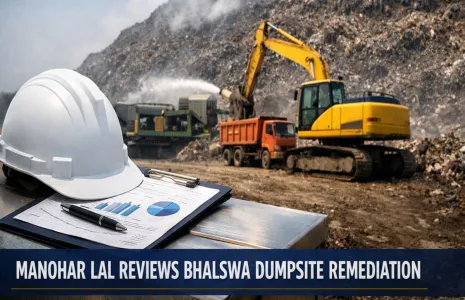
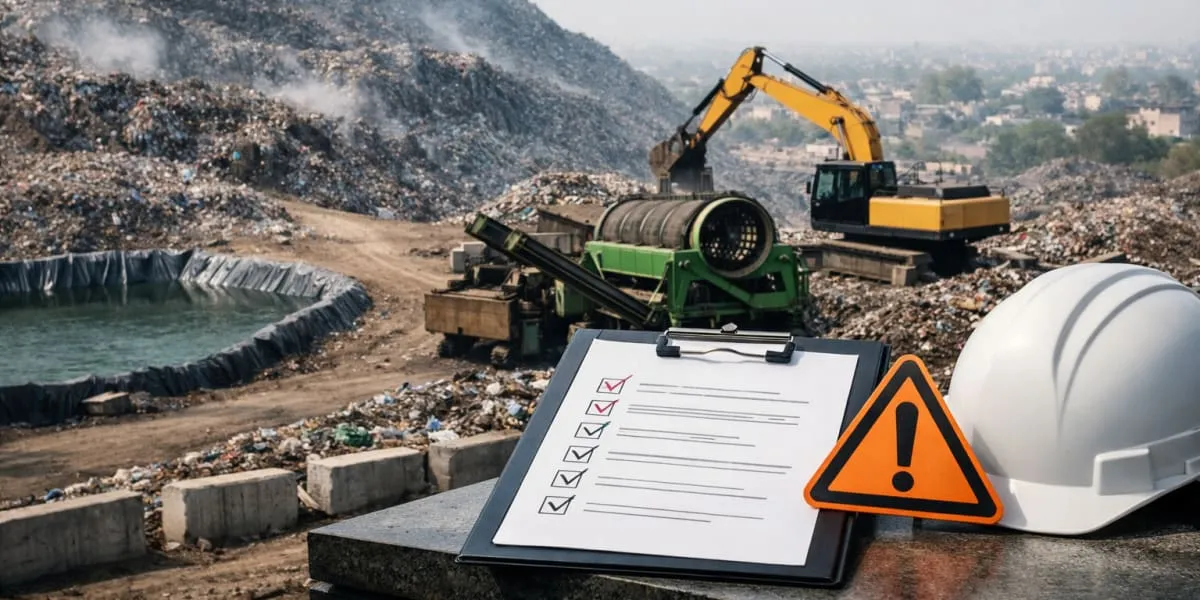
The Lieutenant Governor of Delhi conducted a comprehensive inspection of the Bhalswa landfill and reviewed the current waste handling operations, access roads and on site equipment, assessing potential risks to adjacent communities.

He directed the Municipal Corporation of Delhi (MCD) to accelerate upgrades to waste management infrastructure to reduce environmental and public health risks and to improve the overall sanitary condition of the area.

Officials were instructed to prioritise segregation at source, strengthen door to door collection and improve collection frequency in surrounding neighbourhoods.

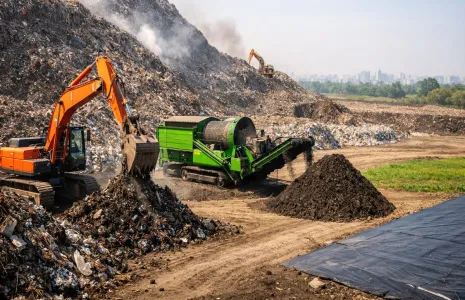
The inspection report highlighted methane emissions from decomposing waste, leachate control deficiencies and the need for scientific capping and phased remediation of older dumpsites to limit further contamination.

The Lieutenant Governor asked for a detailed action plan with clear timelines, measurable milestones and resource estimates to be submitted within a specified timeframe so that progress could be monitored and accountability maintained.

MCD officers were urged to coordinate with state and central agencies, engage accredited technical consultants and align with best practice protocols for engineered landfill management.

The administration was told to enhance recycling and composting capacity, expand material recovery facilities and to deploy mechanised systems for processing to reduce dependence on landfilling and to divert biodegradable waste towards compost and biogas routes.

Plans were expected to include community awareness campaigns, school programmes and incentives for waste reduction and segregation by households, small businesses and bulk waste generators.

Monitoring systems were to be upgraded with regular reporting, independent audits and public disclosure of progress to build transparency.

The directive also covered emergency measures to manage fires and odour, immediate steps to protect nearby water bodies from contamination and strengthened provisions for worker safety and training at the site.

Funding options, budget reallocation and public private partnerships were to be explored to meet short term and long term needs without compromising essential municipal services.

The Lieutenant Governor emphasised that prompt implementation, periodic review and demonstrable outcomes would be critical to restore environmental standards and public confidence.

The Lieutenant Governor of Delhi conducted a comprehensive inspection of the Bhalswa landfill and reviewed the current waste handling operations, access roads and on site equipment, assessing potential risks to adjacent communities. He directed the Municipal Corporation of Delhi (MCD) to accelerate upgrades to waste management infrastructure to reduce environmental and public health risks and to improve the overall sanitary condition of the area. Officials were instructed to prioritise segregation at source, strengthen door to door collection and improve collection frequency in surrounding neighbourhoods. The inspection report highlighted methane emissions from decomposing waste, leachate control deficiencies and the need for scientific capping and phased remediation of older dumpsites to limit further contamination. The Lieutenant Governor asked for a detailed action plan with clear timelines, measurable milestones and resource estimates to be submitted within a specified timeframe so that progress could be monitored and accountability maintained. MCD officers were urged to coordinate with state and central agencies, engage accredited technical consultants and align with best practice protocols for engineered landfill management. The administration was told to enhance recycling and composting capacity, expand material recovery facilities and to deploy mechanised systems for processing to reduce dependence on landfilling and to divert biodegradable waste towards compost and biogas routes. Plans were expected to include community awareness campaigns, school programmes and incentives for waste reduction and segregation by households, small businesses and bulk waste generators. Monitoring systems were to be upgraded with regular reporting, independent audits and public disclosure of progress to build transparency. The directive also covered emergency measures to manage fires and odour, immediate steps to protect nearby water bodies from contamination and strengthened provisions for worker safety and training at the site. Funding options, budget reallocation and public private partnerships were to be explored to meet short term and long term needs without compromising essential municipal services. The Lieutenant Governor emphasised that prompt implementation, periodic review and demonstrable outcomes would be critical to restore environmental standards and public confidence.

Next Story
Technology

AI-Enabled Workflows Lift Profitability and Productivity

Organisations modernising frontline workflows with artificial intelligence, automation and real-time data are reporting stronger financial performance, higher productivity and improved employee engagement, according to a global study by Zebra Technologies and Oxford Economics.The research covered 1,000 senior leaders across retail, manufacturing, transportation and logistics in the US, Mexico, the UK, Germany, India, Japan, Australia and New Zealand.In transportation and logistics, 54 per cent of companies that improved picking and packing operations reported faster operational performance, wh..

Next Story
Real Estate

India Leads Global AI Readiness but Implementation Lags

Indian companies lead global averages across all eight artificial intelligence readiness indicators tracked by JLL, but only 19 per cent have started making changes to their workplaces, according to the JLL 2026 Future of Work Survey.The study found that 77 per cent of Indian business leaders expect AI to change their office requirements, creating a 58-percentage-point gap between awareness and implementation. The survey covered more than 2,200 CEOs, CFOs and real estate leaders across 21 countries during the first quarter of 2026.Despite concerns over automation, 58 per cent of Indian leaders..

Next Story
Equipment

Three WOLFF Cranes Build Riyadh Cable-Stayed Bridges

Three WOLFF 180 B luffing jib cranes are supporting the construction of two cable-stayed bridges alongside the existing Wadi Laban Bridge in Riyadh, Saudi Arabia. The project is being developed for the Royal Commission for Riyadh City and executed by the ICRC joint venture comprising IC Ictas and Al Rashid Trading & Contracting Company.The cranes are handling lifting operations including formwork, reinforcement, concrete placement, work platforms, surveying equipment and other construction materials. Each crane is fitted with a 40 m jib, reaches a hook height of 157 m and offers a maximum ..

Advertisement

Subscribe to Our Newsletter

Get daily newsletters around different themes from Construction world.

STAY CONNECTED

Advertisement

Advertisement

Advertisement