NITI Aayog Launches Circular Economy Reports on ELVs, Tyres, E-waste
WATER & WASTE

NITI Aayog Launches Circular Economy Reports on ELVs, Tyres, E-waste

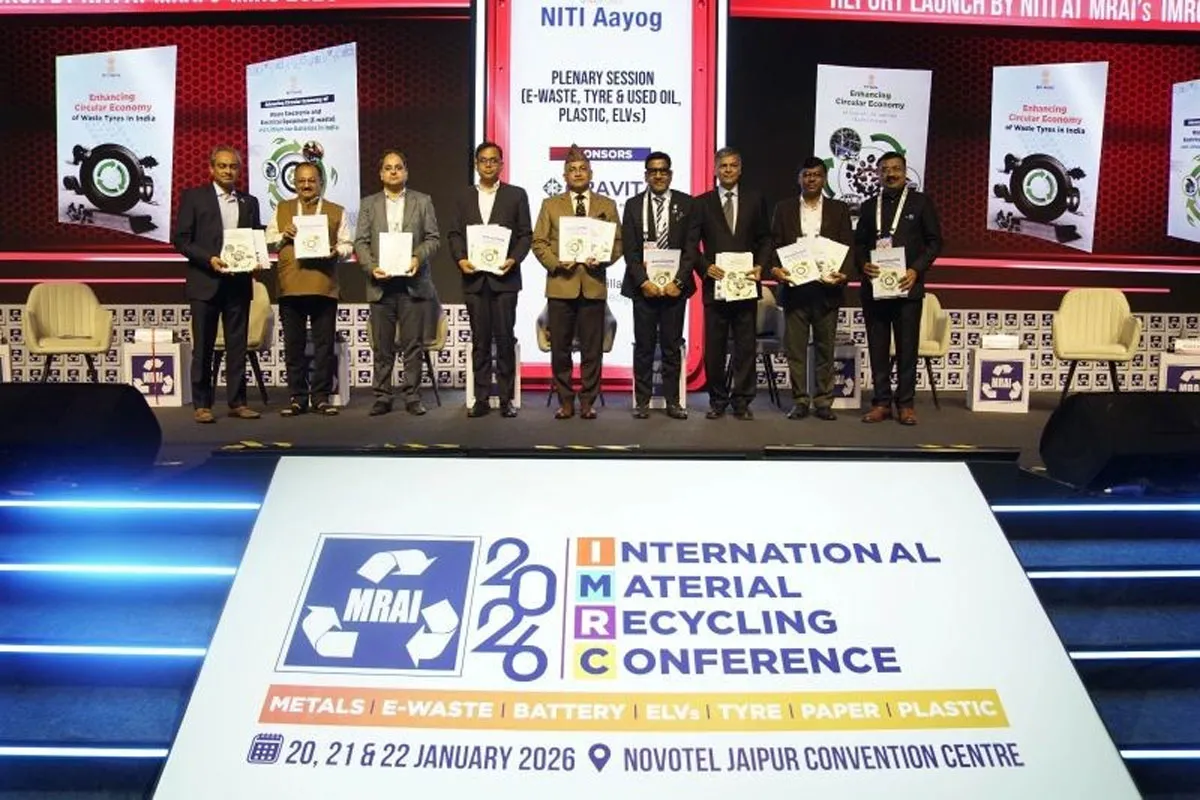
NITI Aayog recently launched three reports on enhancing the circular economy for end-of-life vehicles (ELVs), waste tyres, e-waste and lithium-ion batteries at the International Material Recycling Conference organised by Material Recycling Association of India in Jaipur. The reports analyse structural gaps in India’s circular economy ecosystem and recommend measures to strengthen infrastructure, formalise sectors, reinforce the Extended Producer Responsibility framework and unlock revenue potential.

Aligned with the Prime Minister’s vision of Viksit Bharat 2047, the reports highlight the growing role of electronic equipment, electric vehicles and batteries in India’s low-carbon, resource-efficient growth pathway. EV sales have risen sharply over the past decade, while demand for lithium-ion batteries is projected to expand significantly by 2035. At the same time, the number of ELVs and the volume of e-waste are expected to rise steeply by 2030, underscoring the urgency of sustainable material management.

Developed through extensive consultations with ministries, regulators, industry and knowledge partners, the reports present actionable recommendations to accelerate India’s transition to a circular economy. These include improving material recovery, strengthening domestic supply chains, enhancing sustainability outcomes and boosting material security to support inclusive and long-term economic growth.

NITI Aayog recently launched three reports on enhancing the circular economy for end-of-life vehicles (ELVs), waste tyres, e-waste and lithium-ion batteries at the International Material Recycling Conference organised by Material Recycling Association of India in Jaipur. The reports analyse structural gaps in India’s circular economy ecosystem and recommend measures to strengthen infrastructure, formalise sectors, reinforce the Extended Producer Responsibility framework and unlock revenue potential. Aligned with the Prime Minister’s vision of Viksit Bharat 2047, the reports highlight the growing role of electronic equipment, electric vehicles and batteries in India’s low-carbon, resource-efficient growth pathway. EV sales have risen sharply over the past decade, while demand for lithium-ion batteries is projected to expand significantly by 2035. At the same time, the number of ELVs and the volume of e-waste are expected to rise steeply by 2030, underscoring the urgency of sustainable material management. Developed through extensive consultations with ministries, regulators, industry and knowledge partners, the reports present actionable recommendations to accelerate India’s transition to a circular economy. These include improving material recovery, strengthening domestic supply chains, enhancing sustainability outcomes and boosting material security to support inclusive and long-term economic growth.

Next Story
Infrastructure Urban

PM Modi Addresses India-EU Business Forum in New Delhi

Prime Minister Shri Narendra Modi recently addressed the India–European Union Business Forum at Bharat Mandapam, New Delhi, describing the current phase as a new era of alignment in India-EU relations. He noted that the presence of EU leaders as Chief Guests at India’s Republic Day and the conclusion of the largest Free Trade Agreement in India’s history reflect unprecedented strategic convergence between the two democratic partners. Highlighting economic ties, the Prime Minister said bilateral trade has doubled over the past decade to 180 billion euros, with EU investments in India exc..

Next Story
Infrastructure Energy

PM Modi Highlights Energy Opportunities at India Energy Week 2026

Prime Minister Narendra Modi recently addressed the inaugural ceremony of India Energy Week 2026 via video conferencing, describing India as a land of immense opportunity for the global energy sector. He noted that representatives from nearly 125 countries had gathered to deliberate on building an energy-secure and sustainable future, underlining the event’s growing stature as a global platform for dialogue and action. The Prime Minister highlighted that India’s position as the world’s fastest-growing major economy is driving sustained growth in energy demand, while also creating opport..

Next Story
Infrastructure Energy

India–EU Free Trade Agreement Marks Strategic Trade Breakthrough

India and the European Union have recently concluded the India–EU Free Trade Agreement (FTA), marking a major milestone in bilateral economic engagement. The agreement was jointly announced at the 16th India–EU Summit by Narendra Modi and Ursula von der Leyen, positioning the two blocs as trusted partners committed to open, rules-based and inclusive growth. The FTA follows sustained negotiations since talks were relaunched in 2022 and reflects a shared strategic vision between the world’s fourth- and second-largest economies, together accounting for about 25 per cent of global GDP and n..

Advertisement

Subscribe to Our Newsletter

Get daily newsletters around different themes from Construction world.

STAY CONNECTED

Advertisement

Advertisement

Advertisement

Advertisement

Open In App