Union Minister Launches Sujal Gaon ID For Rural Water Mapping
WATER & WASTE

Union Minister Launches Sujal Gaon ID For Rural Water Mapping

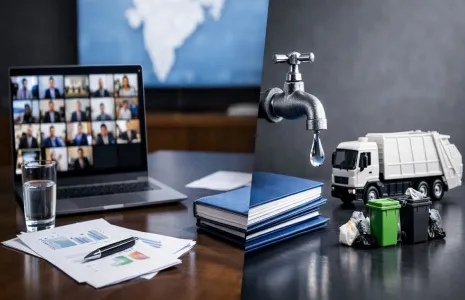
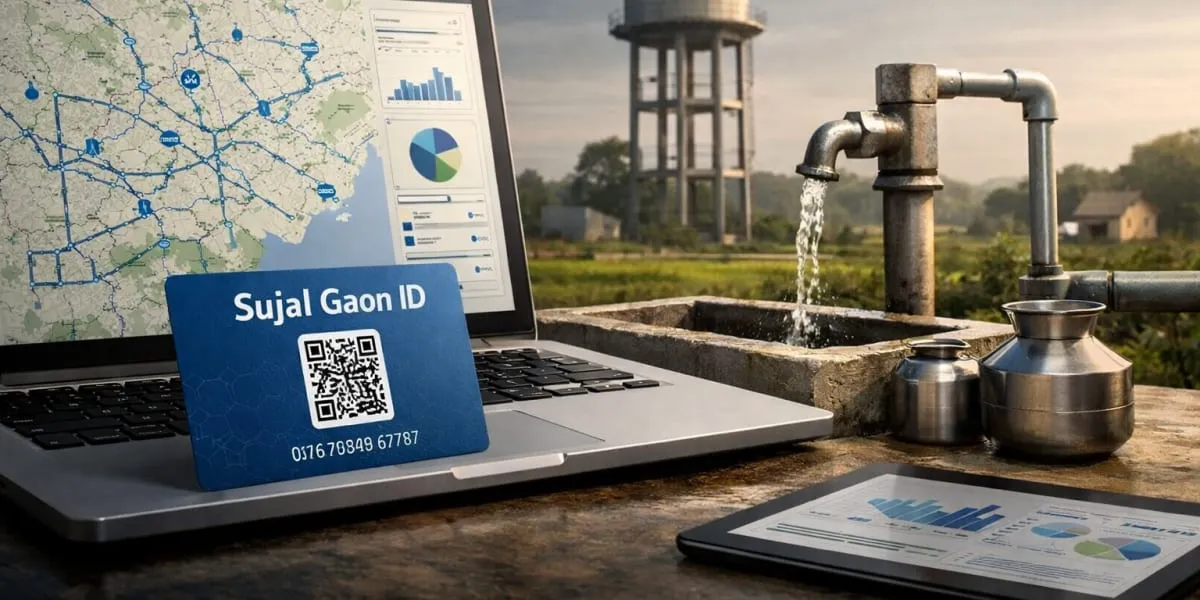
The Union Minister of Jal Shakti chaired a virtual meeting with Ministers of Public Health Engineering and Panchayati Raj Departments of States and Union Territories to outline the implementation roadmap for Jal Jeevan Mission 2.0. He released the Sujal Gaon ID, a scheme-based unique digital identifier that enables comprehensive digital mapping of rural piped water supply assets and brings rural water systems onto a unified national platform. So far 0.164 million (mn) Sujal Gaon IDs have been created across 31 States/UTs, linked to 67,000 Sujalam Bharat IDs, and each Sujalam Bharat identifier integrates infrastructure and service area records.

The cabinet has approved an extension of Jal Jeevan Mission 2.0 up to December 2028 with an enhanced financial outlay. The Mission’s total allocation has been increased from Rs 3,600 billion (bn) to Rs 8,690 billion (bn). The revised funding is intended to focus on sustainability, service delivery and sectoral reforms while making central assistance conditional on milestone-based implementation and structural changes.

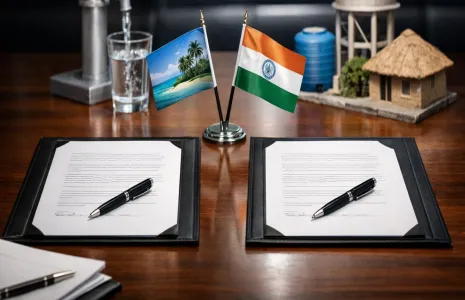
States were reminded that water is a state subject and that timely completion of schemes and strict adherence to approved technical specifications and expenditure limits are essential. Any expenditure arising from oversized or non-compliant works will be borne by the respective State Governments. The release of central funds will require signing of an MoU, creation of Sujal Gaon IDs for complete digital mapping, timely financial reconciliation and notification of State operation and maintenance policies.

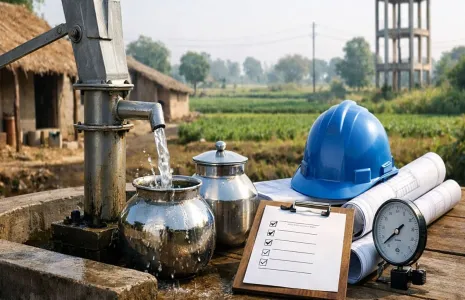
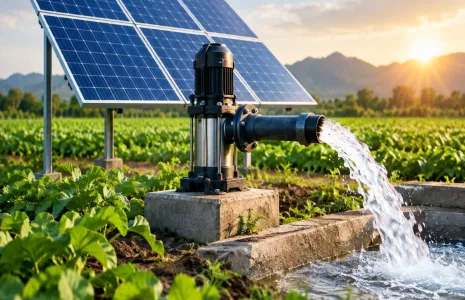
Implementation will be anchored in Gram Panchayat-led governance with strengthened operation and maintenance arrangements and community participation central to long-term functionality. The national digital architecture Sujalam Bharat will enable source-to-tap mapping, real-time monitoring and evidence-based decision making, while village-level service assessment will be supported by Jal Seva Aankalan and citizen oversight through the Meri Panchayat application. The Mission aims to reduce drudgery, improve public health and create rural employment as part of the drive to achieve universal tap water coverage by December 2028.

The Union Minister of Jal Shakti chaired a virtual meeting with Ministers of Public Health Engineering and Panchayati Raj Departments of States and Union Territories to outline the implementation roadmap for Jal Jeevan Mission 2.0. He released the Sujal Gaon ID, a scheme-based unique digital identifier that enables comprehensive digital mapping of rural piped water supply assets and brings rural water systems onto a unified national platform. So far 0.164 million (mn) Sujal Gaon IDs have been created across 31 States/UTs, linked to 67,000 Sujalam Bharat IDs, and each Sujalam Bharat identifier integrates infrastructure and service area records. The cabinet has approved an extension of Jal Jeevan Mission 2.0 up to December 2028 with an enhanced financial outlay. The Mission’s total allocation has been increased from Rs 3,600 billion (bn) to Rs 8,690 billion (bn). The revised funding is intended to focus on sustainability, service delivery and sectoral reforms while making central assistance conditional on milestone-based implementation and structural changes. States were reminded that water is a state subject and that timely completion of schemes and strict adherence to approved technical specifications and expenditure limits are essential. Any expenditure arising from oversized or non-compliant works will be borne by the respective State Governments. The release of central funds will require signing of an MoU, creation of Sujal Gaon IDs for complete digital mapping, timely financial reconciliation and notification of State operation and maintenance policies. Implementation will be anchored in Gram Panchayat-led governance with strengthened operation and maintenance arrangements and community participation central to long-term functionality. The national digital architecture Sujalam Bharat will enable source-to-tap mapping, real-time monitoring and evidence-based decision making, while village-level service assessment will be supported by Jal Seva Aankalan and citizen oversight through the Meri Panchayat application. The Mission aims to reduce drudgery, improve public health and create rural employment as part of the drive to achieve universal tap water coverage by December 2028.

Next Story
Infrastructure Urban

MIDC and Ramky Unit Sign Concession for Life Sciences Park

Maharashtra Industrial Development Corporation has signed a concession agreement with Maha Integrated Life Sciences City Limited (MILeS City), a wholly owned subsidiary of Ramky Infrastructure Limited (RIL), to develop a high-tech pharmaceutical park at Dighi Port Industrial Area in Raigad. The project will follow a public-private partnership under a DBFOT model and has an estimated cost of Rs 30 billion (Rs 30 bn). The concession will run for 95 years, including a five-year construction phase, with MILeS City responsible for development and management. The development will occupy approximatel..

Next Story
Real Estate

BuzzWorks Leases Hyderabad Office to MyComplianceOffice

Brigade Group’s managed workspace provider BuzzWorks has leased 550 seats at Mindspace Business Park in Hyderabad to Dublin based MyComplianceOffice, in what is the company’s largest office in India. With this signing, BuzzWorks' total leased office space in Hyderabad stands at zero point one one million (mn) square feet. The new premises will house core functions including product engineering, product management, customer success and global operations. Artificial intelligence enabled compliance technology initiatives will also be part of the local delivery model. BuzzWorks will provide wo..

Next Story
Infrastructure Transport

Jindal Stainless Flags Operational Strain From Middle East Crisis

Jindal Stainless warned that the Middle East war crisis has affected its operations because of dependence on industrial gases such as propane and LPG and on natural gas. The scrap-based production route used by the stainless steel maker does not generate blast furnace or coke oven gases internally, unlike the conventional steel industry. Several plant processes have been adversely impacted and production is being run at rationalised capacity. Disruptions in global shipping routes have resulted in vessel diversions, longer transit times and cargo delays, adding pressure to supply chains and to ..

Advertisement

Subscribe to Our Newsletter

Get daily newsletters around different themes from Construction world.

STAY CONNECTED

Advertisement

Advertisement

Advertisement