TDB Backs Hybrid Jump Take-Off Project With Casey Aviation
ECONOMY & POLICY

TDB Backs Hybrid Jump Take-Off Project With Casey Aviation

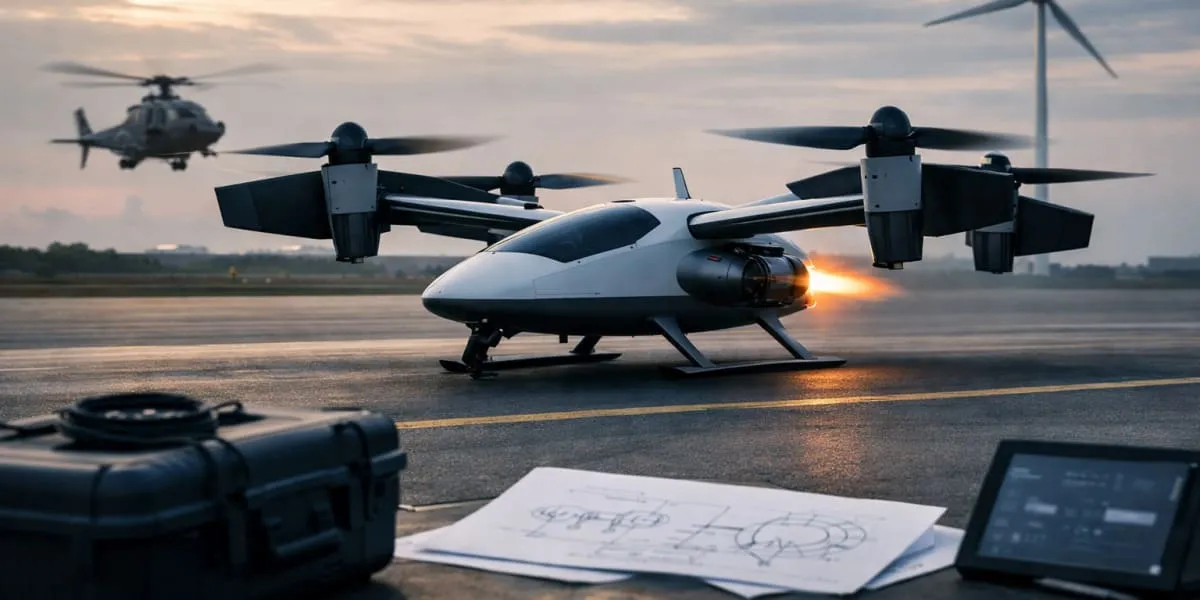
The Technology Development Board (TDB), Department of Science and Technology (DST), has signed an agreement with Casey Aviation Private Limited (Casey Aviation) of Gurugram for a project titled Boost Electric Jump Take-Off under the India-UK Collaborative R&D Programme for Industrial Sustainability in partnership with UK-based ARC Aerosystems Limited (ARC Aerosystems). The TDB has sanctioned a conditional grant to support development of an advanced hybrid propulsion Jump Take-Off system for unmanned and light aircraft platforms. The initiative seeks to strengthen bilateral research ties and accelerate industrial development in advanced aerial mobility technologies.

The project focuses on establishing a dedicated test bench facility for validation of rotorcraft propulsion systems, which will serve as critical infrastructure for testing and optimisation of next generation aerial mobility technologies. The proposed technical solution integrates hybrid propulsion to enable short or near vertical take-off capabilities for platforms such as gyrocopters and unmanned aerial systems. The facility is intended to provide validated testing infrastructure that supports in house development and broader ecosystem needs.

The technology aims to reduce take-off distances and enhance operational flexibility, which is expected to support applications including regional connectivity, disaster response, medical evacuation, unmanned logistics and surveillance in remote and inaccessible regions. By making test services available to startups and developers, the facility is expected to facilitate commercialisation of hybrid propulsion solutions and foster a stronger domestic supply chain for advanced aviation systems. The project partners plan to use the testing facility to accelerate development cycles and enable real world validation of scalable propulsion solutions.

Casey Aviation, a newly established aerospace venture, brings together expertise from industry, academia and research institutions to address emerging needs in India's aviation and unmanned systems landscape. The TDB noted that collaborative international research and development initiatives are vital for advancing strategic technologies and enhancing national capabilities in unmanned aviation and regional air mobility. Promoters of Casey Aviation indicated that the support will enable technology validation under operational conditions and help scale propulsion solutions for emerging aviation applications.

The Technology Development Board (TDB), Department of Science and Technology (DST), has signed an agreement with Casey Aviation Private Limited (Casey Aviation) of Gurugram for a project titled Boost Electric Jump Take-Off under the India-UK Collaborative R&D Programme for Industrial Sustainability in partnership with UK-based ARC Aerosystems Limited (ARC Aerosystems). The TDB has sanctioned a conditional grant to support development of an advanced hybrid propulsion Jump Take-Off system for unmanned and light aircraft platforms. The initiative seeks to strengthen bilateral research ties and accelerate industrial development in advanced aerial mobility technologies. The project focuses on establishing a dedicated test bench facility for validation of rotorcraft propulsion systems, which will serve as critical infrastructure for testing and optimisation of next generation aerial mobility technologies. The proposed technical solution integrates hybrid propulsion to enable short or near vertical take-off capabilities for platforms such as gyrocopters and unmanned aerial systems. The facility is intended to provide validated testing infrastructure that supports in house development and broader ecosystem needs. The technology aims to reduce take-off distances and enhance operational flexibility, which is expected to support applications including regional connectivity, disaster response, medical evacuation, unmanned logistics and surveillance in remote and inaccessible regions. By making test services available to startups and developers, the facility is expected to facilitate commercialisation of hybrid propulsion solutions and foster a stronger domestic supply chain for advanced aviation systems. The project partners plan to use the testing facility to accelerate development cycles and enable real world validation of scalable propulsion solutions. Casey Aviation, a newly established aerospace venture, brings together expertise from industry, academia and research institutions to address emerging needs in India's aviation and unmanned systems landscape. The TDB noted that collaborative international research and development initiatives are vital for advancing strategic technologies and enhancing national capabilities in unmanned aviation and regional air mobility. Promoters of Casey Aviation indicated that the support will enable technology validation under operational conditions and help scale propulsion solutions for emerging aviation applications.

Next Story
Technology

AI-Enabled Workflows Lift Profitability and Productivity

Organisations modernising frontline workflows with artificial intelligence, automation and real-time data are reporting stronger financial performance, higher productivity and improved employee engagement, according to a global study by Zebra Technologies and Oxford Economics.The research covered 1,000 senior leaders across retail, manufacturing, transportation and logistics in the US, Mexico, the UK, Germany, India, Japan, Australia and New Zealand.In transportation and logistics, 54 per cent of companies that improved picking and packing operations reported faster operational performance, wh..

Next Story
Real Estate

India Leads Global AI Readiness but Implementation Lags

Indian companies lead global averages across all eight artificial intelligence readiness indicators tracked by JLL, but only 19 per cent have started making changes to their workplaces, according to the JLL 2026 Future of Work Survey.The study found that 77 per cent of Indian business leaders expect AI to change their office requirements, creating a 58-percentage-point gap between awareness and implementation. The survey covered more than 2,200 CEOs, CFOs and real estate leaders across 21 countries during the first quarter of 2026.Despite concerns over automation, 58 per cent of Indian leaders..

Next Story
Equipment

Three WOLFF Cranes Build Riyadh Cable-Stayed Bridges

Three WOLFF 180 B luffing jib cranes are supporting the construction of two cable-stayed bridges alongside the existing Wadi Laban Bridge in Riyadh, Saudi Arabia. The project is being developed for the Royal Commission for Riyadh City and executed by the ICRC joint venture comprising IC Ictas and Al Rashid Trading & Contracting Company.The cranes are handling lifting operations including formwork, reinforcement, concrete placement, work platforms, surveying equipment and other construction materials. Each crane is fitted with a 40 m jib, reaches a hook height of 157 m and offers a maximum ..

Advertisement

Subscribe to Our Newsletter

Get daily newsletters around different themes from Construction world.

STAY CONNECTED

Advertisement

Advertisement

Advertisement