TRAI Assesses Mobile Network Quality In Kottayam LSA
ECONOMY & POLICY

TRAI Assesses Mobile Network Quality In Kottayam LSA

The Telecom Regulatory Authority of India (TRAI) released its independent drive test findings for the Kottayam Licensed Service Area following assessments conducted under the supervision of the TRAI Regional Office, Bengaluru. The tests were carried out from 10 February 2026 to 13 February 2026 over 503.9 km of routes, including 306 km of city drives, nine point two km of walk tests, twelve point four km of coastal drives and 176.3 km of highway drives, with standardised protocols and TRAI calibrated equipment.

Technologies evaluated included second, third, fourth and fifth generation mobile networks to capture user experience across different handset capabilities in urban zones, institutional hotspots, public transport hubs and high speed corridors. The assessment covered neighbourhoods across the district and real world locations such as the district collectorate, the government medical college hospital, the railway station, main bazaar, bus stand, a major mall, municipal park, stadium and temple, and the findings have been intimated to the telecom service providers for remedial action.

Performance metrics for voice services showed that Bharti Airtel Limited (Airtel), Bharat Sanchar Nigam Limited (BSNL), Reliance Jio Infocomm Limited (RJIL) and Vodafone Idea Limited (VIL) recorded call setup success rates of 99.84 per cent, 89.02 per cent, 100.00 per cent and 98.92 per cent respectively in auto selection mode. Drop call rates for the same operators were 0.16 per cent, 7.53 per cent, 0.31 per cent and 0.47 per cent respectively and call setup times averaged one point two three seconds, two point zero five seconds, zero point five eight seconds and zero point seven eight seconds respectively. Mean Opinion Score representing typical voice quality was recorded as four point zero four, three point one zero, four point five eight and four point five two respectively.

Data performance varied markedly, with overall average download speeds of 149.07 Mbps for Airtel, 10.33 Mbps for BSNL, 318.34 Mbps for RJIL and 22.95 Mbps for VIL, and corresponding upload speeds of 25.56 Mbps, 4.41 Mbps, 26.78 Mbps and 18.71 Mbps. Latency at the median varied between 25.80 ms and 58.85 ms across operators and hotspot and coastal routes showed higher instances of poor signal strength for some operators, with coastal data poor signal observations notably elevated in specific cases. The authority indicated that detailed results are available on the TRAI website and that the concerned providers have been asked to take corrective measures.

The Telecom Regulatory Authority of India (TRAI) released its independent drive test findings for the Kottayam Licensed Service Area following assessments conducted under the supervision of the TRAI Regional Office, Bengaluru. The tests were carried out from 10 February 2026 to 13 February 2026 over 503.9 km of routes, including 306 km of city drives, nine point two km of walk tests, twelve point four km of coastal drives and 176.3 km of highway drives, with standardised protocols and TRAI calibrated equipment. Technologies evaluated included second, third, fourth and fifth generation mobile networks to capture user experience across different handset capabilities in urban zones, institutional hotspots, public transport hubs and high speed corridors. The assessment covered neighbourhoods across the district and real world locations such as the district collectorate, the government medical college hospital, the railway station, main bazaar, bus stand, a major mall, municipal park, stadium and temple, and the findings have been intimated to the telecom service providers for remedial action. Performance metrics for voice services showed that Bharti Airtel Limited (Airtel), Bharat Sanchar Nigam Limited (BSNL), Reliance Jio Infocomm Limited (RJIL) and Vodafone Idea Limited (VIL) recorded call setup success rates of 99.84 per cent, 89.02 per cent, 100.00 per cent and 98.92 per cent respectively in auto selection mode. Drop call rates for the same operators were 0.16 per cent, 7.53 per cent, 0.31 per cent and 0.47 per cent respectively and call setup times averaged one point two three seconds, two point zero five seconds, zero point five eight seconds and zero point seven eight seconds respectively. Mean Opinion Score representing typical voice quality was recorded as four point zero four, three point one zero, four point five eight and four point five two respectively. Data performance varied markedly, with overall average download speeds of 149.07 Mbps for Airtel, 10.33 Mbps for BSNL, 318.34 Mbps for RJIL and 22.95 Mbps for VIL, and corresponding upload speeds of 25.56 Mbps, 4.41 Mbps, 26.78 Mbps and 18.71 Mbps. Latency at the median varied between 25.80 ms and 58.85 ms across operators and hotspot and coastal routes showed higher instances of poor signal strength for some operators, with coastal data poor signal observations notably elevated in specific cases. The authority indicated that detailed results are available on the TRAI website and that the concerned providers have been asked to take corrective measures.

Related Stories

Gold Stories

Next Story
Infrastructure Urban

KONE Opens India's First Digital Experience Centre in Pune

KONE, a global elevator and escalator manufacturer, has inaugurated its first Digital Experience Centre (DEC) in India, located in Pune. The facility aims to showcase how artificial intelligence (AI), connectivity and data-driven technologies can enhance customer experiences and improve building operations.The centre was inaugurated by Jussi Herlin, Executive Vice Chair, KONE Corporation; Philippe Delorme, President and CEO, KONE; and Nandan Nilekani, Co-founder and Chairman of the Board, Infosys.Designed as an interactive customer environment, the facility demonstrates digital solutions cover..

Next Story
Infrastructure Urban

CII GreenCo Launches Circularity Guidelines for Indian Industry

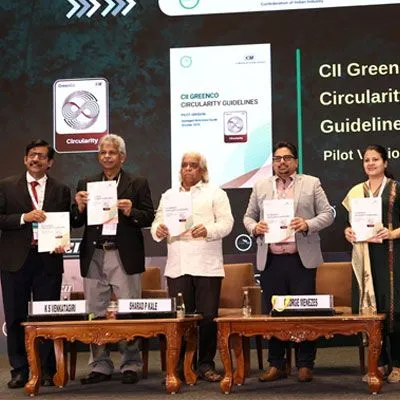
The Confederation of Indian Industry (CII) GreenCo Council has launched the CII GreenCo Circularity Guidelines – Pilot Version at the 17th CII GreenCo Waste & Resource Management Summit 2026 in Chennai. The initiative aims to strengthen resource efficiency, waste reduction and circular economy practices across Indian manufacturing and process industries.The guidelines introduce a structured framework with circularity indices covering raw materials, consumables, packaging and other resource inputs. These indicators will help industries assess existing practices, identify opportunities to ..

Next Story
Infrastructure Energy

Global Electronics Association Launches IPC-1783-CO2E Standard

The Global Electronics Association has introduced IPC-1783-CO2E, a new international standard aimed at improving consistency, transparency and comparability in product carbon footprint reporting across the electronics manufacturing industry.The standard, titled International Standard for Data Collection and Reporting of CO2 Equivalent (CO2e) Emissions for the Electronics Manufacturing Supply Chain, provides industry-specific guidance for collecting, estimating and reporting carbon emissions data.With increasing regulatory requirements and customer expectations, electronics manufacturers face c..

Advertisement

Subscribe to Our Newsletter

Get daily newsletters around different themes from Construction world.

STAY CONNECTED

Advertisement

SPECIAL OFFER
QR Code