+
Thiruvananthapuram Airport Records Highest Passenger Traffic in January
AVIATION & AIRPORTS

Thiruvananthapuram Airport Records Highest Passenger Traffic in January

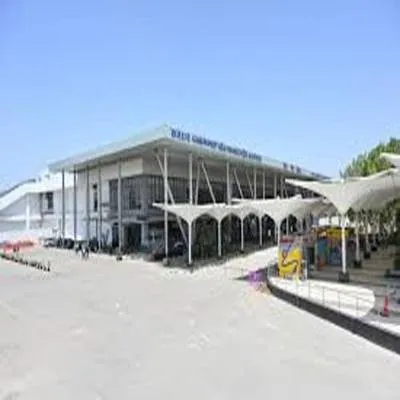
Thiruvananthapuram International Airport recorded its highest ever passenger traffic in January, airport authorities said. The surge in movements followed continued growth in domestic and international travel to and from the state capital. Authorities attributed the rise to greater connectivity and seasonal demand patterns. They noted that the increase underlines the need for expanded infrastructure to accommodate rising demand.

A new development masterplan envisaged for the airport is designed to manage 27 mn passengers per annum. Once implemented, the plan will provide state of the art terminal buildings and advanced cargo facilities to enable a seamless passenger experience and efficient cargo handling. The design anticipates scalable capacity and modern passenger processing systems to reduce dwell time and improve operational resilience. The plan also provides for enhanced automation and baggage handling systems to streamline passenger flows.

The airport is set to be developed as a greentech airport with sustainable and eco-friendly infrastructure incorporating renewable energy sources and green building practices. Environmental measures in the plan include energy efficient systems and reduced carbon intensity across airport operations. Officials indicated that sustainability features will be integral to future construction and facilities management. The approach is intended to lower operational costs and improve resilience to energy supply fluctuations.

Expansion is intended to strengthen regional connectivity and support tourism and commerce in Kerala. Authorities will prioritise phasing and funding to ensure minimal disruption to current operations during construction. Stakeholders will continue to assess traffic trends and adapt the masterplan to evolving demand. The project is positioned as a strategic investment in the region's transport infrastructure.

Cargo enhancements are expected to boost trade and provide better handling for perishable goods and time sensitive consignments. Improved cargo capacity will support local exporters and medical supply chains. Continued monitoring will guide further phased investments.

Thiruvananthapuram International Airport recorded its highest ever passenger traffic in January, airport authorities said. The surge in movements followed continued growth in domestic and international travel to and from the state capital. Authorities attributed the rise to greater connectivity and seasonal demand patterns. They noted that the increase underlines the need for expanded infrastructure to accommodate rising demand. A new development masterplan envisaged for the airport is designed to manage 27 mn passengers per annum. Once implemented, the plan will provide state of the art terminal buildings and advanced cargo facilities to enable a seamless passenger experience and efficient cargo handling. The design anticipates scalable capacity and modern passenger processing systems to reduce dwell time and improve operational resilience. The plan also provides for enhanced automation and baggage handling systems to streamline passenger flows. The airport is set to be developed as a greentech airport with sustainable and eco-friendly infrastructure incorporating renewable energy sources and green building practices. Environmental measures in the plan include energy efficient systems and reduced carbon intensity across airport operations. Officials indicated that sustainability features will be integral to future construction and facilities management. The approach is intended to lower operational costs and improve resilience to energy supply fluctuations. Expansion is intended to strengthen regional connectivity and support tourism and commerce in Kerala. Authorities will prioritise phasing and funding to ensure minimal disruption to current operations during construction. Stakeholders will continue to assess traffic trends and adapt the masterplan to evolving demand. The project is positioned as a strategic investment in the region's transport infrastructure. Cargo enhancements are expected to boost trade and provide better handling for perishable goods and time sensitive consignments. Improved cargo capacity will support local exporters and medical supply chains. Continued monitoring will guide further phased investments.

Related Stories

Gold Stories

Next Story
Infrastructure Urban

KONE Opens India's First Digital Experience Centre in Pune

KONE, a global elevator and escalator manufacturer, has inaugurated its first Digital Experience Centre (DEC) in India, located in Pune. The facility aims to showcase how artificial intelligence (AI), connectivity and data-driven technologies can enhance customer experiences and improve building operations.The centre was inaugurated by Jussi Herlin, Executive Vice Chair, KONE Corporation; Philippe Delorme, President and CEO, KONE; and Nandan Nilekani, Co-founder and Chairman of the Board, Infosys.Designed as an interactive customer environment, the facility demonstrates digital solutions cover..

Next Story
Infrastructure Urban

CII GreenCo Launches Circularity Guidelines for Indian Industry

The Confederation of Indian Industry (CII) GreenCo Council has launched the CII GreenCo Circularity Guidelines – Pilot Version at the 17th CII GreenCo Waste & Resource Management Summit 2026 in Chennai. The initiative aims to strengthen resource efficiency, waste reduction and circular economy practices across Indian manufacturing and process industries.The guidelines introduce a structured framework with circularity indices covering raw materials, consumables, packaging and other resource inputs. These indicators will help industries assess existing practices, identify opportunities to ..

Next Story
Infrastructure Energy

Global Electronics Association Launches IPC-1783-CO2E Standard

The Global Electronics Association has introduced IPC-1783-CO2E, a new international standard aimed at improving consistency, transparency and comparability in product carbon footprint reporting across the electronics manufacturing industry.The standard, titled International Standard for Data Collection and Reporting of CO2 Equivalent (CO2e) Emissions for the Electronics Manufacturing Supply Chain, provides industry-specific guidance for collecting, estimating and reporting carbon emissions data.With increasing regulatory requirements and customer expectations, electronics manufacturers face c..

Advertisement

Subscribe to Our Newsletter

Get daily newsletters around different themes from Construction world.

STAY CONNECTED

Advertisement

SPECIAL OFFER
QR Code