Bhayandar Vasai Bridge Plan Could Slash Commute Time
ROADS & HIGHWAYS

Bhayandar Vasai Bridge Plan Could Slash Commute Time

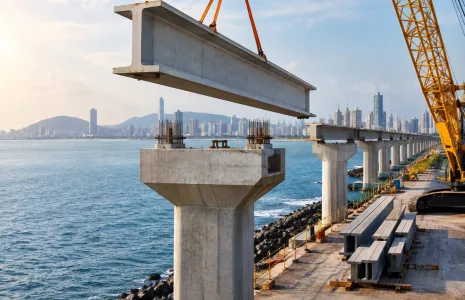
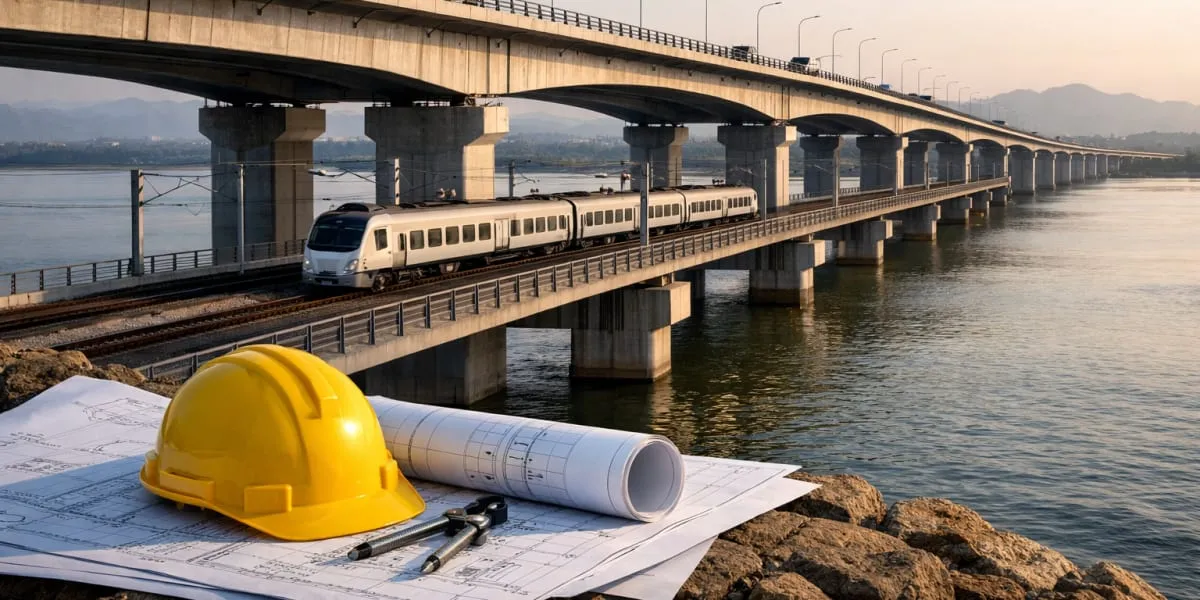
The Mumbai Metropolitan Region Development Authority (MMRDA) has submitted a fresh proposal to the state urban development department for a long delayed bridge linking Bhayandar and Vasai. The project was first conceived in two thousand and cleared by the state government in two thousand and thirteen, and it now envisages a double deck structure across the Vasai creek with distinct levels for road and rail.

The upper level has been planned as a road crossing while the lower deck is intended to carry Metro Line 13, creating an integrated transport corridor. Present arrangements require commuters to travel about thirty nine km and spend ninety minutes on the route between the suburbs, whereas the proposed alignment would cut this to five km and a ten minute drive, substantially reducing travel time.

The scheme is expected to offer relief to the estimated one point eight million (1.8 mn) residents of the Vasai Virar belt and to ease pressure on existing road networks through improved public transport connectivity. The estimated cost stands at Rs 25 billion (Rs 25 bn), reflecting the scale and complexity of a double deck crossing designed to combine urban rail and highway capacity.

Of the five government clearances required for the project, three have already been secured from the Maharashtra Maritime Board, the Inland Waterways Authority of India and the Maharashtra Coastal Zone Management Authority, leaving two approvals outstanding. The revived proposal signals renewed momentum for a scheme that planners say would strengthen suburban integration, improve commuting efficiency and support wider development objectives in the northern reaches of the Mumbai metropolitan region.

The Mumbai Metropolitan Region Development Authority (MMRDA) has submitted a fresh proposal to the state urban development department for a long delayed bridge linking Bhayandar and Vasai. The project was first conceived in two thousand and cleared by the state government in two thousand and thirteen, and it now envisages a double deck structure across the Vasai creek with distinct levels for road and rail. The upper level has been planned as a road crossing while the lower deck is intended to carry Metro Line 13, creating an integrated transport corridor. Present arrangements require commuters to travel about thirty nine km and spend ninety minutes on the route between the suburbs, whereas the proposed alignment would cut this to five km and a ten minute drive, substantially reducing travel time. The scheme is expected to offer relief to the estimated one point eight million (1.8 mn) residents of the Vasai Virar belt and to ease pressure on existing road networks through improved public transport connectivity. The estimated cost stands at Rs 25 billion (Rs 25 bn), reflecting the scale and complexity of a double deck crossing designed to combine urban rail and highway capacity. Of the five government clearances required for the project, three have already been secured from the Maharashtra Maritime Board, the Inland Waterways Authority of India and the Maharashtra Coastal Zone Management Authority, leaving two approvals outstanding. The revived proposal signals renewed momentum for a scheme that planners say would strengthen suburban integration, improve commuting efficiency and support wider development objectives in the northern reaches of the Mumbai metropolitan region.

Next Story
Infrastructure Energy

India Adds Record 44.61 GW Solar Capacity in FY2026

India’s solar sector reached a milestone in FY2026, with cumulative installed capacity crossing 150 GW and annual additions hitting a record 44.61 GW, exceeding the government target of 34 GW and nearly doubling FY2025’s 23.83 GW. Distributed Renewable Energy contributed 16.3 GW, while PPA and C&I segments accounted for 34 per cent and 30 per cent, respectively.India has risen from 9th globally in 2015 to 3rd in cumulative solar capacity by 2025 and is set to become the world’s second-largest solar market in annual installations in 2026. Seven states, led by Rajasthan and Gujarat, ac..

Next Story
Real Estate

Abhee Ventures unveils Scottish-themed 45-acre township in Bengaluru

Abhee Ventures, a leading South Indian real estate developer, has announced “Codename New Dimension,” a 45-acre Scottish-themed residential township at Gunjur on Whitefield–Sarjapur Road, Bengaluru. Strategically located between Whitefield and Sarjapur Road, Gunjur benefits from strong connectivity to the Outer Ring Road IT corridor, ITPL, EPIP, the upcoming Dommasandra Metro Station, and the proposed SWIFT City and Peripheral Ring Road.The township, designed in collaboration with London-based UHA London and India’s RSP Architects, offers low-density living with 85 per cent open spaces..

Next Story
Infrastructure Urban

Hindalco unveils Eternia experience centre for high-performance aluminium windows

Hindalco Industries, the metals flagship of the Aditya Birla Group, has launched its Eternia experience centre in Lajpat Nagar, New Delhi, highlighting its high-performance aluminium window systems designed for India’s evolving construction sector. The company is also expanding its manufacturing footprint in North India with a new Bilaspur facility.Eternia has emerged as one of the fastest-growing brands in system aluminium windows, registering nearly 65 per cent CAGR over the last three years. With a nationwide network of 170+ channel partners across 100+ cities, the brand serves homeowners..

Advertisement

Subscribe to Our Newsletter

Get daily newsletters around different themes from Construction world.

STAY CONNECTED

Advertisement

Advertisement

Advertisement

-->