+
Telangana Expands Highways And Rural Roads To Transform Connectivity
ROADS & HIGHWAYS

Telangana Expands Highways And Rural Roads To Transform Connectivity

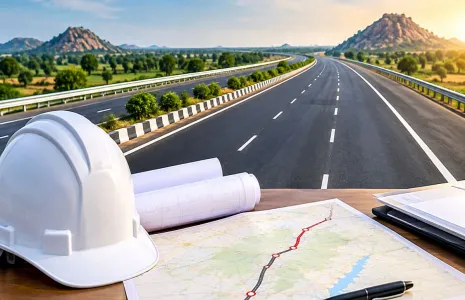
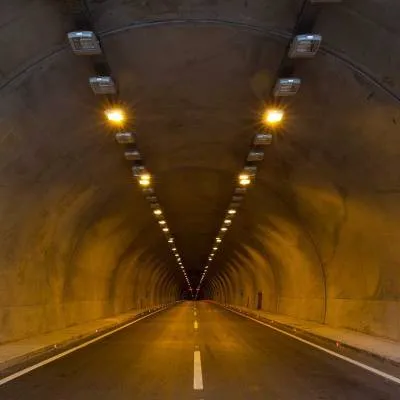
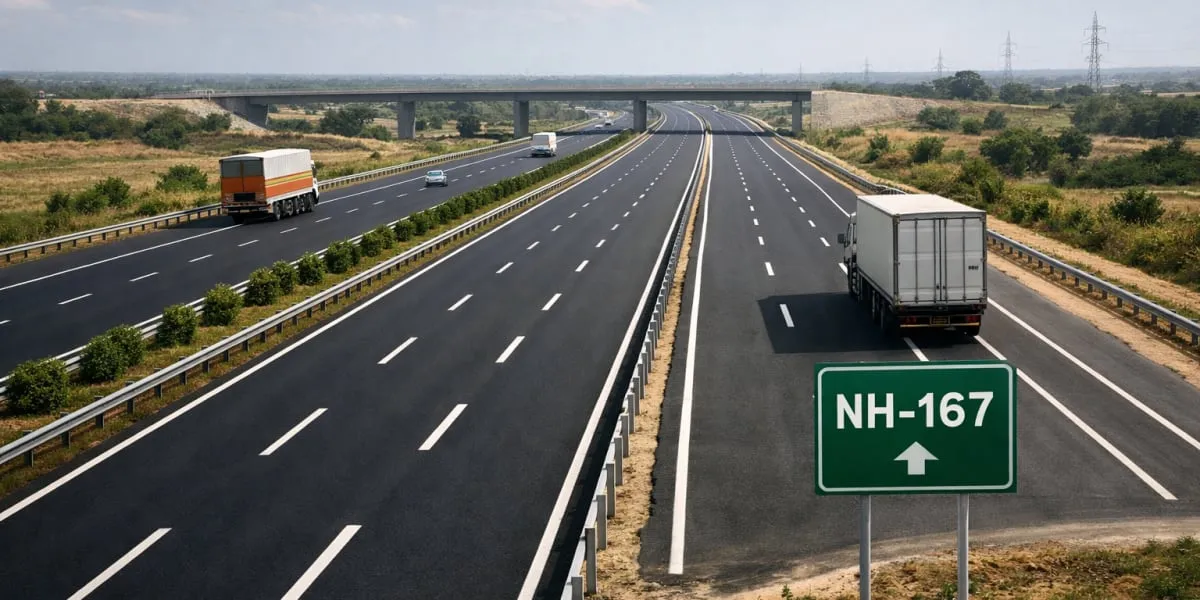
Telangana has developed more than 5,000 km of highways and arterial roads in a sustained infrastructure push that aims to enhance statewide connectivity and economic activity. One flagship upgrade involved the Gudeballur to Mahabubnagar section of NH-167, which has been expanded to four lanes at a total cost of Rs 31,750 million (mn). The expanded route serves as a critical link between commercial and industrial zones and supports smoother freight and passenger movement.

The state has also prioritised rural road development under the Pradhan Mantri Gram Sadak Yojana, with more than 12,000 km of rural roads constructed to date. These works have been directed at improving last mile connectivity to markets, healthcare facilities and educational institutions, thereby reducing isolation of remote habitations. Improved rural links have facilitated access for agricultural producers, enabled more reliable deliveries and supported local livelihood opportunities.

Improvements in road infrastructure have strengthened logistics and supply chain efficiency across Telangana, reducing travel times for both passengers and freight and lowering operating costs for transporters. The combination of upgraded national highways and an expanded rural network has enhanced prospects for industrial growth and attracted interest from investors seeking improved access to production clusters. The balanced focus on arterial corridors and feeder routes has created a more integrated transport ecosystem.

Overall, the road expansion drive reflects a policy emphasis on modern, sustainable and inclusive infrastructure development. With Bharatmala-backed highway projects complementing the PMGSY rural road programme, the state is positioning itself as a model for connectivity-driven growth in India. Continued maintenance and coordinated planning will be important to preserve the benefits of recent investments and to ensure that enhanced access translates into long term social and economic gains.

Telangana has developed more than 5,000 km of highways and arterial roads in a sustained infrastructure push that aims to enhance statewide connectivity and economic activity. One flagship upgrade involved the Gudeballur to Mahabubnagar section of NH-167, which has been expanded to four lanes at a total cost of Rs 31,750 million (mn). The expanded route serves as a critical link between commercial and industrial zones and supports smoother freight and passenger movement. The state has also prioritised rural road development under the Pradhan Mantri Gram Sadak Yojana, with more than 12,000 km of rural roads constructed to date. These works have been directed at improving last mile connectivity to markets, healthcare facilities and educational institutions, thereby reducing isolation of remote habitations. Improved rural links have facilitated access for agricultural producers, enabled more reliable deliveries and supported local livelihood opportunities. Improvements in road infrastructure have strengthened logistics and supply chain efficiency across Telangana, reducing travel times for both passengers and freight and lowering operating costs for transporters. The combination of upgraded national highways and an expanded rural network has enhanced prospects for industrial growth and attracted interest from investors seeking improved access to production clusters. The balanced focus on arterial corridors and feeder routes has created a more integrated transport ecosystem. Overall, the road expansion drive reflects a policy emphasis on modern, sustainable and inclusive infrastructure development. With Bharatmala-backed highway projects complementing the PMGSY rural road programme, the state is positioning itself as a model for connectivity-driven growth in India. Continued maintenance and coordinated planning will be important to preserve the benefits of recent investments and to ensure that enhanced access translates into long term social and economic gains.

Next Story
Infrastructure Urban

Implementation Status of Jal Jeevan Mission

Since August 2019 the Government has implemented Jal Jeevan Mission to provide assured potable water through household tap connections in rural India. At the start of the mission only 32.3 million (mn) rural households, representing 16.7 per cent, were reported to have tap water connections. States and union territories have reported that 125.8 mn additional rural households have since been provided with tap connections. As a result, of about 193.6 mn rural households roughly 158.2 mn, or 81.71 per cent, are reported to have tap water supply at home.\n\nThe State, district and village level st..

Next Story
Infrastructure Urban

Jal Jeevan Mission Reaches Eighty One Per Cent Rural Coverage

The Government reported substantial progress under the Jal Jeevan Mission, launched in August 2019 to provide tap water to every rural household. At launch only 32.3 million (mn) rural households had tap connections and states and Union territories reported provision of 125.8 mn additional households by March 2026. Consequently, out of about 193.6 mn rural households around 158.2 mn, or 81.71 per cent, are reported to have tap water at home. The Finance Minister announced extension of the mission until 2028 in the 2025-26 budget speech. The Swachh Bharat Mission Grameen, launched in October 20..

Next Story
Infrastructure Urban

Empowering Local Governance for Sustainable Rural Water Supply

The Ministry of Jal Shakti has aligned the Jal Jeevan Mission (JJM) with the 73rd Amendment to strengthen village level planning and community ownership of water supply. Gram Panchayats, village water and sanitation committees and Pani Samitis are to plan, implement, manage and maintain piped water systems, with gram sabha processes formalising handover and oversight. Implementation support agencies including non government organisations, community based organisations and self help groups have been empanelled to train local committees and promote women participation. Under JJM, the department ..

Advertisement

Subscribe to Our Newsletter

Get daily newsletters around different themes from Construction world.

STAY CONNECTED

Advertisement

Advertisement

Advertisement