+
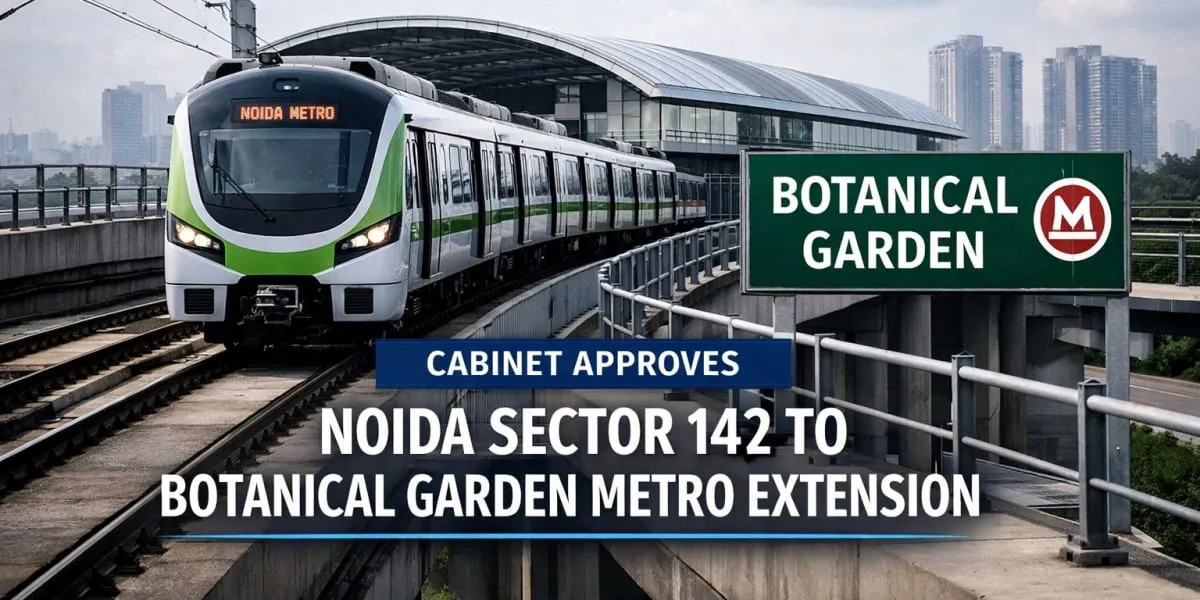
Cabinet Approves Noida Sector 142 To Botanical Garden Metro Extension
RAILWAYS & METRO RAIL

Cabinet Approves Noida Sector 142 To Botanical Garden Metro Extension

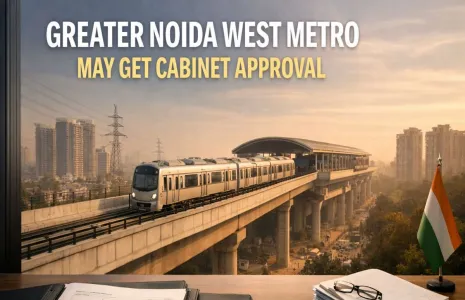
The Union Cabinet chaired by the Prime Minister Narendra Modi has approved an extension corridor of the Noida Metro Rail Project (Noida Metro) from Noida Sector 142 to Botanical Garden in Noida for a length of 11.56 kilometre with eight elevated stations. On operationalisation of the corridor Noida and Greater Noida city will have 61.62 kilometre of active metro rail network. The project was cleared by the cabinet following consideration of planning and connectivity needs.

The Noida Metro extension is presented as a major expansion that will link commercial hubs, multinational company campuses, educational institutions, healthcare facilities and tourist attractions across the city. The new alignment is expected to provide a direct interchange at Botanical Garden with existing metro lines including the Blue Line and the Magenta Line, improving network integration and passenger flows.

By bridging prominent sectors such as the business parks around Sector 142 and retail and leisure destinations in adjacent sectors, the extension is anticipated to ease road congestion and shorten commute times for workers and residents. Improved access to transportation hubs such as Delhi airport and major railway stations is expected to enhance productivity and broaden employment catchment areas without altering existing service patterns.

Environmental benefits are expected from modal shift to metro services as increased rail ridership should reduce emissions relative to fossil fuel road transport and contribute to better urban air quality. The scheme is also framed as likely to stimulate local economic activity by attracting investment near stations and supporting small and medium enterprises that serve commuters and workers.

Social outcomes are presented in terms of more equitable access to public transport and reduced travel disparities across socio economic groups, which should raise quality of life by lowering journey times and improving access to essential services. The project forms part of broader plans to expand sustainable urban mobility in the Noida and Greater Noida region.

The Union Cabinet chaired by the Prime Minister Narendra Modi has approved an extension corridor of the Noida Metro Rail Project (Noida Metro) from Noida Sector 142 to Botanical Garden in Noida for a length of 11.56 kilometre with eight elevated stations. On operationalisation of the corridor Noida and Greater Noida city will have 61.62 kilometre of active metro rail network. The project was cleared by the cabinet following consideration of planning and connectivity needs. The Noida Metro extension is presented as a major expansion that will link commercial hubs, multinational company campuses, educational institutions, healthcare facilities and tourist attractions across the city. The new alignment is expected to provide a direct interchange at Botanical Garden with existing metro lines including the Blue Line and the Magenta Line, improving network integration and passenger flows. By bridging prominent sectors such as the business parks around Sector 142 and retail and leisure destinations in adjacent sectors, the extension is anticipated to ease road congestion and shorten commute times for workers and residents. Improved access to transportation hubs such as Delhi airport and major railway stations is expected to enhance productivity and broaden employment catchment areas without altering existing service patterns. Environmental benefits are expected from modal shift to metro services as increased rail ridership should reduce emissions relative to fossil fuel road transport and contribute to better urban air quality. The scheme is also framed as likely to stimulate local economic activity by attracting investment near stations and supporting small and medium enterprises that serve commuters and workers. Social outcomes are presented in terms of more equitable access to public transport and reduced travel disparities across socio economic groups, which should raise quality of life by lowering journey times and improving access to essential services. The project forms part of broader plans to expand sustainable urban mobility in the Noida and Greater Noida region.

Next Story
Infrastructure Urban

Implementation Status of Jal Jeevan Mission

Since August 2019 the Government has implemented Jal Jeevan Mission to provide assured potable water through household tap connections in rural India. At the start of the mission only 32.3 million (mn) rural households, representing 16.7 per cent, were reported to have tap water connections. States and union territories have reported that 125.8 mn additional rural households have since been provided with tap connections. As a result, of about 193.6 mn rural households roughly 158.2 mn, or 81.71 per cent, are reported to have tap water supply at home.\n\nThe State, district and village level st..

Next Story
Infrastructure Urban

Jal Jeevan Mission Reaches Eighty One Per Cent Rural Coverage

The Government reported substantial progress under the Jal Jeevan Mission, launched in August 2019 to provide tap water to every rural household. At launch only 32.3 million (mn) rural households had tap connections and states and Union territories reported provision of 125.8 mn additional households by March 2026. Consequently, out of about 193.6 mn rural households around 158.2 mn, or 81.71 per cent, are reported to have tap water at home. The Finance Minister announced extension of the mission until 2028 in the 2025-26 budget speech. The Swachh Bharat Mission Grameen, launched in October 20..

Next Story
Infrastructure Urban

Empowering Local Governance for Sustainable Rural Water Supply

The Ministry of Jal Shakti has aligned the Jal Jeevan Mission (JJM) with the 73rd Amendment to strengthen village level planning and community ownership of water supply. Gram Panchayats, village water and sanitation committees and Pani Samitis are to plan, implement, manage and maintain piped water systems, with gram sabha processes formalising handover and oversight. Implementation support agencies including non government organisations, community based organisations and self help groups have been empanelled to train local committees and promote women participation. Under JJM, the department ..

Advertisement

Subscribe to Our Newsletter

Get daily newsletters around different themes from Construction world.

STAY CONNECTED

Advertisement

Advertisement

Advertisement