+
Centre Clears Line 5 Metro Extension To Kalyan And Ulhasnagar
RAILWAYS & METRO RAIL

Centre Clears Line 5 Metro Extension To Kalyan And Ulhasnagar

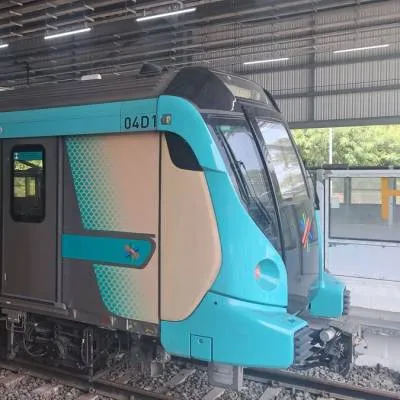
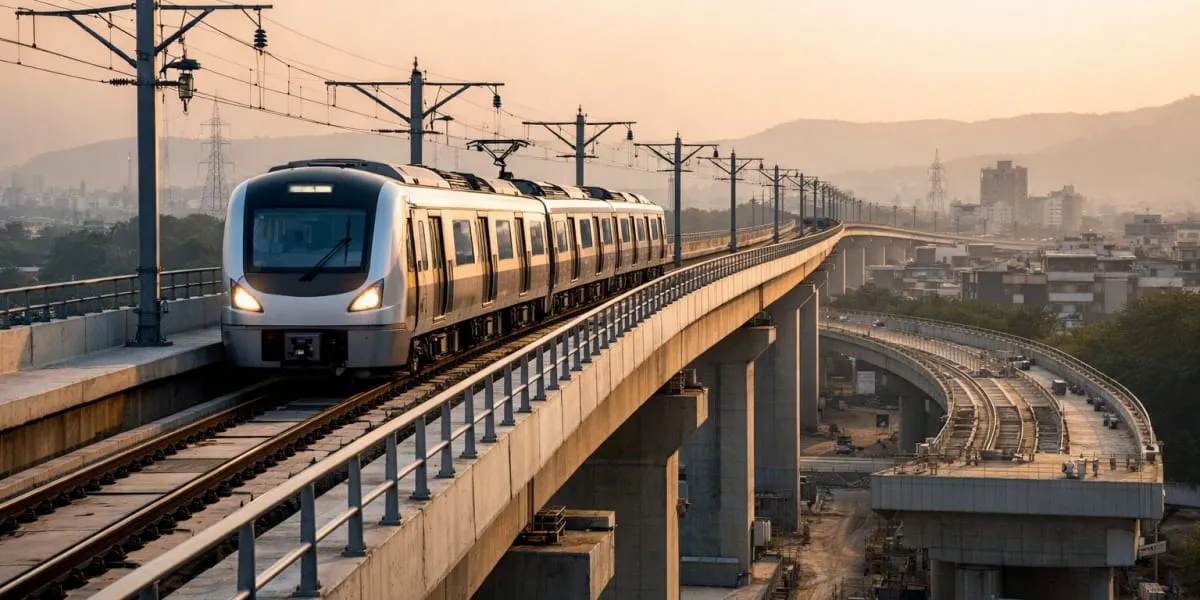
The Centre has cleared Metro Line 5 and its extension Line 5A, paving the way for a new connection to Bhiwandi, Kalyan and Ulhasnagar. Work on the first stretch, phase one between Thane and Bhiwandi, is nearing completion and is scheduled to open in December. The 11.9 km first phase runs from Balkum in Thane to Dhamankar Nagar in Bhiwandi and comprises six elevated stations. The phase was built for Rs 67.41 billion and will provide an interchange with Metro Line 4, which is expected to open part of its Thane stretch in the current financial year.

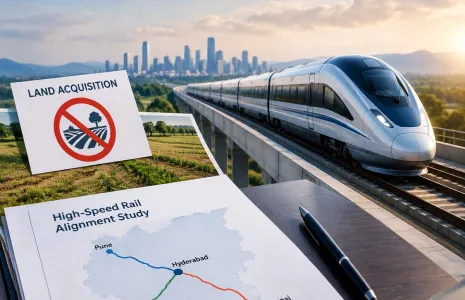
The original Line 5 plan envisaged a 24.9 km Thane–Bhiwandi–Kalyan corridor, but extensive resettlement and rehabilitation requirements together with a conflict with the Bhiwandi Bypass Flyover held up the second phase and prompted the Mumbai Metropolitan Region Development Authority to revise the alignment. Under the revised plan a short section around Bhiwandi will be underground while the corridor is extended through Line 5A towards Kalyan and Ulhasnagar. The redesign aims to address prior obstacles to land acquisition and to better integrate the route with existing infrastructure.

The second phase will run 10.48 km from Bhiwandi to Durgadi in Kalyan and is estimated to cost Rs 73.26 billion. Line 5A will add another 11.83 km at an estimated cost of Rs 40.63 billion, forming a spur towards Kalyan with an interchange for Metro Line 12 towards Navi Mumbai and a main route to Ulhasnagar. Authorities have indicated that construction of the extended network is targeted for 2030–31 and that full completion will take several years, meaning passengers will benefit gradually as sections open in phases.

For Bhiwandi, Kalyan and Ulhasnagar the significance lies in providing an alternative to an already strained transport network and in improving connectivity across the Mumbai Metropolitan Region. Planned stations on the combined route include Kapurbawdi, Balkum, Kasheli, Kalher, Purna, Anjur Phata and Dhamankar Naka, with further stops towards Bhiwandi, Durgadi, Kalyan and Ulhasnagar among others. The cleared alignment and the planned interchanges are expected to reshape commuting patterns as the region prepares for phased openings of the new corridors.

The Centre has cleared Metro Line 5 and its extension Line 5A, paving the way for a new connection to Bhiwandi, Kalyan and Ulhasnagar. Work on the first stretch, phase one between Thane and Bhiwandi, is nearing completion and is scheduled to open in December. The 11.9 km first phase runs from Balkum in Thane to Dhamankar Nagar in Bhiwandi and comprises six elevated stations. The phase was built for Rs 67.41 billion and will provide an interchange with Metro Line 4, which is expected to open part of its Thane stretch in the current financial year. The original Line 5 plan envisaged a 24.9 km Thane–Bhiwandi–Kalyan corridor, but extensive resettlement and rehabilitation requirements together with a conflict with the Bhiwandi Bypass Flyover held up the second phase and prompted the Mumbai Metropolitan Region Development Authority to revise the alignment. Under the revised plan a short section around Bhiwandi will be underground while the corridor is extended through Line 5A towards Kalyan and Ulhasnagar. The redesign aims to address prior obstacles to land acquisition and to better integrate the route with existing infrastructure. The second phase will run 10.48 km from Bhiwandi to Durgadi in Kalyan and is estimated to cost Rs 73.26 billion. Line 5A will add another 11.83 km at an estimated cost of Rs 40.63 billion, forming a spur towards Kalyan with an interchange for Metro Line 12 towards Navi Mumbai and a main route to Ulhasnagar. Authorities have indicated that construction of the extended network is targeted for 2030–31 and that full completion will take several years, meaning passengers will benefit gradually as sections open in phases. For Bhiwandi, Kalyan and Ulhasnagar the significance lies in providing an alternative to an already strained transport network and in improving connectivity across the Mumbai Metropolitan Region. Planned stations on the combined route include Kapurbawdi, Balkum, Kasheli, Kalher, Purna, Anjur Phata and Dhamankar Naka, with further stops towards Bhiwandi, Durgadi, Kalyan and Ulhasnagar among others. The cleared alignment and the planned interchanges are expected to reshape commuting patterns as the region prepares for phased openings of the new corridors.

Related Stories

Gold Stories

Next Story
Infrastructure Energy

Inside a Pumped Storage Project: How It Actually Balances the Grid

What happens when the sun sets just as electricity demand starts to rise? Solar generation falls, but homes, factories and businesses still need power. Pumped storage power plants help bridge this gap by storing surplus electricity as gravitational potential energy in elevated water and releasing it when demand increases. As India adds more solar and wind capacity, this ability to shift electricity across hours is becoming increasingly important for grid flexibility.What is a Pumped Storage Power Plant?A pumped storage power plant (PSP) is a long-duration energy storage facility with two reser..

Next Story
Technology

LTTS launches FARM to accelerate deep-tech startups

L&T Technology Services (LTTS) has launched LTTS FARM, a startup engagement platform aimed at accelerating the commercialisation of deep-tech innovations through Engineering Intelligence-led collaboration, co-innovation and market access.Built on the theme of “Collaboration First, Commercialisation Next”, the platform targets startups with Technology Readiness Level (TRL) 4+ solutions that have demonstrated technical feasibility and are ready for industry adoption. LTTS FARM will support startups aligned with LTTS’ key technology focus areas, including Software Defined Mobility, Plan..

Next Story
Infrastructure Energy

REC Wins Top Honour for Hindi Policy Implementation

EC Limited has received the First Prize for outstanding implementation of the Official Language Policy for 2025-26 at the meeting of the Hindi Salahkar Samiti of the Ministry of Power, Government of India.The award was presented to REC by Shri Manohar Lal, Union Minister of Power and Housing and Urban Affairs. Shri Shripad Yesso Naik, Minister of State for Power and New and Renewable Energy; Shri Dinesh Sharma, Rajya Sabha MP; Shri Suresh Kumar Kashyap, Lok Sabha MP; and Shri Pankaj Agrawal, Secretary, Ministry of Power, were also present. Shri Jitendra Shrivastava, IAS, CMD, REC, received the..

Advertisement

Subscribe to Our Newsletter

Get daily newsletters around different themes from Construction world.

STAY CONNECTED

Advertisement

SPECIAL OFFER
QR Code