CMRS Inspects Phase II Trains Ahead of Chennai Metro Launch
RAILWAYS & METRO RAIL

CMRS Inspects Phase II Trains Ahead of Chennai Metro Launch

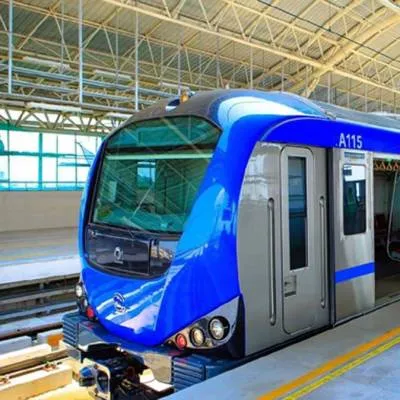
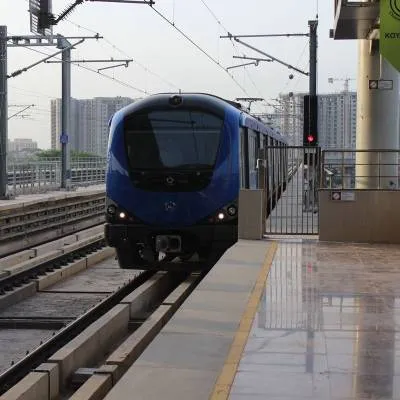
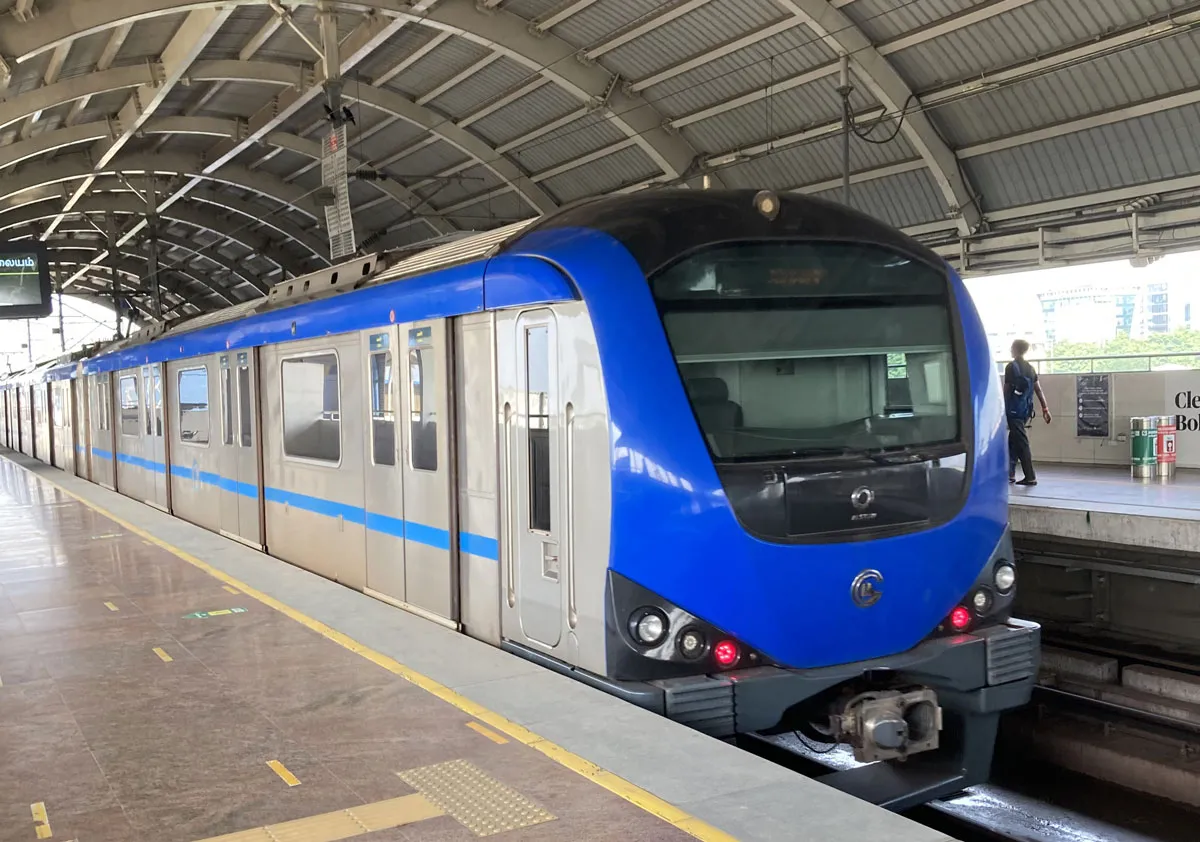
The Commissioner of Metro Railway Safety (CMRS) has completed the first round of inspection of trains for Chennai Metro Rail’s Phase II network, clearing a key step towards the launch of services on the Poonamallee Bypass–Vadapalani stretch. In a slight change from the earlier plan, Chennai Metro Rail Limited (CMRL) is now set to commence operations on the 15.8-km corridor in February.

Originally, CMRL had planned to begin services between Poonamallee Bypass and Porur Junction by the end of January and extend them to Vadapalani a month later. However, officials decided to start services directly up to Vadapalani to ensure early connectivity with the Phase I network, benefiting commuters from the outset.

According to officials, the initial CMRS inspection of the trains was completed a few days ago, while the final inspection, covering station facilities and passenger amenities, is likely to be conducted in the last week of January. As a precursor, trial runs are scheduled to be extended up to Vadapalani on January 9. “If rain does not disrupt the work and trials, we are planning to commence services from next Friday,” a CMRL official said.

Between Poonamallee Bypass and Vadapalani, a total of 987 pillars have been constructed, including the double-decker stretch between Alwarthirunagar and Alapakkam. However, around 2 km of track still needs to be laid between Porur Junction and Vadapalani, along with the installation of overhead equipment masts. CMRL has mobilised around 600 workers to complete this challenging task within a tight timeline.

Initially, entry and exit at the Vadapalani Phase II station may not be operational, and commuters are expected to use the Phase I station via the upcoming skywalk. While stations between Poonamallee Bypass and Porur Junction will be ready, those between Alapakkam and Saligramam are likely to open only by June. Trains will halt at 10 stations up to Porur Junction and then stop directly at Vadapalani after Alapakkam. 

News source: The Hindu


The Commissioner of Metro Railway Safety (CMRS) has completed the first round of inspection of trains for Chennai Metro Rail’s Phase II network, clearing a key step towards the launch of services on the Poonamallee Bypass–Vadapalani stretch. In a slight change from the earlier plan, Chennai Metro Rail Limited (CMRL) is now set to commence operations on the 15.8-km corridor in February.Originally, CMRL had planned to begin services between Poonamallee Bypass and Porur Junction by the end of January and extend them to Vadapalani a month later. However, officials decided to start services directly up to Vadapalani to ensure early connectivity with the Phase I network, benefiting commuters from the outset.According to officials, the initial CMRS inspection of the trains was completed a few days ago, while the final inspection, covering station facilities and passenger amenities, is likely to be conducted in the last week of January. As a precursor, trial runs are scheduled to be extended up to Vadapalani on January 9. “If rain does not disrupt the work and trials, we are planning to commence services from next Friday,” a CMRL official said.Between Poonamallee Bypass and Vadapalani, a total of 987 pillars have been constructed, including the double-decker stretch between Alwarthirunagar and Alapakkam. However, around 2 km of track still needs to be laid between Porur Junction and Vadapalani, along with the installation of overhead equipment masts. CMRL has mobilised around 600 workers to complete this challenging task within a tight timeline.Initially, entry and exit at the Vadapalani Phase II station may not be operational, and commuters are expected to use the Phase I station via the upcoming skywalk. While stations between Poonamallee Bypass and Porur Junction will be ready, those between Alapakkam and Saligramam are likely to open only by June. Trains will halt at 10 stations up to Porur Junction and then stop directly at Vadapalani after Alapakkam. News source: The Hindu

Next Story
Infrastructure Urban

Rosatom Delivers Nuclear Fuel for Kudankulam Unit 3

Rosatom has recently supplied nuclear fuel for the initial loading of the VVER-1000 reactor core at Unit 3 of the Kudankulam Nuclear Power Plant, marking a key milestone in the second stage of the Russian-designed nuclear power project in southern India.The fuel was supplied by Rosatom’s Nuclear Fuel Division, managed by TVEL, and manufactured at the Novosibirsk Chemical Concentrates Plant. The delivery includes the initial reactor load along with reserve fuel assemblies and is part of a long-term contract covering the entire operational life of Units 3 and 4.Building on operational experien..

Next Story
Infrastructure Transport

CBL International Enables First LNG Bunkering at Xiaomo Port

CBL International recently completed the first-ever LNG bunkering operation at Xiaomo Port, supplying liquefied natural gas to vessels operated by BYD in support of its maritime decarbonisation strategy. The operation was facilitated through a physical supplier in collaboration with China National Offshore Oil Corporation (CNOOC), which supported the port’s inaugural LNG bunkering activity. The milestone represents a strategic expansion of CBL International's sustainable fuel offerings beyond biofuels, while also diversifying revenue streams. As global shipping intensifies efforts to cut em..

Next Story
Infrastructure Urban

Aimtron, Aurassure Partner for IoT Weather Systems

Aimtron Electronics has recently entered into an OEM manufacturing engagement with Aurassure to produce new-age, IoT-enabled weather and environmental monitoring systems in India. The collaboration supports the growing demand for real-time environmental intelligence across urban, industrial and infrastructure applications. The engagement comes as global focus on climate-risk management and data-driven planning accelerates. The global weather monitoring systems market, valued at around USD 2.1 billion in 2024, is projected to reach nearly USD 4.8 billion by 2034, driven by the rapid adoption o..

Advertisement

Subscribe to Our Newsletter

Get daily newsletters around different themes from Construction world.

STAY CONNECTED

Advertisement

Advertisement

Advertisement

Advertisement

Open In App