+
Concord Control Systems Secures Kavach 4.0 Contract
RAILWAYS & METRO RAIL

Concord Control Systems Secures Kavach 4.0 Contract

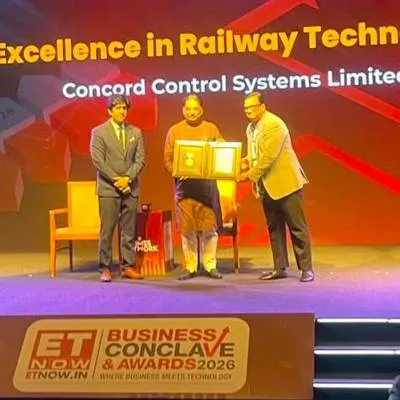
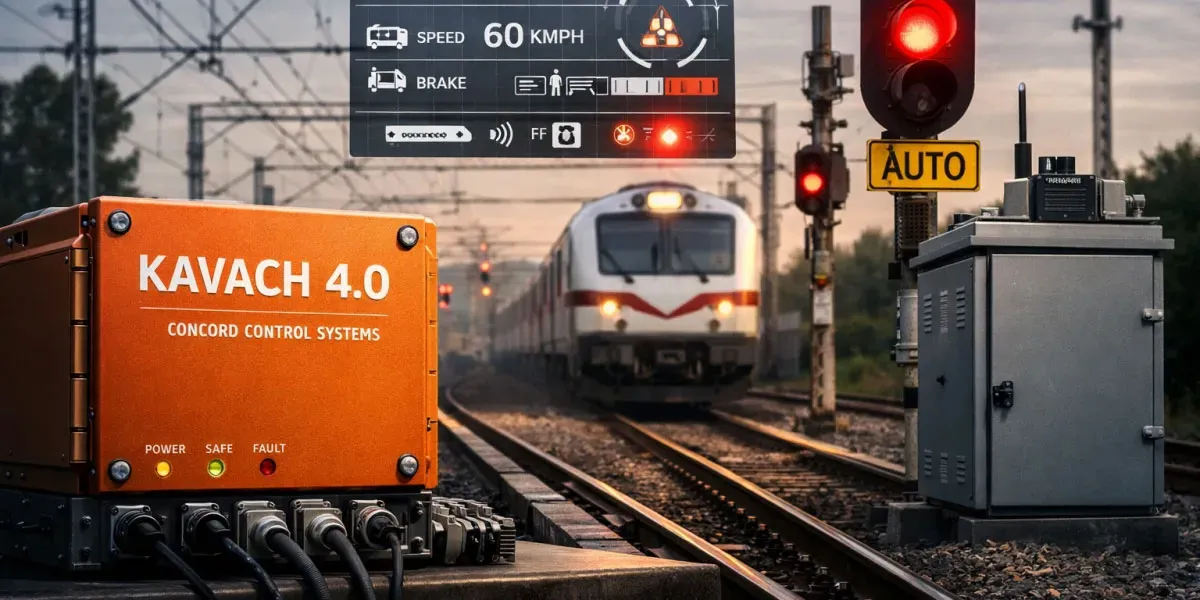
Concord Control Systems (Concord) has secured a contract to supply the Kavach 4.0 automatic train protection system to Indian Railways (IR). The award is presented as part of wider efforts to enhance safety and modernise signalling across the network. The company indicated that the project will cover supply, integration and testing of on-board and wayside equipment.

Kavach 4.0 is described as incorporating advanced sensors and fail-safe interlocking to reduce collision risk and improve operational reliability. The technology is expected to support higher train densities while maintaining safety standards. Project engineers will focus on interoperability with existing signalling infrastructure and on minimising disruption during installation.

The contract requires close coordination with railway authorities and local suppliers to adapt the system for diverse operating conditions. Trials will be staged progressively to validate performance under revenue service scenarios. The company plans to train maintenance teams and provide technical support during the commissioning phase. Vendors and contractors will be engaged under standard procurement terms to ensure compliance with regulatory requirements.

Concord described the award as a milestone for its efforts to scale up safety solutions for mass transit and mainline services. Company representatives indicated that successful delivery could open further opportunities for modernisation across the rail sector. The initiative is aligned with national priorities to enhance passenger safety and system efficiency while supporting broader digital signalling adoption.

Stakeholders emphasised the importance of rigorous testing and phased roll-out to preserve service continuity and to gather operational data for optimisation. The vendor will work with infrastructure managers to schedule installations and to deliver training modules for front-line staff and maintenance crews. Observers noted that such programmes typically involve iterative refinements as live feedback informs software updates and operational procedures. The company anticipates delivering initial units within the coming months subject to regulatory clearance and ongoing coordination.

Concord Control Systems (Concord) has secured a contract to supply the Kavach 4.0 automatic train protection system to Indian Railways (IR). The award is presented as part of wider efforts to enhance safety and modernise signalling across the network. The company indicated that the project will cover supply, integration and testing of on-board and wayside equipment. Kavach 4.0 is described as incorporating advanced sensors and fail-safe interlocking to reduce collision risk and improve operational reliability. The technology is expected to support higher train densities while maintaining safety standards. Project engineers will focus on interoperability with existing signalling infrastructure and on minimising disruption during installation. The contract requires close coordination with railway authorities and local suppliers to adapt the system for diverse operating conditions. Trials will be staged progressively to validate performance under revenue service scenarios. The company plans to train maintenance teams and provide technical support during the commissioning phase. Vendors and contractors will be engaged under standard procurement terms to ensure compliance with regulatory requirements. Concord described the award as a milestone for its efforts to scale up safety solutions for mass transit and mainline services. Company representatives indicated that successful delivery could open further opportunities for modernisation across the rail sector. The initiative is aligned with national priorities to enhance passenger safety and system efficiency while supporting broader digital signalling adoption. Stakeholders emphasised the importance of rigorous testing and phased roll-out to preserve service continuity and to gather operational data for optimisation. The vendor will work with infrastructure managers to schedule installations and to deliver training modules for front-line staff and maintenance crews. Observers noted that such programmes typically involve iterative refinements as live feedback informs software updates and operational procedures. The company anticipates delivering initial units within the coming months subject to regulatory clearance and ongoing coordination.

Next Story
Infrastructure Urban

Implementation Status of Jal Jeevan Mission

Since August 2019 the Government has implemented Jal Jeevan Mission to provide assured potable water through household tap connections in rural India. At the start of the mission only 32.3 million (mn) rural households, representing 16.7 per cent, were reported to have tap water connections. States and union territories have reported that 125.8 mn additional rural households have since been provided with tap connections. As a result, of about 193.6 mn rural households roughly 158.2 mn, or 81.71 per cent, are reported to have tap water supply at home.\n\nThe State, district and village level st..

Next Story
Infrastructure Urban

Jal Jeevan Mission Reaches Eighty One Per Cent Rural Coverage

The Government reported substantial progress under the Jal Jeevan Mission, launched in August 2019 to provide tap water to every rural household. At launch only 32.3 million (mn) rural households had tap connections and states and Union territories reported provision of 125.8 mn additional households by March 2026. Consequently, out of about 193.6 mn rural households around 158.2 mn, or 81.71 per cent, are reported to have tap water at home. The Finance Minister announced extension of the mission until 2028 in the 2025-26 budget speech. The Swachh Bharat Mission Grameen, launched in October 20..

Next Story
Infrastructure Urban

Empowering Local Governance for Sustainable Rural Water Supply

The Ministry of Jal Shakti has aligned the Jal Jeevan Mission (JJM) with the 73rd Amendment to strengthen village level planning and community ownership of water supply. Gram Panchayats, village water and sanitation committees and Pani Samitis are to plan, implement, manage and maintain piped water systems, with gram sabha processes formalising handover and oversight. Implementation support agencies including non government organisations, community based organisations and self help groups have been empanelled to train local committees and promote women participation. Under JJM, the department ..

Advertisement

Subscribe to Our Newsletter

Get daily newsletters around different themes from Construction world.

STAY CONNECTED

Advertisement

Advertisement

Advertisement