+
Ernakulam Junction Set For Major Capacity Upgrade By 2030
RAILWAYS & METRO RAIL

Ernakulam Junction Set For Major Capacity Upgrade By 2030

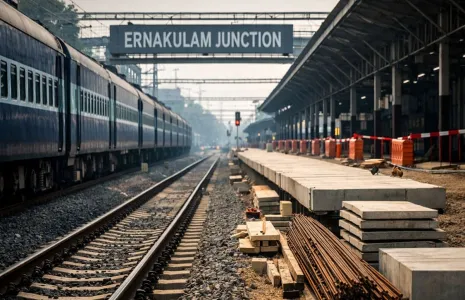
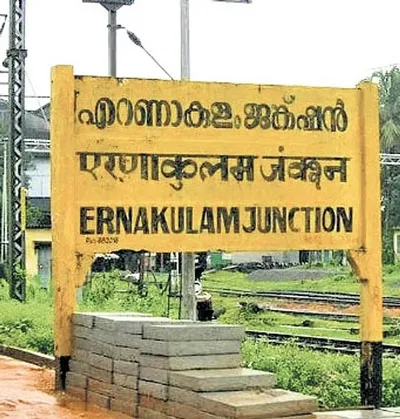
Indian Railways is set to significantly upgrade Ernakulam Junction as part of a national initiative to double train capacity in major cities by 2030. The proposal, outlined in a report on station redevelopment, new terminals and multi-tracking projects, places Ernakulam alongside Chennai and Coimbatore as the only three locations selected in the Southern Railway zone.

Once implemented, the initiative is expected to substantially raise Ernakulam’s originating and handling capacity, reinforcing its position as one of Kerala’s busiest railway terminals. The station currently operates between 37 and over 60 originating services, including express and superfast trains, and ranks just behind Thiruvananthapuram Central in revenue generation. Passenger representatives said the upgrade could eventually see Ernakulam emerge as the state’s leading originating hub.

Passengers’ associations across Kerala have welcomed the move, citing Ernakulam’s strategic advantage for expansion due to the availability of railway land. They pointed to the 110-acre marshalling yard between Ponnurunni and Kathrikadavu as a key asset that reduces land acquisition challenges and supports the case for developing a new coaching terminal.

According to the planning document, the works are aimed at doubling originating capacity by 2030 while improving both suburban and long-distance connectivity. Automation of signalling on the Ernakulam–Thrissur–Shoranur stretch is already under way, and a detailed project report for proposed third and fourth lines on the corridor is being prepared. Passenger groups said these developments underline Ernakulam’s growing role as a major coaching hub, though they cautioned that supporting stations must also be strengthened.

Associations highlighted the need for a third platform at Tripunithura and capacity enhancements at Ernakulam Town to fully realise the benefits of the junction’s expansion.

While passenger bodies in central and south Kerala have broadly welcomed the proposal, representatives from the northern region expressed concern that long-standing demands there remain unaddressed. They noted the absence of originating stations in North Kerala, with most services starting from Mangaluru, and warned that this imbalance could persist unless future plans adopt a more regionally inclusive approach.

Passenger groups said the project offers a crucial opportunity to enhance regional access while positioning Ernakulam as a key node in Indian Railways’ long-term capacity expansion strategy.

Indian Railways is set to significantly upgrade Ernakulam Junction as part of a national initiative to double train capacity in major cities by 2030. The proposal, outlined in a report on station redevelopment, new terminals and multi-tracking projects, places Ernakulam alongside Chennai and Coimbatore as the only three locations selected in the Southern Railway zone. Once implemented, the initiative is expected to substantially raise Ernakulam’s originating and handling capacity, reinforcing its position as one of Kerala’s busiest railway terminals. The station currently operates between 37 and over 60 originating services, including express and superfast trains, and ranks just behind Thiruvananthapuram Central in revenue generation. Passenger representatives said the upgrade could eventually see Ernakulam emerge as the state’s leading originating hub. Passengers’ associations across Kerala have welcomed the move, citing Ernakulam’s strategic advantage for expansion due to the availability of railway land. They pointed to the 110-acre marshalling yard between Ponnurunni and Kathrikadavu as a key asset that reduces land acquisition challenges and supports the case for developing a new coaching terminal. According to the planning document, the works are aimed at doubling originating capacity by 2030 while improving both suburban and long-distance connectivity. Automation of signalling on the Ernakulam–Thrissur–Shoranur stretch is already under way, and a detailed project report for proposed third and fourth lines on the corridor is being prepared. Passenger groups said these developments underline Ernakulam’s growing role as a major coaching hub, though they cautioned that supporting stations must also be strengthened. Associations highlighted the need for a third platform at Tripunithura and capacity enhancements at Ernakulam Town to fully realise the benefits of the junction’s expansion. While passenger bodies in central and south Kerala have broadly welcomed the proposal, representatives from the northern region expressed concern that long-standing demands there remain unaddressed. They noted the absence of originating stations in North Kerala, with most services starting from Mangaluru, and warned that this imbalance could persist unless future plans adopt a more regionally inclusive approach. Passenger groups said the project offers a crucial opportunity to enhance regional access while positioning Ernakulam as a key node in Indian Railways’ long-term capacity expansion strategy.

Next Story
Infrastructure Transport

Second Mountain Tunnel Breakthrough in Palghar Advances High Speed Rail

The Mumbai-Ahmedabad high speed rail (MAHSR) project reached a milestone with the breakthrough of a mountain tunnel in Palghar, Maharashtra. Mountain tunnel MT-six measures 454 metres long and 14.4 metres wide and will accommodate up and down tracks. The breakthrough follows MT-five near Saphale on second January 2026 and the MT-six excavation was completed from both ends using the New Austrian Tunnelling Method. The ministry reported that the tunnelling was completed within 12 months. The New Austrian Tunnelling Method is favoured for its flexibility in complex geology and irregular tunnel s..

Next Story
Infrastructure Transport

Modi Government Pushes Atmanirbhar Container Drive With BCSL MoU

The Union Government advanced a plan to create an integrated, domestically anchored container ecosystem with the signing of a Memorandum of Understanding to establish the Bharat Container Shipping Line (BCSL). The MoU was signed by key agencies including the Shipping Corporation of India and Container Corporation of India alongside major port authorities and Sagarmala Finance Corporation Limited under the Ministry of Ports, Shipping and Waterways, in the presence of senior ministers. The initiative aligns with the Container Manufacturing Assistance Scheme announced in the Union Budget 2026–2..

Next Story
Infrastructure Urban

Ministry Reports Gains In Mobility For Marginalised Communities

The Ministry of Social Justice and Empowerment is implementing skill development, education and rehabilitation schemes to promote socio-economic mobility and sustainable livelihoods for marginalised and disadvantaged communities across the country. Programmes target Scheduled Castes, Other Backward Classes, Economically Weaker Sections, De-notified Tribes and Safai Karamcharis through specialised implementing corporations and empanelled training institutes. Pradhan Mantri Dakshata Aur Kushalta Sampann Hitgrahi Yojana, or PM-DAKSH, provided skill training and placement support through the Nati..

Advertisement

Subscribe to Our Newsletter

Get daily newsletters around different themes from Construction world.

STAY CONNECTED

Advertisement

Advertisement

Advertisement

Open In App