First Phase of Mumbai-Ahmedabad Bullet Train to Open Next Year
RAILWAYS & METRO RAIL

First Phase of Mumbai-Ahmedabad Bullet Train to Open Next Year

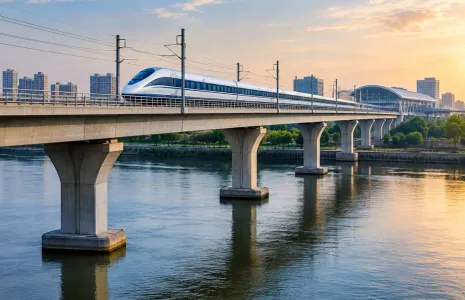
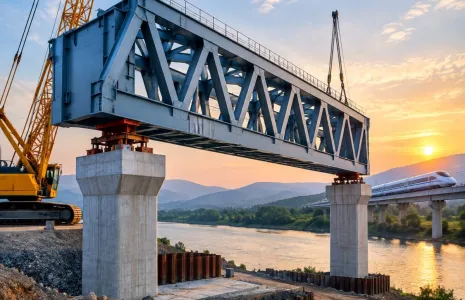
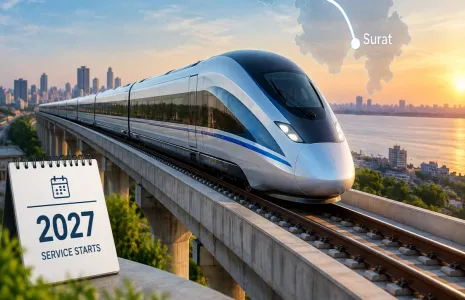
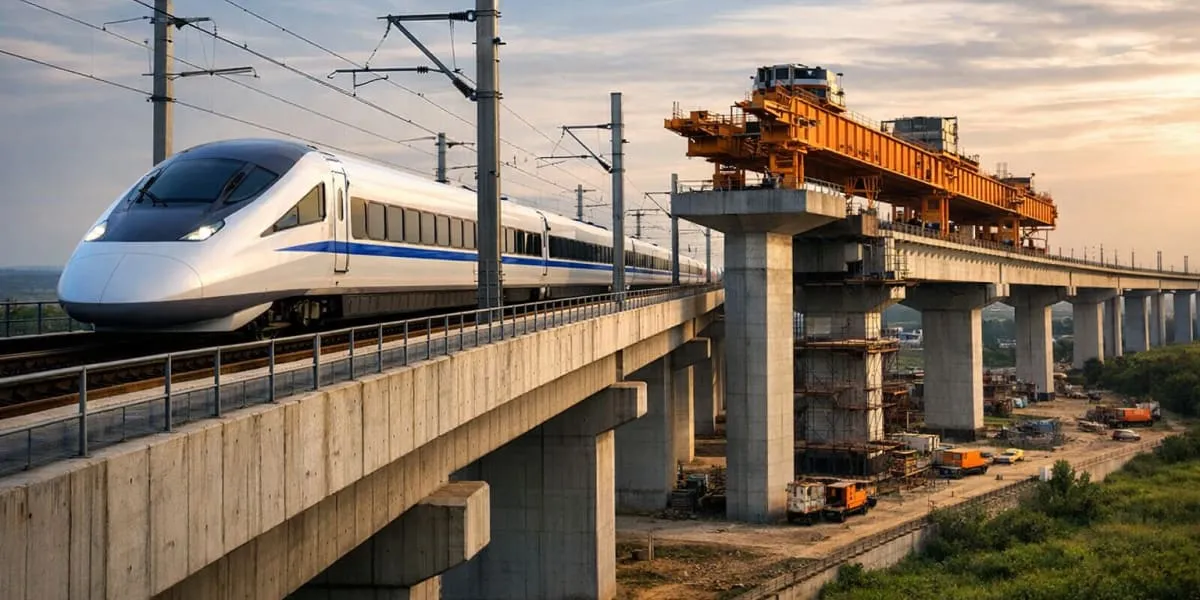
Union Railway Minister Ashwini Vaishnaw said the Surat to Bilimora section of the Mumbai-Ahmedabad high-speed corridor will become operational in 2027 as construction on the country's first bullet train corridor continues at pace. He noted that the project between Mumbai and Ahmedabad is progressing rapidly and that the first section will open next year. The corridor will be brought into service in phases, beginning with the Surat-Bilimora stretch and followed by sequential openings from Vapi to Surat, Vapi to Ahmedabad, Ahmedabad to Thane and Ahmedabad to Mumbai.

Vaishnaw provided an update on ongoing redevelopment works at railway stations, stating that 261 stations have been completed to date at an unprecedented pace. He described the Secunderabad station as being redeveloped in a fundamentally new form while maintaining regular train operations, a task that requires work to proceed without stopping traffic. The redevelopment involves construction of an air concourse that will serve as a roof over all platforms while trains continue to run, with an emphasis on safety and quality.

He said the high-speed corridors announced for the region will integrate regional economies and reshape urban landscapes, with Hyderabad positioned as a high-speed hub. Prime Minister Narendra Modi has approved three high-speed corridors linked to Hyderabad - from Pune to Hyderabad, Hyderabad to Chennai and Hyderabad to Bengaluru - which the Minister said will drive development across the region. The corridors are expected to bring significant economic integration and urban transformation.

On the technology and manufacturing front, Vaishnaw said more than one hundred electronics manufacturing companies have been promoted under central programmes and that Telangana has been a major beneficiary. He added that the central government has allocated a Rs 54 billion (Rs 54 bn) railways budget for Telangana, which is contributing to substantial change. The Minister indicated that these investments, combined with high-speed connectivity, will accelerate growth and development across connected states.

Union Railway Minister Ashwini Vaishnaw said the Surat to Bilimora section of the Mumbai-Ahmedabad high-speed corridor will become operational in 2027 as construction on the country's first bullet train corridor continues at pace. He noted that the project between Mumbai and Ahmedabad is progressing rapidly and that the first section will open next year. The corridor will be brought into service in phases, beginning with the Surat-Bilimora stretch and followed by sequential openings from Vapi to Surat, Vapi to Ahmedabad, Ahmedabad to Thane and Ahmedabad to Mumbai. Vaishnaw provided an update on ongoing redevelopment works at railway stations, stating that 261 stations have been completed to date at an unprecedented pace. He described the Secunderabad station as being redeveloped in a fundamentally new form while maintaining regular train operations, a task that requires work to proceed without stopping traffic. The redevelopment involves construction of an air concourse that will serve as a roof over all platforms while trains continue to run, with an emphasis on safety and quality. He said the high-speed corridors announced for the region will integrate regional economies and reshape urban landscapes, with Hyderabad positioned as a high-speed hub. Prime Minister Narendra Modi has approved three high-speed corridors linked to Hyderabad - from Pune to Hyderabad, Hyderabad to Chennai and Hyderabad to Bengaluru - which the Minister said will drive development across the region. The corridors are expected to bring significant economic integration and urban transformation. On the technology and manufacturing front, Vaishnaw said more than one hundred electronics manufacturing companies have been promoted under central programmes and that Telangana has been a major beneficiary. He added that the central government has allocated a Rs 54 billion (Rs 54 bn) railways budget for Telangana, which is contributing to substantial change. The Minister indicated that these investments, combined with high-speed connectivity, will accelerate growth and development across connected states.

Related Stories

Gold Stories

Next Story
Infrastructure Urban

KONE Opens India's First Digital Experience Centre in Pune

KONE, a global elevator and escalator manufacturer, has inaugurated its first Digital Experience Centre (DEC) in India, located in Pune. The facility aims to showcase how artificial intelligence (AI), connectivity and data-driven technologies can enhance customer experiences and improve building operations.The centre was inaugurated by Jussi Herlin, Executive Vice Chair, KONE Corporation; Philippe Delorme, President and CEO, KONE; and Nandan Nilekani, Co-founder and Chairman of the Board, Infosys.Designed as an interactive customer environment, the facility demonstrates digital solutions cover..

Next Story
Infrastructure Urban

CII GreenCo Launches Circularity Guidelines for Indian Industry

The Confederation of Indian Industry (CII) GreenCo Council has launched the CII GreenCo Circularity Guidelines – Pilot Version at the 17th CII GreenCo Waste & Resource Management Summit 2026 in Chennai. The initiative aims to strengthen resource efficiency, waste reduction and circular economy practices across Indian manufacturing and process industries.The guidelines introduce a structured framework with circularity indices covering raw materials, consumables, packaging and other resource inputs. These indicators will help industries assess existing practices, identify opportunities to ..

Next Story
Infrastructure Energy

Global Electronics Association Launches IPC-1783-CO2E Standard

The Global Electronics Association has introduced IPC-1783-CO2E, a new international standard aimed at improving consistency, transparency and comparability in product carbon footprint reporting across the electronics manufacturing industry.The standard, titled International Standard for Data Collection and Reporting of CO2 Equivalent (CO2e) Emissions for the Electronics Manufacturing Supply Chain, provides industry-specific guidance for collecting, estimating and reporting carbon emissions data.With increasing regulatory requirements and customer expectations, electronics manufacturers face c..

Advertisement

Subscribe to Our Newsletter

Get daily newsletters around different themes from Construction world.

STAY CONNECTED

Advertisement

SPECIAL OFFER
QR Code