Hyderabad High-Speed Rail Surveys Advance for Two Corridors
RAILWAYS & METRO RAIL

Hyderabad High-Speed Rail Surveys Advance for Two Corridors

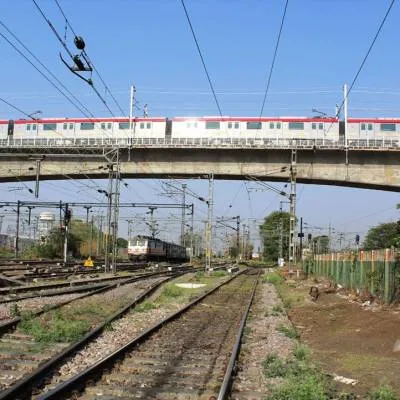
South Central Railway (SCR) has begun final locational surveys for two high?speed corridors linking Hyderabad with Bengaluru and Chennai, covering 626 km and 705 km respectively. The surveys are being carried out by Rail India Technical and Economic Service (RITES) and address route alignments, land requirements and engineering constraints. National High Speed Rail Corporation Limited (NHSRCL) conducted an independent survey for the Hyderabad–Mumbai corridor about a year ago.

A senior official said the Railway Minister indicated that high?speed connectivity would first be established between Mumbai and Pune and subsequently between Pune and Hyderabad, effectively creating a direct high?speed link between Hyderabad and Mumbai. Finer details and timelines are expected to emerge as surveys conclude and inter?agency coordination progresses.

Planned trains are to operate at a maximum speed of 350 kmph with an operational speed of 320 kmph and will use standard?gauge tracks similar to metro systems. Most technology and systems are expected to mirror those used in the ongoing Ahmedabad–Mumbai bullet train project, including signalling and track design. Surveys emphasise achieving design speeds while minimising land acquisition and urban disruption.

Projected travel times aim to reduce journey duration between Hyderabad and Bengaluru to around one hour fifty?five minutes and between Hyderabad and Chennai to about two and a half hours. These reductions are central to planning studies that assess economic benefits, passenger demand projections and integration with existing rail networks. Three of the seven high?speed corridors announced in the Union Budget 2026-27 are intended to link Hyderabad with other major cities.

Progress on the locational surveys will inform detailed project reports, environmental clearances and funding decisions, and will determine phasing and construction schedules. Coordination between South Central Railway and National High Speed Rail Corporation Limited will be critical to align route planning and technical standards, while RITES will complete field surveys and produce alignment recommendations. Officials expect further announcements as surveys conclude and statutory clearances are sought.

South Central Railway (SCR) has begun final locational surveys for two high?speed corridors linking Hyderabad with Bengaluru and Chennai, covering 626 km and 705 km respectively. The surveys are being carried out by Rail India Technical and Economic Service (RITES) and address route alignments, land requirements and engineering constraints. National High Speed Rail Corporation Limited (NHSRCL) conducted an independent survey for the Hyderabad–Mumbai corridor about a year ago. A senior official said the Railway Minister indicated that high?speed connectivity would first be established between Mumbai and Pune and subsequently between Pune and Hyderabad, effectively creating a direct high?speed link between Hyderabad and Mumbai. Finer details and timelines are expected to emerge as surveys conclude and inter?agency coordination progresses. Planned trains are to operate at a maximum speed of 350 kmph with an operational speed of 320 kmph and will use standard?gauge tracks similar to metro systems. Most technology and systems are expected to mirror those used in the ongoing Ahmedabad–Mumbai bullet train project, including signalling and track design. Surveys emphasise achieving design speeds while minimising land acquisition and urban disruption. Projected travel times aim to reduce journey duration between Hyderabad and Bengaluru to around one hour fifty?five minutes and between Hyderabad and Chennai to about two and a half hours. These reductions are central to planning studies that assess economic benefits, passenger demand projections and integration with existing rail networks. Three of the seven high?speed corridors announced in the Union Budget 2026-27 are intended to link Hyderabad with other major cities. Progress on the locational surveys will inform detailed project reports, environmental clearances and funding decisions, and will determine phasing and construction schedules. Coordination between South Central Railway and National High Speed Rail Corporation Limited will be critical to align route planning and technical standards, while RITES will complete field surveys and produce alignment recommendations. Officials expect further announcements as surveys conclude and statutory clearances are sought.

Related Stories

Gold Stories

Next Story
Infrastructure Urban

KONE Opens India's First Digital Experience Centre in Pune

KONE, a global elevator and escalator manufacturer, has inaugurated its first Digital Experience Centre (DEC) in India, located in Pune. The facility aims to showcase how artificial intelligence (AI), connectivity and data-driven technologies can enhance customer experiences and improve building operations.The centre was inaugurated by Jussi Herlin, Executive Vice Chair, KONE Corporation; Philippe Delorme, President and CEO, KONE; and Nandan Nilekani, Co-founder and Chairman of the Board, Infosys.Designed as an interactive customer environment, the facility demonstrates digital solutions cover..

Next Story
Infrastructure Urban

CII GreenCo Launches Circularity Guidelines for Indian Industry

The Confederation of Indian Industry (CII) GreenCo Council has launched the CII GreenCo Circularity Guidelines – Pilot Version at the 17th CII GreenCo Waste & Resource Management Summit 2026 in Chennai. The initiative aims to strengthen resource efficiency, waste reduction and circular economy practices across Indian manufacturing and process industries.The guidelines introduce a structured framework with circularity indices covering raw materials, consumables, packaging and other resource inputs. These indicators will help industries assess existing practices, identify opportunities to ..

Next Story
Infrastructure Energy

Global Electronics Association Launches IPC-1783-CO2E Standard

The Global Electronics Association has introduced IPC-1783-CO2E, a new international standard aimed at improving consistency, transparency and comparability in product carbon footprint reporting across the electronics manufacturing industry.The standard, titled International Standard for Data Collection and Reporting of CO2 Equivalent (CO2e) Emissions for the Electronics Manufacturing Supply Chain, provides industry-specific guidance for collecting, estimating and reporting carbon emissions data.With increasing regulatory requirements and customer expectations, electronics manufacturers face c..

Advertisement

Subscribe to Our Newsletter

Get daily newsletters around different themes from Construction world.

STAY CONNECTED

Advertisement

SPECIAL OFFER
QR Code