+
Indian Railways Approves Major Infrastructure Projects Nationwide
RAILWAYS & METRO RAIL

Indian Railways Approves Major Infrastructure Projects Nationwide

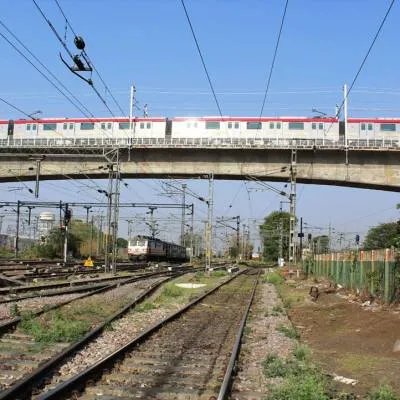
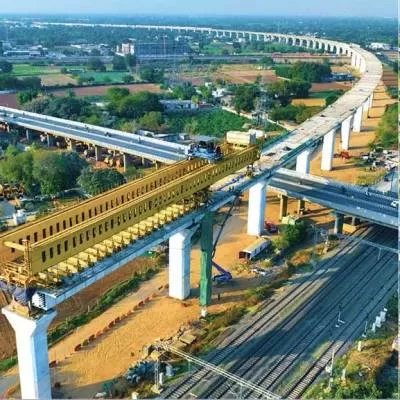
Indian Railways has approved a set of major infrastructure projects across Southern Railway, Northern Railway and South Eastern Railway to eliminate congestion, enhance line capacity, improve safety systems and enable faster, more reliable passenger and freight movement. The approvals cover line doubling, third and fourth lines, bypass corridors and the installation of advanced electronic interlocking systems to increase operational resilience on high density routes.

Key projects include the Barbenda-Damrughutu doubling and the Damrughutu-Bokaro Steel City third and fourth line project in Jharkhand as part of the Energy, Mineral and Cement Corridor. The route is operating at 108 per cent utilisation with train detention between 90 and 150 minutes, handling 78 trains daily, including 38 passenger and 40 freight services and supporting a freight throughput of 35.22 million tonnes per annum (mn t per annum). Without augmentation utilisation was projected to rise to 132 per cent by 2028-29.

To improve signalling and safeguard operations Electronic Interlocking has been approved at 34 stations on Northern Railway where the Kavach protection system is being rolled out, including 21 stations in the Delhi Division at a cost of Rs 2,922.4 mn and 13 stations in the Ambala Division at a cost of Rs 1,291.7 mn. The Rajpura Bypass will provide direct connectivity between the New Shambhu Dedicated Freight Corridor station and Kauli on the Rajpura Bathinda line, allowing freight trains to bypass Rajpura Yard and streamlining flow.

Removal of the single line constraint on the Ernakulam Turavur Kayankulam route will enable nine additional passenger trains per day in each direction, add 2.88 mn t per annum of freight capacity and generate Rs 32.3 mn in annual earnings. The Palakkad bypass will eliminate engine reversal and cut passenger detention by 40 to 44 minutes and freight detention by up to 120 minutes. Doubling Irugur Podanur will permit 15 additional passenger trains per day, increase freight capacity by 3.12 mn t per annum and raise annual net earnings by Rs 117.7 mn while supporting the transformation of the Chennai Coimbatore Podanur belt into a high capacity four line corridor. With timely cooperation from State Governments the projects are expected to deliver faster journeys, higher freight efficiency, improved safety and sustained economic growth.

Indian Railways has approved a set of major infrastructure projects across Southern Railway, Northern Railway and South Eastern Railway to eliminate congestion, enhance line capacity, improve safety systems and enable faster, more reliable passenger and freight movement. The approvals cover line doubling, third and fourth lines, bypass corridors and the installation of advanced electronic interlocking systems to increase operational resilience on high density routes. Key projects include the Barbenda-Damrughutu doubling and the Damrughutu-Bokaro Steel City third and fourth line project in Jharkhand as part of the Energy, Mineral and Cement Corridor. The route is operating at 108 per cent utilisation with train detention between 90 and 150 minutes, handling 78 trains daily, including 38 passenger and 40 freight services and supporting a freight throughput of 35.22 million tonnes per annum (mn t per annum). Without augmentation utilisation was projected to rise to 132 per cent by 2028-29. To improve signalling and safeguard operations Electronic Interlocking has been approved at 34 stations on Northern Railway where the Kavach protection system is being rolled out, including 21 stations in the Delhi Division at a cost of Rs 2,922.4 mn and 13 stations in the Ambala Division at a cost of Rs 1,291.7 mn. The Rajpura Bypass will provide direct connectivity between the New Shambhu Dedicated Freight Corridor station and Kauli on the Rajpura Bathinda line, allowing freight trains to bypass Rajpura Yard and streamlining flow. Removal of the single line constraint on the Ernakulam Turavur Kayankulam route will enable nine additional passenger trains per day in each direction, add 2.88 mn t per annum of freight capacity and generate Rs 32.3 mn in annual earnings. The Palakkad bypass will eliminate engine reversal and cut passenger detention by 40 to 44 minutes and freight detention by up to 120 minutes. Doubling Irugur Podanur will permit 15 additional passenger trains per day, increase freight capacity by 3.12 mn t per annum and raise annual net earnings by Rs 117.7 mn while supporting the transformation of the Chennai Coimbatore Podanur belt into a high capacity four line corridor. With timely cooperation from State Governments the projects are expected to deliver faster journeys, higher freight efficiency, improved safety and sustained economic growth.

Next Story
Infrastructure Energy

Jyoti Structures expands manufacturing capacity in Nashik

The announcement Jyoti Structures (JSL) reported steady operational performance in 2025, supported by stable project execution across its power transmission portfolio. The company commissioned galvanisation operations at its second Nashik manufacturing unit, adding 33,000 MT of annual capacity. This increased aggregate tower manufacturing capability at Nashik to approximately 69,000 MT per annum, aimed at improving fabrication accuracy, scheduling control and delivery predictability. JSL also expanded its workforce to over 750 employees, onboarding more than 70 engineers during the year. C..

Next Story
Infrastructure Energy

TSPL Mega Health Camp Reaches 338 Residents in Mansa

Talwandi Sabo Power (TSPL), Punjab’s largest and North India’s largest private thermal power plant, organised a Mega Health Camp at Village Raipur, Mansa, under its flagship healthcare initiative Project SEHAT. The camp benefitted 338 community members through free consultations and diagnostic services.A team comprising a General Physician, Gynaecologist, Dermatologist and Dentist provided medical advice and treatment. Beneficiaries received free diagnostic tests including BP, HB, blood sugar, malaria, dengue and blood group tests, along with free medicines.The camp was inaugurated by Vill..

Next Story
Infrastructure Transport

Mumbai Coastal Road Musical Path Plays Jai Ho

Mumbai inaugurated India’s first musical path on the Coastal Road that plays the song Jai Ho for motorists. The civic administration said the installation used Hungarian technology and that the intention was to implement the concept of Sangeet Marg in future projects. A senior official suggested implementing a pilot on the Samruddhi Expressway, which connects Mumbai and Nagpur. City officials described the inauguration as a symbolic demonstration of collaboration between municipal authorities and foreign partners. The inauguration was attended by the Consul General of Hungary Ferenc Jari, f..

Advertisement

Subscribe to Our Newsletter

Get daily newsletters around different themes from Construction world.

STAY CONNECTED

Advertisement

Advertisement

Advertisement

Open In App