Metro Line 8 to Link Mumbai and Navi Mumbai Airports
RAILWAYS & METRO RAIL

Metro Line 8 to Link Mumbai and Navi Mumbai Airports

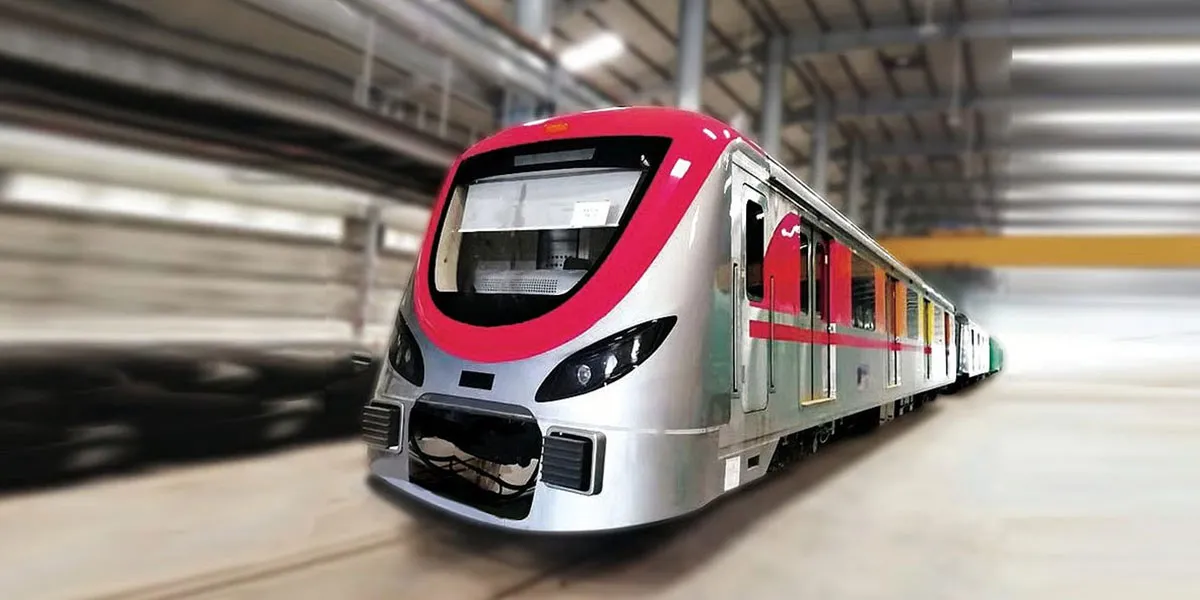
To improve connectivity between Chhatrapati Shivaji Maharaj International Airport and the Navi Mumbai International Airport, the Maharashtra government, through CIDCO, has planned the Metro Line 8 corridor. The project will, for the first time, establish an internal and continuous metro network connecting multiple suburbs across Navi Mumbai.

According to the detailed project report and finalised alignment, 11 stations of Metro Line 8 will fall within Navi Mumbai limits. After receiving state-level approval, the intra-city alignment has now been locked in. Once the metro crosses the Vashi Creek bridge from Mankhurd, it will run along the Sion–Panvel Highway before turning inward towards Nerul, Seawoods and Ulwe, eventually terminating at the Navi Mumbai International Airport.

The state government has recently incorporated Metro Line 8 into the Mumbai Metropolitan Region Development Authority’s 337-kilometre regional metro masterplan. While the corridor was initially proposed as a joint venture between MMRDA and CIDCO, it will now be executed entirely by CIDCO under a public-private partnership model.

Prime Minister Narendra Modi recently inaugurated the Navi Mumbai International Airport, with the first commercial flight scheduled for December 25. Metro Line 8 is expected to play a critical role in providing seamless airport-to-airport connectivity once operational.

Within Navi Mumbai, the corridor will include stations at Vashi, Sanpada, Juinagar, Nerul Sector-1, Nerul, Seawoods, Belapur, Sagar Sangam, Targhar or Moha, NMIA West, and NMIA Terminal 2. The final two stations will be located within the airport campus.

After entering Navi Mumbai from Mankhurd, the metro will pass through Vashi, Sanpada and Juinagar along the Sion–Panvel Highway. From LP Junction in Nerul, the alignment will turn inward, with a major station planned near Dr D.Y. Patil University. The route will then pass through inner Nerul and Seawoods, including a station near Wonders Park, before heading towards Ulwe via Apollo Hospital and behind the Navi Mumbai Municipal Corporation headquarters.

Stations at Sagar Sangam and Targhar or Moha are expected to serve the rapidly developing Ulwe node. From there, the line will enter the airport campus, with stops at NMIA West and NMIA Terminal 2.

A CIDCO official said the agency has been entrusted with developing the strategic airport-to-airport metro link, adding that the detailed project report and financial planning have been completed and the proposal has been submitted to the state government for cabinet approval.

To improve connectivity between Chhatrapati Shivaji Maharaj International Airport and the Navi Mumbai International Airport, the Maharashtra government, through CIDCO, has planned the Metro Line 8 corridor. The project will, for the first time, establish an internal and continuous metro network connecting multiple suburbs across Navi Mumbai. According to the detailed project report and finalised alignment, 11 stations of Metro Line 8 will fall within Navi Mumbai limits. After receiving state-level approval, the intra-city alignment has now been locked in. Once the metro crosses the Vashi Creek bridge from Mankhurd, it will run along the Sion–Panvel Highway before turning inward towards Nerul, Seawoods and Ulwe, eventually terminating at the Navi Mumbai International Airport. The state government has recently incorporated Metro Line 8 into the Mumbai Metropolitan Region Development Authority’s 337-kilometre regional metro masterplan. While the corridor was initially proposed as a joint venture between MMRDA and CIDCO, it will now be executed entirely by CIDCO under a public-private partnership model. Prime Minister Narendra Modi recently inaugurated the Navi Mumbai International Airport, with the first commercial flight scheduled for December 25. Metro Line 8 is expected to play a critical role in providing seamless airport-to-airport connectivity once operational. Within Navi Mumbai, the corridor will include stations at Vashi, Sanpada, Juinagar, Nerul Sector-1, Nerul, Seawoods, Belapur, Sagar Sangam, Targhar or Moha, NMIA West, and NMIA Terminal 2. The final two stations will be located within the airport campus. After entering Navi Mumbai from Mankhurd, the metro will pass through Vashi, Sanpada and Juinagar along the Sion–Panvel Highway. From LP Junction in Nerul, the alignment will turn inward, with a major station planned near Dr D.Y. Patil University. The route will then pass through inner Nerul and Seawoods, including a station near Wonders Park, before heading towards Ulwe via Apollo Hospital and behind the Navi Mumbai Municipal Corporation headquarters. Stations at Sagar Sangam and Targhar or Moha are expected to serve the rapidly developing Ulwe node. From there, the line will enter the airport campus, with stops at NMIA West and NMIA Terminal 2. A CIDCO official said the agency has been entrusted with developing the strategic airport-to-airport metro link, adding that the detailed project report and financial planning have been completed and the proposal has been submitted to the state government for cabinet approval.

Next Story
Infrastructure Transport

MMRDA advances 250 m on Orange Gate–Marine Drive tunnel

The Mumbai Metropolitan Region Development Authority (MMRDA) has completed 250 m of underground tunnelling for the Orange Gate–Marine Drive Urban Road Tunnel using India’s largest slurry shield tunnel boring machine (TBM) deployed for an urban road project.The project involves twin tunnels extending over 7 km beneath critical transport corridors, including Central Railway, Western Railway and Metro Line 3. The work requires high-precision engineering to navigate densely developed urban infrastructure.Once completed, the tunnel is expected to reduce travel time between Orange Gate and Marin..

Next Story
Infrastructure Urban

Hindustan Zinc Pays Rs 188.46 Billion in FY26

Hindustan Zinc contributed Rs 188.46 billion to the public exchequer in FY 2025-26, according to its 9th Tax Transparency Report. The contribution, equivalent to 46 per cent of the company’s revenue, included direct and indirect taxes, government royalties, dividends to the Government of India, withholding taxes and other statutory levies.The company’s five-year cumulative contribution to the exchequer stood at Rs 915.72 billion. In FY26, Hindustan Zinc reported revenue of Rs 408.44 billion, EBITDA of Rs 221.62 billion and profit after tax of Rs 138.32 billion. It also achieved its highest..

Next Story
Infrastructure Urban

World of Concrete India 2026 Opens in Mumbai

Informa Markets in India will host the 12th edition of World of Concrete India 2026 from 3–5 June 2026 at the Bombay Exhibition Centre, Mumbai. The specialised B2B exhibition will bring together manufacturers, suppliers, contractors, developers, architects, consultants, infrastructure companies, project leaders and government stakeholders.The event is expected to feature over 350 brands and more than 18,000 trade professionals. It will cover concrete and cement, dry mortar, precast technologies, formwork, construction chemicals, industrial and commercial flooring, scaffolding, safety solutio..

Advertisement

Subscribe to Our Newsletter

Get daily newsletters around different themes from Construction world.

STAY CONNECTED

Advertisement

Advertisement

Advertisement