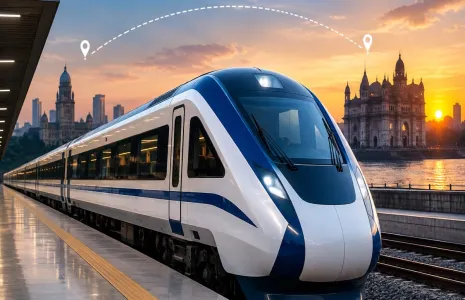
RailTel Expanding Business in Neighbouring Countries
RAILWAYS & METRO RAIL

RailTel Expanding Business in Neighbouring Countries

RailTel Corporation of India Ltd., a leading telecom infrastructure provider, is embarking on an ambitious expansion plan to extend its business operations into neighbouring countries such as Bhutan and Bangladesh. With a strategic focus on enhancing connectivity and digital infrastructure across borders, RailTel aims to leverage its expertise and resources to contribute to the socio-economic development of these nations.

This move comes in line with RailTel's commitment to supporting regional connectivity initiatives and fostering closer ties with neighbouring countries. By expanding its footprint beyond Indian borders, RailTel seeks to play a pivotal role in promoting cross-border communication networks and facilitating seamless connectivity across the South Asian region.

Key aspects of RailTel's expansion strategy include the deployment of advanced telecom infrastructure, including high-speed broadband networks and digital services, to meet the evolving needs of businesses and consumers in these countries. Additionally, RailTel plans to collaborate with local partners and stakeholders to ensure the successful implementation and operation of its services in the new markets.

RailTel's expansion into Bhutan, Bangladesh, and other neighbouring countries underscores the growing importance of digital connectivity in driving economic growth and regional integration. By providing reliable and affordable telecom solutions, RailTel aims to empower businesses, governments, and communities to harness the benefits of digital technology and accelerate progress towards shared development goals.

In summary, RailTel's decision to expand its business in neighbouring countries represents a significant step towards enhancing regional connectivity and fostering closer ties across borders. Through its comprehensive infrastructure solutions and strategic partnerships, RailTel is poised to make a meaningful impact on the socio-economic landscape of Bhutan, Bangladesh, and other neighbouring nations

RailTel Corporation of India Ltd., a leading telecom infrastructure provider, is embarking on an ambitious expansion plan to extend its business operations into neighbouring countries such as Bhutan and Bangladesh. With a strategic focus on enhancing connectivity and digital infrastructure across borders, RailTel aims to leverage its expertise and resources to contribute to the socio-economic development of these nations. This move comes in line with RailTel's commitment to supporting regional connectivity initiatives and fostering closer ties with neighbouring countries. By expanding its footprint beyond Indian borders, RailTel seeks to play a pivotal role in promoting cross-border communication networks and facilitating seamless connectivity across the South Asian region. Key aspects of RailTel's expansion strategy include the deployment of advanced telecom infrastructure, including high-speed broadband networks and digital services, to meet the evolving needs of businesses and consumers in these countries. Additionally, RailTel plans to collaborate with local partners and stakeholders to ensure the successful implementation and operation of its services in the new markets. RailTel's expansion into Bhutan, Bangladesh, and other neighbouring countries underscores the growing importance of digital connectivity in driving economic growth and regional integration. By providing reliable and affordable telecom solutions, RailTel aims to empower businesses, governments, and communities to harness the benefits of digital technology and accelerate progress towards shared development goals. In summary, RailTel's decision to expand its business in neighbouring countries represents a significant step towards enhancing regional connectivity and fostering closer ties across borders. Through its comprehensive infrastructure solutions and strategic partnerships, RailTel is poised to make a meaningful impact on the socio-economic landscape of Bhutan, Bangladesh, and other neighbouring nations

Related Stories

Gold Stories

Next Story
Infrastructure Urban

EMO Energy and e-Sprinto to Deploy 8,000 Electric Scooters

EMO Energy has announced a partnership with electric two-wheeler maker e-Sprinto to deploy 8,000 electric scooters across India this financial year. The rollout will include both low-speed and high-speed models and will be phased across several cities. The scooters will be aimed at quick-commerce and last-mile delivery operations where uptime and energy efficiency are prioritised. EMO Energy said the scooters will use its patented ZenPac liquid-cooled battery platform with active thermal management, battery intelligence and energy optimisation to improve reliability and performance. ZenPac con..

Next Story
Infrastructure Energy

Octillion Opens Third EV Battery Plant in India

Octillion Power Systems has opened its third manufacturing facility in Halol, Gujarat, adding production capacity as demand for electric vehicle battery systems grows across passenger, commercial and public transport segments. The facility covers more than 13,000 square metres and was converted from an empty structure into an operational battery manufacturing plant in less than eight months. At full capacity the Gujarat plant will manufacture more than 48,000 battery systems annually, representing over three GWh of energy storage capacity. With the addition of the Halol facility Octillion's co..

Next Story
Real Estate

Land Reforms Could Unlock Urban Affordable Housing

Former cabinet secretary and NITI Aayog member Rajeev Gauba said India’s urban housing shortage could be tackled by unlocking 10 million (mn) vacant homes and using excess unutilised land held by public sector undertakings (PSUs). He said land availability lay at the heart of the problem and estimated that land accounted for as much as 50 to 70 per cent of total project cost. He urged states to waive land?use change fees and exempt stamp duty on land and transactions linked to affordable housing. He noted that urban population was projected to rise from 500 million to nearly 900 million by 2..

Advertisement

Subscribe to Our Newsletter

Get daily newsletters around different themes from Construction world.

STAY CONNECTED

Advertisement