Gujarat Commissions Five Battery Storage Systems, 13 Projects Planned
ECONOMY & POLICY

Gujarat Commissions Five Battery Storage Systems, 13 Projects Planned

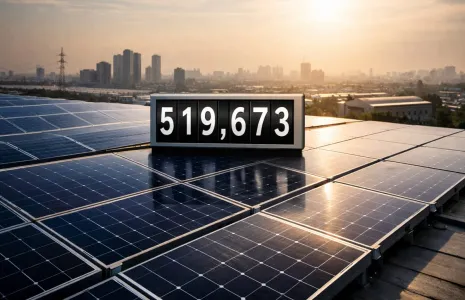
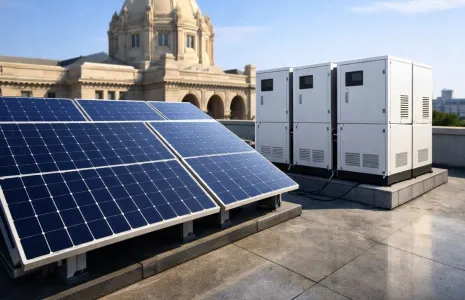
India's first Solar Village at Modhera in Gujarat has become the site of the country's first Battery Energy Storage System (BESS) integrated with a solar power plant, the release said. The state government under Chief Minister Bhupendra Patel has pursued battery storage as a strategic priority and has now brought five battery storage systems online. The initiatives are presented as part of a broader effort to strengthen Gujarat's role in energy storage. The release linked the developments to national renewable targets.

Following Modhera, the state has initiated systems at five locations with a combined capacity of 870 MW. Authorities have registered 13 projects across Ahmedabad, Gandhinagar, Banaskantha, Patan and Kutch to expand storage capacity. A battery storage installation was recently commissioned at Charal in Sanand taluka of Ahmedabad, while four systems are operational at Modhera in Mehsana and at Lakhpat in Kutch. The state framed these deployments as measures to meet peak demand and to reduce wastage from transmission losses.

The state government has incorporated advanced energy storage into the Gujarat Integrated Renewable Energy Policy, 2025, enabling approvals for standalone battery projects, installations linked with new renewable energy capacity and systems integrated with existing renewable plants. Implementation is being routed through competitive bidding and sites are being identified by GETCO and distribution companies based on grid capacity and operational need. The release said that once the Standard Operating Procedure is finalised, registrations will open for commercial and industrial users to set up battery storage alongside solar or wind projects. These measures are intended to accelerate deployment while ensuring technical and commercial readiness.

BESS assist by storing surplus electricity generated during daylight hours for supply during evening peaks, thereby reducing stress on the grid. Apart from managing temporal variation in renewable generation, the systems will support voltage and frequency regulation and provide emergency backup. The state expects these facilities to contribute to India's target of achieving 500 gigawatt (GW) of non-fossil fuel capacity by 2030 in line with the Prime Minister's vision.

India's first Solar Village at Modhera in Gujarat has become the site of the country's first Battery Energy Storage System (BESS) integrated with a solar power plant, the release said. The state government under Chief Minister Bhupendra Patel has pursued battery storage as a strategic priority and has now brought five battery storage systems online. The initiatives are presented as part of a broader effort to strengthen Gujarat's role in energy storage. The release linked the developments to national renewable targets. Following Modhera, the state has initiated systems at five locations with a combined capacity of 870 MW. Authorities have registered 13 projects across Ahmedabad, Gandhinagar, Banaskantha, Patan and Kutch to expand storage capacity. A battery storage installation was recently commissioned at Charal in Sanand taluka of Ahmedabad, while four systems are operational at Modhera in Mehsana and at Lakhpat in Kutch. The state framed these deployments as measures to meet peak demand and to reduce wastage from transmission losses. The state government has incorporated advanced energy storage into the Gujarat Integrated Renewable Energy Policy, 2025, enabling approvals for standalone battery projects, installations linked with new renewable energy capacity and systems integrated with existing renewable plants. Implementation is being routed through competitive bidding and sites are being identified by GETCO and distribution companies based on grid capacity and operational need. The release said that once the Standard Operating Procedure is finalised, registrations will open for commercial and industrial users to set up battery storage alongside solar or wind projects. These measures are intended to accelerate deployment while ensuring technical and commercial readiness. BESS assist by storing surplus electricity generated during daylight hours for supply during evening peaks, thereby reducing stress on the grid. Apart from managing temporal variation in renewable generation, the systems will support voltage and frequency regulation and provide emergency backup. The state expects these facilities to contribute to India's target of achieving 500 gigawatt (GW) of non-fossil fuel capacity by 2030 in line with the Prime Minister's vision.

Next Story
Infrastructure Transport

Shivraj Chouhan Launches PMGSY IV and Announces Package for Madhya Pradesh

Union Minister Shivraj Singh Chouhan launched the Pradhan Mantri Gram Sadak Yojana (PMGSY) IV at Bhairunda in Sehore district during the 25 year celebrations and announced a development package for Madhya Pradesh. The programme was organised by the Union Ministry of Rural Development and attended by Chief Minister Dr Mohan Yadav, ministers of state, state ministers, legislators and senior officials from the centre and the state. The minister said the central government under the Prime Minister is committed to strengthening rural livelihoods through improved connectivity, housing and women's in..

Next Story
Infrastructure Urban

DMR Engineering Reports FY 25-26 Financial Results

DMR Engineering reported its half year results for the financial year ended 31 March 2026 and published full year figures on a standalone basis. Standalone revenue from operations decreased by 2.01 per cent year-over-year to Rs 102.58 million (mn), while profit after tax declined by 43.94 per cent to nine point five six mn, leaving a profit after tax margin of nine point zero five per cent. Earnings per share stood at Rs zero point nine two, a fall of 44.71 per cent year-over-year. The company attributed part of the decline to one-off provisioning for bad debts and additional financing charges..

Next Story
Infrastructure Urban

Atlanta Electricals Posts Strong FY26 Growth And Debt Free Finish

Atlanta Electricals reported audited consolidated results for the quarter and year ended 31 March 2026. The company recorded significant year-on-year revenue growth driven by capacity ramp-up at new facilities and higher utilisation at legacy plants. The announcement summarised operating improvements and strategic milestones achieved during the year. For Q4 the company reported revenue of Rs 7.48 bn and for FY26 revenue of Rs 18.52 bn, representing robust growth versus the prior year. EBITDA in Q4 was Rs. 1.49 bn and Rs. 3.44 bn for the full year, with margins expanding to 20 per cent in the q..

Advertisement

Subscribe to Our Newsletter

Get daily newsletters around different themes from Construction world.

STAY CONNECTED

Advertisement

Advertisement

Advertisement