India AI Impact Summit To Promote Inclusive Responsible AI
ECONOMY & POLICY

India AI Impact Summit To Promote Inclusive Responsible AI

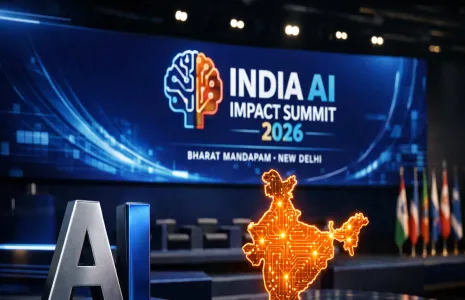
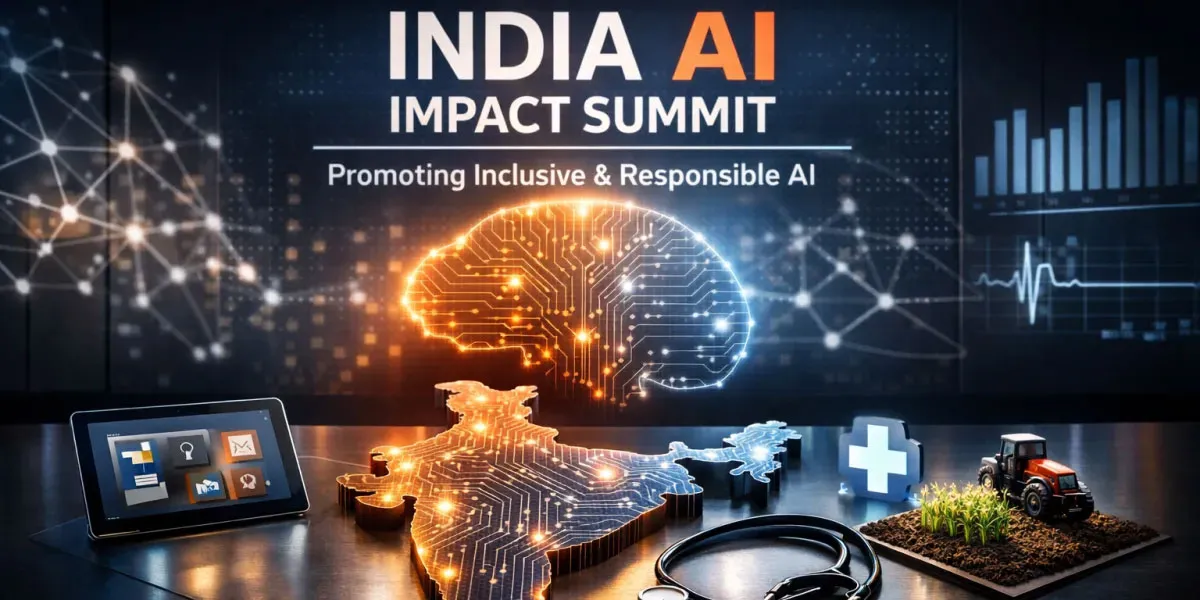
The India AI Impact Summit was presented as a people-centric platform during the Digital India Ask Our Experts (Digital India) episode on six February 2026 with Abhishek Singh, chief executive officer of IndiaAI Mission (IndiaAI). Organisers emphasised that artificial intelligence is reshaping how people in India learn, work, access services and solve everyday problems. The summit was described as moving beyond technical debate to focus on practical outcomes across education, healthcare, agriculture, governance and employment.

Organisers said the summit seeks to translate global AI conversations into usable outcomes for people on the ground, with attention to developing economies and the Global South. The agenda will show how AI innovation, skills and benefits can be made accessible to resource-constrained countries. Sessions will highlight applications to support farmers with crop planning, help clinicians make faster diagnoses and assist teachers to deliver personalised learning.

Speakers clarified the technology is intended to augment human capability rather than replace people and that while some tasks will change, new jobs and skills are expected to emerge. Citizens were urged to focus on continuous learning, adaptability and AI literacy rather than fear disruption. The summit will present pathways for students, professionals and job seekers to explore reskilling and career options.

Startups were offered opportunities to access networks, policy insights and global collaboration, while researchers and academicians were invited to engage with cutting-edge work. Policymakers and institutions were urged to co-create responsible AI frameworks to ensure inclusion, efficiency and accountability. Practical showcases were presented as central to showing AI as a tool for empowerment rather than mere automation.

Organisers called on citizens to participate actively in the India AI Impact Summit, saying the national AI journey will succeed only if people understand, trust and use the technology responsibly. The Digital India series continues to enable dialogue between citizens and domain experts and the full recording is available on the Digital India YouTube channel, with details on the Digital India and National e-Governance Division websites.

The India AI Impact Summit was presented as a people-centric platform during the Digital India Ask Our Experts (Digital India) episode on six February 2026 with Abhishek Singh, chief executive officer of IndiaAI Mission (IndiaAI). Organisers emphasised that artificial intelligence is reshaping how people in India learn, work, access services and solve everyday problems. The summit was described as moving beyond technical debate to focus on practical outcomes across education, healthcare, agriculture, governance and employment. Organisers said the summit seeks to translate global AI conversations into usable outcomes for people on the ground, with attention to developing economies and the Global South. The agenda will show how AI innovation, skills and benefits can be made accessible to resource-constrained countries. Sessions will highlight applications to support farmers with crop planning, help clinicians make faster diagnoses and assist teachers to deliver personalised learning. Speakers clarified the technology is intended to augment human capability rather than replace people and that while some tasks will change, new jobs and skills are expected to emerge. Citizens were urged to focus on continuous learning, adaptability and AI literacy rather than fear disruption. The summit will present pathways for students, professionals and job seekers to explore reskilling and career options. Startups were offered opportunities to access networks, policy insights and global collaboration, while researchers and academicians were invited to engage with cutting-edge work. Policymakers and institutions were urged to co-create responsible AI frameworks to ensure inclusion, efficiency and accountability. Practical showcases were presented as central to showing AI as a tool for empowerment rather than mere automation. Organisers called on citizens to participate actively in the India AI Impact Summit, saying the national AI journey will succeed only if people understand, trust and use the technology responsibly. The Digital India series continues to enable dialogue between citizens and domain experts and the full recording is available on the Digital India YouTube channel, with details on the Digital India and National e-Governance Division websites.

Next Story
Technology

AI-Enabled Workflows Lift Profitability and Productivity

Organisations modernising frontline workflows with artificial intelligence, automation and real-time data are reporting stronger financial performance, higher productivity and improved employee engagement, according to a global study by Zebra Technologies and Oxford Economics.The research covered 1,000 senior leaders across retail, manufacturing, transportation and logistics in the US, Mexico, the UK, Germany, India, Japan, Australia and New Zealand.In transportation and logistics, 54 per cent of companies that improved picking and packing operations reported faster operational performance, wh..

Next Story
Real Estate

India Leads Global AI Readiness but Implementation Lags

Indian companies lead global averages across all eight artificial intelligence readiness indicators tracked by JLL, but only 19 per cent have started making changes to their workplaces, according to the JLL 2026 Future of Work Survey.The study found that 77 per cent of Indian business leaders expect AI to change their office requirements, creating a 58-percentage-point gap between awareness and implementation. The survey covered more than 2,200 CEOs, CFOs and real estate leaders across 21 countries during the first quarter of 2026.Despite concerns over automation, 58 per cent of Indian leaders..

Next Story
Equipment

Three WOLFF Cranes Build Riyadh Cable-Stayed Bridges

Three WOLFF 180 B luffing jib cranes are supporting the construction of two cable-stayed bridges alongside the existing Wadi Laban Bridge in Riyadh, Saudi Arabia. The project is being developed for the Royal Commission for Riyadh City and executed by the ICRC joint venture comprising IC Ictas and Al Rashid Trading & Contracting Company.The cranes are handling lifting operations including formwork, reinforcement, concrete placement, work platforms, surveying equipment and other construction materials. Each crane is fitted with a 40 m jib, reaches a hook height of 157 m and offers a maximum ..

Advertisement

Subscribe to Our Newsletter

Get daily newsletters around different themes from Construction world.

STAY CONNECTED

Advertisement

Advertisement

Advertisement