India Expands Doppler Weather Radar Network To Boost Forecasting
ECONOMY & POLICY

India Expands Doppler Weather Radar Network To Boost Forecasting

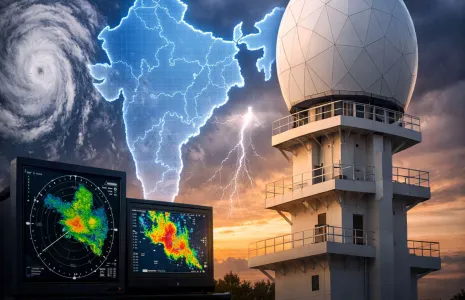
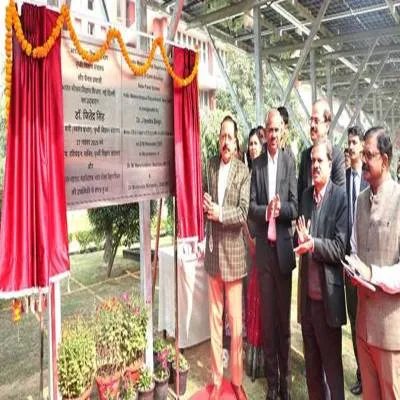
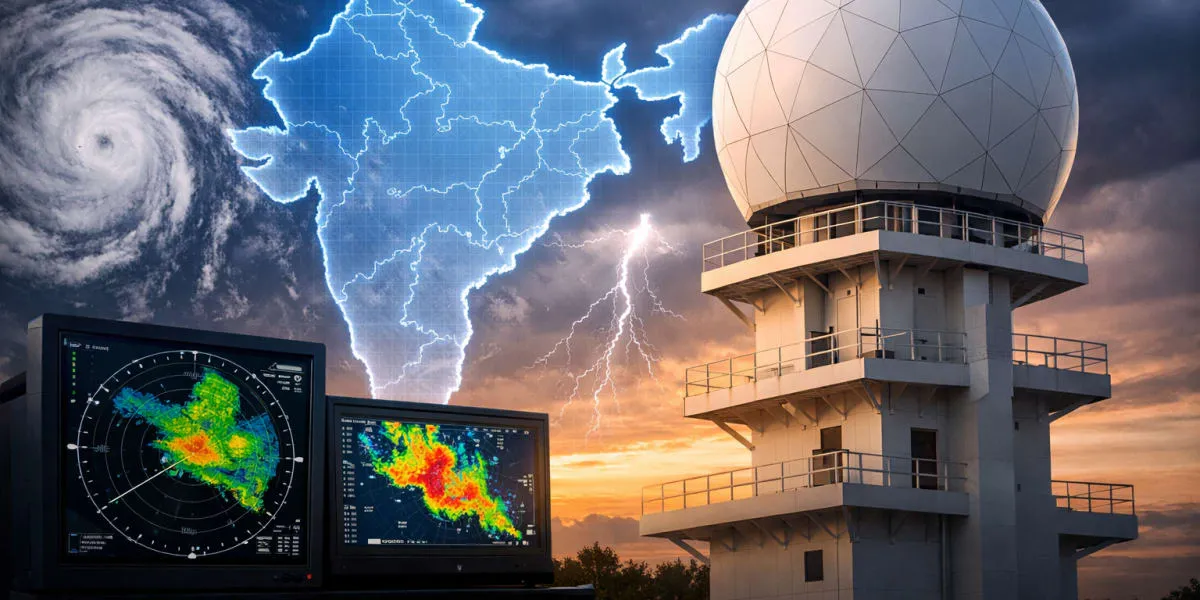
India has expanded its Doppler Weather Radar (DWR) network since 2014, rising from 14 operational units to 50, an over 250 per cent increase. The additions now cover over 87 per cent of the country and are set to improve forecasting for cyclones, heavy rain and thunderstorms, with 50 more DWRs planned under Mission Mausam. A Selfie Point depicting a weather radar was inaugurated at the India Meteorological Department (IMD) headquarters in New Delhi.

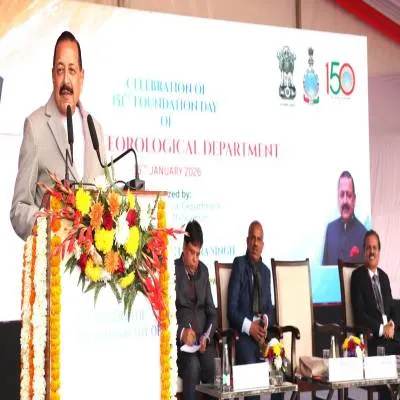
Senior officials from the Ministry of Earth Sciences and IMD attended the event. The minister attributed the transformation to government priority and leadership, saying it has delivered greater accuracy, accessibility and public trust in forecasts. He noted that forecasts are now routinely consulted by farmers, pilots and event planners.

He outlined Nowcast services that provide highly localised and accurate forecasts for the next three hours. These services supply detailed inputs on rainfall intensity, type of precipitation, the possibility of hailstorms and even the size of raindrops. Real-time information was presented as crucial for disaster preparedness and urban planning.

He described how DWR technology uses the Doppler effect to track movement and velocity of weather systems and explained that modern radars deployed by IMD are equipped with dual-polarisation capability. This allows better distinction of precipitation types, improved rainfall estimation and reduced false signals. The network supports continuous atmospheric monitoring and early warnings for cyclones, thunderstorms and heavy rainfall.

The minister highlighted benefits for aviation safety, agricultural planning and disaster risk reduction and noted that enhanced forecasting is aiding neighbouring countries through cooperation. He referred to installations in vulnerable regions such as Jammu and Kashmir and said initiatives like the Selfie Point aim to raise public awareness and encourage use of IMD services via mobile applications, SMS alerts and social media. Officials added that these measures will help bridge the gap between scientific advancement and public engagement.

India has expanded its Doppler Weather Radar (DWR) network since 2014, rising from 14 operational units to 50, an over 250 per cent increase. The additions now cover over 87 per cent of the country and are set to improve forecasting for cyclones, heavy rain and thunderstorms, with 50 more DWRs planned under Mission Mausam. A Selfie Point depicting a weather radar was inaugurated at the India Meteorological Department (IMD) headquarters in New Delhi. Senior officials from the Ministry of Earth Sciences and IMD attended the event. The minister attributed the transformation to government priority and leadership, saying it has delivered greater accuracy, accessibility and public trust in forecasts. He noted that forecasts are now routinely consulted by farmers, pilots and event planners. He outlined Nowcast services that provide highly localised and accurate forecasts for the next three hours. These services supply detailed inputs on rainfall intensity, type of precipitation, the possibility of hailstorms and even the size of raindrops. Real-time information was presented as crucial for disaster preparedness and urban planning. He described how DWR technology uses the Doppler effect to track movement and velocity of weather systems and explained that modern radars deployed by IMD are equipped with dual-polarisation capability. This allows better distinction of precipitation types, improved rainfall estimation and reduced false signals. The network supports continuous atmospheric monitoring and early warnings for cyclones, thunderstorms and heavy rainfall. The minister highlighted benefits for aviation safety, agricultural planning and disaster risk reduction and noted that enhanced forecasting is aiding neighbouring countries through cooperation. He referred to installations in vulnerable regions such as Jammu and Kashmir and said initiatives like the Selfie Point aim to raise public awareness and encourage use of IMD services via mobile applications, SMS alerts and social media. Officials added that these measures will help bridge the gap between scientific advancement and public engagement.

Next Story
Infrastructure Urban

Panasonic Showcases Connected Display Solutions

Panasonic Life Solutions India showcased its integrated display, projection, broadcast and communication technologies at Panasonic Tech Summit 2026 in New Delhi. Hosted through its System Solutions Division, the two-day event highlighted connected technology solutions for education, healthcare, retail, transportation, corporate offices and entertainment.The summit, themed ‘Turning Technology into Value’, featured experience-led zones covering QSR, retail, transit, corporate offices, healthcare, education, security, projection, home theatre and professional displays. Panasonic also introduc..

Next Story
Infrastructure Transport

Kapsch to Deliver India’s First C-ITS Project

"Kapsch TrafficCom will deliver India’s first Cooperative Intelligent Transport Systems project on a key expressway near New Delhi. The project will be implemented with Superwave Communication And Infrasolution Limited to demonstrate how connected mobility can improve road safety and traffic efficiency.The pilot will use real-time connectivity and AI-enabled situational awareness to support road users, especially in high-risk areas such as temporary work zones. Drivers will receive alerts on roadworks, maintenance vehicles, hazardous locations, traffic queues and temporary virtual signage di..

Next Story
Infrastructure Urban

Eurobond Net Profit Rises 44 Per Cent

Euro Panel Products, the parent company of Eurobond, reported a 44.13 per cent year-on-year rise in net profit for FY25–26. The company’s revenue from operations grew 18.91 per cent to Rs 503.20 crore, compared to Rs 423.18 crore in the previous financial year.The company’s full-year EBITDA stood at Rs 56.67 crore, marking a 31.82 per cent increase. Profit after tax rose to Rs 26.56 crore, while net worth increased 20.15 per cent to Rs 160.07 crore. Earnings per share for the year stood at Rs 10.84.Divyam Rajesh Shah, Whole Time Director and CFO, Euro Panel Products, said the company’s..

Advertisement

Subscribe to Our Newsletter

Get daily newsletters around different themes from Construction world.

STAY CONNECTED

Advertisement

Advertisement

Advertisement

-->