




NPG Evaluates PM GatiShakti Infrastructure Projects
ECONOMY & POLICY

NPG Evaluates PM GatiShakti Infrastructure Projects

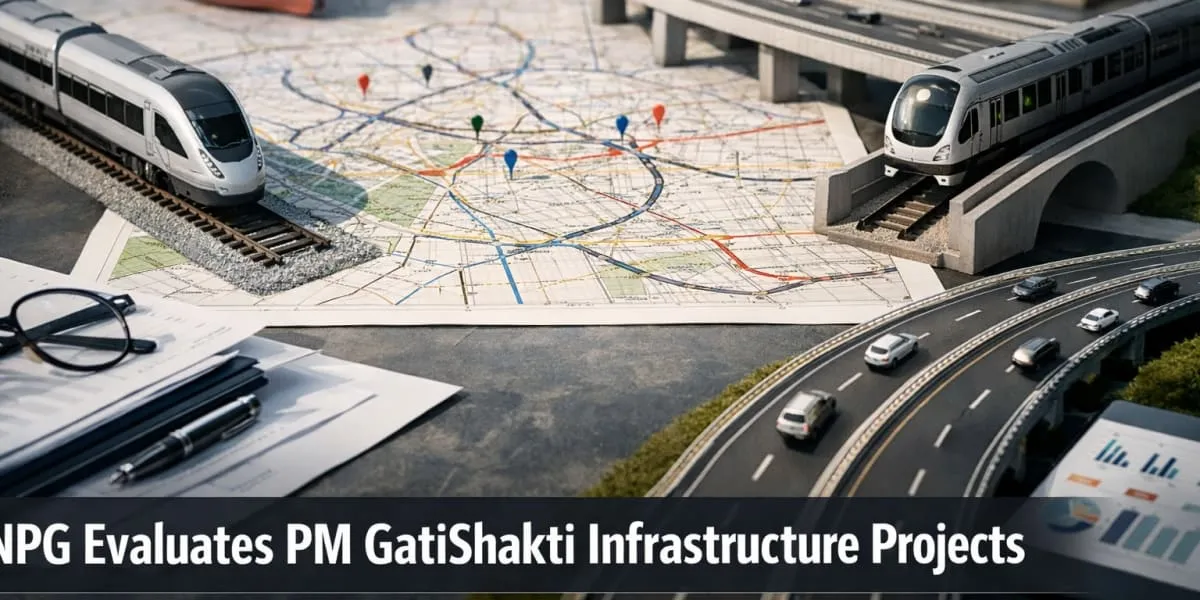
The 110th meeting of the Network Planning Group was held at the Department for Promotion of Industry and Internal Trade (DPIIT) to evaluate infrastructure projects under the PM GatiShakti National Master Plan (PMGS NMP). The group examined two rail projects, two metro initiatives and two road and highway schemes for alignment with integrated multimodal infrastructure, last?mile connectivity to economic and social nodes and a whole?of?government approach. The review noted anticipated improvements in logistics efficiency, reduced travel times and socio?economic benefits for the catchment areas.

The doubling of the rail line between Arakkonam and Chengalpattu in Tamil Nadu covers 67.794 kilometres, passes through three districts and serves 12 stations including junctions at Chengalpattu and Arakkonam as well as five crossing and five halt stations. The work is intended to increase line capacity, improve operational efficiency and ease passenger and freight movements. The proposed quadrupling between Whitefield and Bangarpet spans approximately 47 kilometres and will prioritise passenger services on existing tracks while dedicating two new lines for freight.

The Ministry of Housing and Urban Affairs proposed Mumbai Metro Line 11 as a fully underground corridor of 17.41 kilometres from Anik Depot to the Gateway of India, with multiple interchange stations to integrate with the growing metro network across the Mumbai Metropolitan Region. The scheme is expected to reduce road congestion, save travel time and lower vehicle operating costs and emissions while improving access to residential, commercial and heritage precincts. Pune Metro Line 4 extensions total 16.67 kilometres to strengthen eastern and south?eastern connectivity and integrate with major bus depots and rail links.

The Ministry of Road Transport and Highways proposed four?laning of the Badnawar–Petlawad–Thandla–Timarwani corridor over about 80.45 kilometres to improve regional linkages and access to the PM MITRA Park and the Delhi–Mumbai Expressway. The Fotu La Tunnel of 2.65 kilometres on NH?01 will secure all?weather connectivity, reduce distance by about 8.5 kilometres and cut travel time by around 23 minutes.

The 110th meeting of the Network Planning Group was held at the Department for Promotion of Industry and Internal Trade (DPIIT) to evaluate infrastructure projects under the PM GatiShakti National Master Plan (PMGS NMP). The group examined two rail projects, two metro initiatives and two road and highway schemes for alignment with integrated multimodal infrastructure, last?mile connectivity to economic and social nodes and a whole?of?government approach. The review noted anticipated improvements in logistics efficiency, reduced travel times and socio?economic benefits for the catchment areas. The doubling of the rail line between Arakkonam and Chengalpattu in Tamil Nadu covers 67.794 kilometres, passes through three districts and serves 12 stations including junctions at Chengalpattu and Arakkonam as well as five crossing and five halt stations. The work is intended to increase line capacity, improve operational efficiency and ease passenger and freight movements. The proposed quadrupling between Whitefield and Bangarpet spans approximately 47 kilometres and will prioritise passenger services on existing tracks while dedicating two new lines for freight. The Ministry of Housing and Urban Affairs proposed Mumbai Metro Line 11 as a fully underground corridor of 17.41 kilometres from Anik Depot to the Gateway of India, with multiple interchange stations to integrate with the growing metro network across the Mumbai Metropolitan Region. The scheme is expected to reduce road congestion, save travel time and lower vehicle operating costs and emissions while improving access to residential, commercial and heritage precincts. Pune Metro Line 4 extensions total 16.67 kilometres to strengthen eastern and south?eastern connectivity and integrate with major bus depots and rail links. The Ministry of Road Transport and Highways proposed four?laning of the Badnawar–Petlawad–Thandla–Timarwani corridor over about 80.45 kilometres to improve regional linkages and access to the PM MITRA Park and the Delhi–Mumbai Expressway. The Fotu La Tunnel of 2.65 kilometres on NH?01 will secure all?weather connectivity, reduce distance by about 8.5 kilometres and cut travel time by around 23 minutes.

Next Story
Technology

India Data Centre Market to Cross USD 22 Bn by 2030: Vestian

India’s data centre market is projected to more than double from around USD 10 billion in 2025 to USD 22 billion by 2030, according to a latest report by Vestian. The growth is expected to be driven by rising cloud adoption, expanding AI workloads and increasing demand for data-intensive digital services.Vestian noted that the global data centre sector is witnessing rapid expansion, with current installed capacity estimated at 40–50 GW and projections exceeding 100 GW by 2030. Within this evolving landscape, India is emerging as a strategic hub in the Asia-Pacific region, supported by its ..

Next Story
Real Estate

Retail Leasing Hits 4.3 Mn Sq Ft in H2 2025: ANAROCK RELEAP 2026

India’s retail real estate market recorded a total retail absorption of around 4.3 million sq ft across the top seven cities in H2 2025, reflecting steady leasing activity despite a dynamic market environment, according to ANAROCK Retail’s flagship report, RELEAP 2026.The report highlights a structural shift in the sector as organised retail moves beyond transactional formats toward experience-led spaces that combine shopping, entertainment and dining. Apparel emerged as the leading category driving leasing demand during the period, followed by entertainment, hypermarkets/supermarkets, and..

Next Story
Building Material

Berger Paints Launches ‘Garmi Gone, Thandak On’ Cooling Range

Berger Paints India has launched its Home Cooling Paints Range along with a nationwide campaign titled ‘Garmi Gone, Thandak On’, as rising temperatures continue to pose growing challenges for households across India.The company said the campaign promotes smarter and energy-efficient cooling solutions by focusing on preventing heat from entering homes rather than relying solely on air conditioning. Berger Paints stated that a significant amount of heat enters homes through walls, rooftops and structural openings, making surface protection an important factor in reducing indoor discomfort du..

Advertisement

Subscribe to Our Newsletter

Get daily newsletters around different themes from Construction world.

STAY CONNECTED

Advertisement

Advertisement

Advertisement