Yogi Government to Supply 34,000 MW Across Uttar Pradesh
ECONOMY & POLICY

Yogi Government to Supply 34,000 MW Across Uttar Pradesh

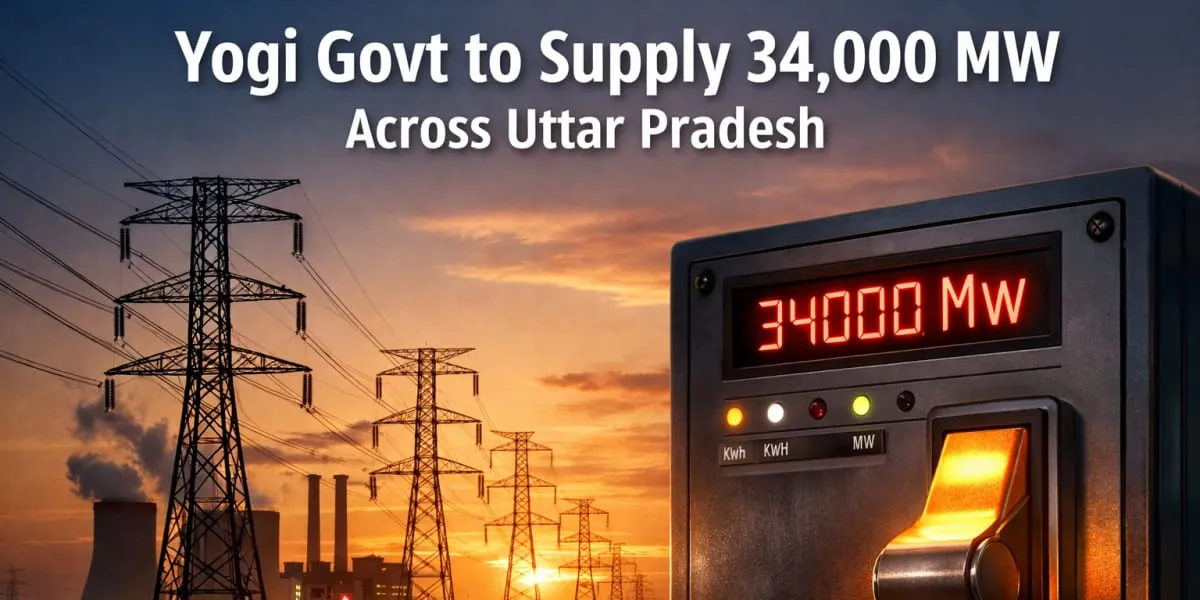
The Uttar Pradesh government has completed preparations to ensure uninterrupted electricity supply across the state during the extreme summer. Under the directions of Chief Minister Yogi Adityanath the Energy Department prepared a strategy to make approximately 34,000 megawatt (MW) of electricity available this year, keeping peak demand in mind.

UPPCL managing director Pankaj Kumar said that electricity demand will rise between April and September and that, based on past trends, peak demand in June is expected to reach around 33,375 MW which would be among the highest levels so far. In May and July demand is likely to remain between 31,000 and 32,000 MW. The department activated all new thermal units and major projects such as Ghatampur, Khurja, Panki, Obra and Jawaharpur have started production; the third unit of Ghatampur is expected to become operational by April 30.

Around 80 per cent of electricity demand during peak hours will be met through previously signed memoranda of understanding, providing a stable supply during sudden spikes. The remaining requirement will be met through power exchange platforms such as IEX, PXIL and HPX from where additional electricity will be purchased as required. This approach is intended to maintain a balance between supply and demand and provide relief to consumers from power cuts.

A banking arrangement of approximately 4,663 million (mn) units has been made with other states so that electricity can be procured when required and returned later to support supply stability. Officials have been instructed to strengthen the transmission and distribution network and to ensure equal power supply in both rural and urban areas. Monitoring has been intensified through regular review meetings and increased feeder level oversight.

Special campaigns are being conducted to reduce line losses while smart metering and digital monitoring systems are being implemented rapidly. The chief minister has issued strict instructions to officials to ensure that consumers do not face any inconvenience, prompting heightened operational coordination.

The Uttar Pradesh government has completed preparations to ensure uninterrupted electricity supply across the state during the extreme summer. Under the directions of Chief Minister Yogi Adityanath the Energy Department prepared a strategy to make approximately 34,000 megawatt (MW) of electricity available this year, keeping peak demand in mind. UPPCL managing director Pankaj Kumar said that electricity demand will rise between April and September and that, based on past trends, peak demand in June is expected to reach around 33,375 MW which would be among the highest levels so far. In May and July demand is likely to remain between 31,000 and 32,000 MW. The department activated all new thermal units and major projects such as Ghatampur, Khurja, Panki, Obra and Jawaharpur have started production; the third unit of Ghatampur is expected to become operational by April 30. Around 80 per cent of electricity demand during peak hours will be met through previously signed memoranda of understanding, providing a stable supply during sudden spikes. The remaining requirement will be met through power exchange platforms such as IEX, PXIL and HPX from where additional electricity will be purchased as required. This approach is intended to maintain a balance between supply and demand and provide relief to consumers from power cuts. A banking arrangement of approximately 4,663 million (mn) units has been made with other states so that electricity can be procured when required and returned later to support supply stability. Officials have been instructed to strengthen the transmission and distribution network and to ensure equal power supply in both rural and urban areas. Monitoring has been intensified through regular review meetings and increased feeder level oversight. Special campaigns are being conducted to reduce line losses while smart metering and digital monitoring systems are being implemented rapidly. The chief minister has issued strict instructions to officials to ensure that consumers do not face any inconvenience, prompting heightened operational coordination.

Next Story
Infrastructure Transport

MMRDA Removes 1.14 lakh m of Metro Barricades

In a bid to ease congestion and improve urban mobility during monsoon, MMRDA has undertaken one of the largest coordinated barricade removal and monsoon preparedness drives across its ongoing metro and infrastructure projects.With substantial progress achieved in viaduct and structural works across multiple metro corridors, barricades from completed stretches beneath metro viaducts are being systematically removed, restoring maximum possible road space before the monsoon. Wider carriageways across key arterial roads are expected to improve traffic flow, reduce congestion, support better rainwa..

Next Story
Infrastructure Transport

Pune Division to Remove All Diamond Crossings by Year-End

The Pune railway division has announced plans to remove all 16 diamond crossings by the end of 2026 as part of a major yard remodelling project following the derailment of a Vande Bharat Express at Pune Junction on April 27. Railway authorities said the replacements aim to improve safety and streamline train operations across the busy station. The decision followed a Central Railway finding that the accident involved a non-standard diamond crossing and highlighted the need for replacement. Regular maintenance of existing crossings will continue until the replacement work is completed. Official..

Next Story
Infrastructure Urban

Goa Declares 80 Million Square Metres No Development Zone

The Goa state government has declared 80 million square metres (mn) of land a no development zone, designating the area as protected from new construction. The notification reclassifies tracts across the state under a no development category for planning and regulatory purposes. The declaration signals a formal halt to new building permits within the defined zone. Authorities indicated that maps will be issued to show broad boundaries while detailed surveys will refine precise limits. The move transfers responsibility for enforcement to local planning authorities and relevant departments, whic..

Advertisement

Subscribe to Our Newsletter

Get daily newsletters around different themes from Construction world.

STAY CONNECTED

Advertisement

Advertisement

Advertisement