Magenta Line To Become Delhi Metro's Longest Corridor
RAILWAYS & METRO RAIL

Magenta Line To Become Delhi Metro's Longest Corridor

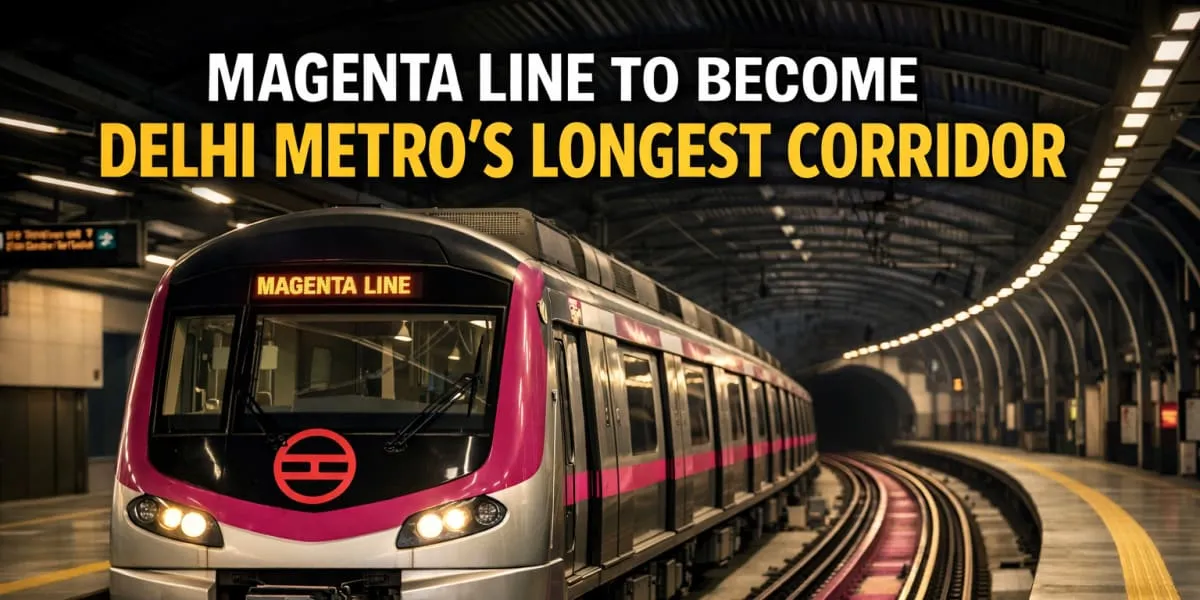
The Magenta Line will become the Delhi Metro's longest corridor, stretching 89 km, according to official sources. The extension will alter the network's configuration and create a continuous rapid transit spine across multiple city zones. Planners indicated the longer corridor is expected to streamline journeys for daily commuters and support more efficient train operations. The development follows planned extensions aimed at enhancing network coverage and aligning with urban transport priorities.

Transport authorities said the extended corridor will improve connectivity by increasing interchange opportunities and reducing the need for multiple transfers. Commuters are expected to benefit from more direct services and shorter total journey times, while the system may see a redistribution of passenger flows during peak hours. The change is likely to encourage a shift from road to rail travel, easing congestion on major arterial roads. Stakeholders expect operational monitoring to inform further adjustments after full implementation.

Operational adjustments will be required to manage the longer route, including timetable revisions and fleet deployment strategies to maintain regular frequency and reliability. Maintenance and signalling regimes will be reviewed to preserve safety and punctuality across the extended corridor. Integration with existing lines will continue to be prioritised to allow seamless travel across the metro network. Capacity planning will consider peak demand patterns to avoid overcrowding.

Authorities foresee wider urban benefits from the corridor becoming the longest, with potential gains for local commerce and daily accessibility to employment centres. Environmental advantages are anticipated as increased public transport use reduces vehicular emissions and fuel consumption in the metropolitan area. The extended Magenta Line is positioned as a central element of the capital's long term mobility planning and network resilience. Officials indicated the longer corridor will be monitored to measure impacts on travel behaviour and service performance.

The Magenta Line will become the Delhi Metro's longest corridor, stretching 89 km, according to official sources. The extension will alter the network's configuration and create a continuous rapid transit spine across multiple city zones. Planners indicated the longer corridor is expected to streamline journeys for daily commuters and support more efficient train operations. The development follows planned extensions aimed at enhancing network coverage and aligning with urban transport priorities. Transport authorities said the extended corridor will improve connectivity by increasing interchange opportunities and reducing the need for multiple transfers. Commuters are expected to benefit from more direct services and shorter total journey times, while the system may see a redistribution of passenger flows during peak hours. The change is likely to encourage a shift from road to rail travel, easing congestion on major arterial roads. Stakeholders expect operational monitoring to inform further adjustments after full implementation. Operational adjustments will be required to manage the longer route, including timetable revisions and fleet deployment strategies to maintain regular frequency and reliability. Maintenance and signalling regimes will be reviewed to preserve safety and punctuality across the extended corridor. Integration with existing lines will continue to be prioritised to allow seamless travel across the metro network. Capacity planning will consider peak demand patterns to avoid overcrowding. Authorities foresee wider urban benefits from the corridor becoming the longest, with potential gains for local commerce and daily accessibility to employment centres. Environmental advantages are anticipated as increased public transport use reduces vehicular emissions and fuel consumption in the metropolitan area. The extended Magenta Line is positioned as a central element of the capital's long term mobility planning and network resilience. Officials indicated the longer corridor will be monitored to measure impacts on travel behaviour and service performance.

Next Story
Infrastructure Urban

Lemon Tree Hotels Signs Resort In Lonavala Maharashtra

Lemon Tree Hotels Limited (LTHL) has signed a licence agreement for Lemon Tree Resort in Lonavala, Maharashtra, with the asset to be managed by Carnation Hotels Private Limited, a wholly owned subsidiary of LTHL. The resort will offer 50 well appointed rooms and will include a restaurant, banquet, meeting room, swimming pool, spa and fitness centre. The company described the addition as part of its strategy to expand branded resort offerings in key getaway destinations. Lonavala, located in the Sahyadri hills, is a popular leisure destination in western India known for scenic landscapes and a ..

Next Story
Infrastructure Urban

Kalai Chettinad Art And Architecture Festival At The Lotus Palace

The Lotus Palace Chettinad will host Kalai, the Chettinad Art and Architecture Festival, a four-day, three-night immersive celebration of the artistic legacy of Chettinad from three to six April 2026. The event has been organised by Apeejay Surrendra Park Hotels Limited (ASPHL) and will take place across restored heritage properties in Chettinad. It will be designed to offer guests a layered experience of place, structure and story that connects art, architecture and living traditions. The festival aims to present a confluence of global influences and local aesthetics. Kalai has been curated i..

Next Story
Infrastructure Energy

SJVN Reaches One bn Units At 1,000 MW Bikaner Solar Project

SJVN Limited (SJVN) has reached a milestone with its 1,000 megawatt (MW) Bikaner Solar Power Project by generating one bn units of electricity on 20 March 2026. The achievement underscores the company's role in supplying clean and sustainable energy to the national grid. The generation milestone was recorded within months of the project commencing operations and highlights rapid performance from the new facility. The Bikaner project, located in Bikaner district of Rajasthan, has been developed and implemented by SJVN Green Energy Limited (SGEL) under the Central Public Sector Undertaking Schem..

Advertisement

Subscribe to Our Newsletter

Get daily newsletters around different themes from Construction world.

STAY CONNECTED

Advertisement

Advertisement

Advertisement