Railways Approve Two 220 kmph Trainsets for 2027-28
RAILWAYS & METRO RAIL

Railways Approve Two 220 kmph Trainsets for 2027-28

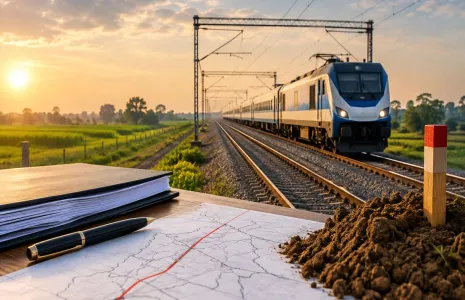
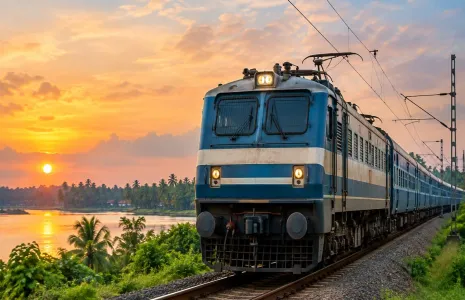
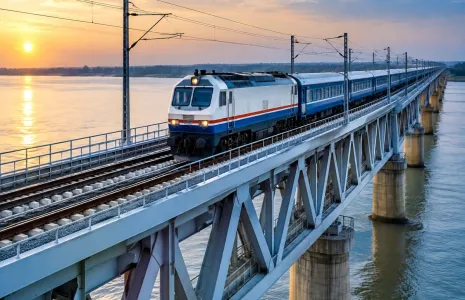
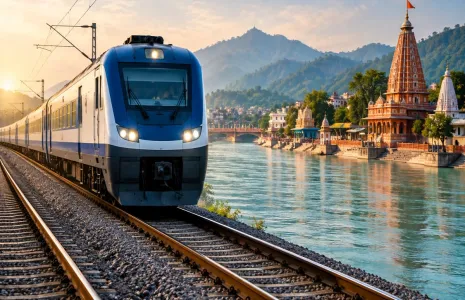
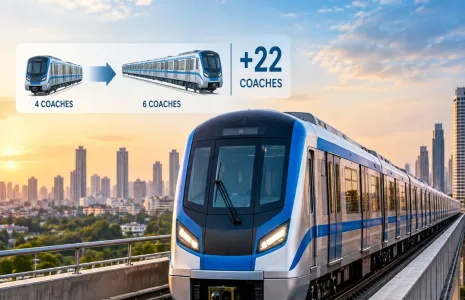
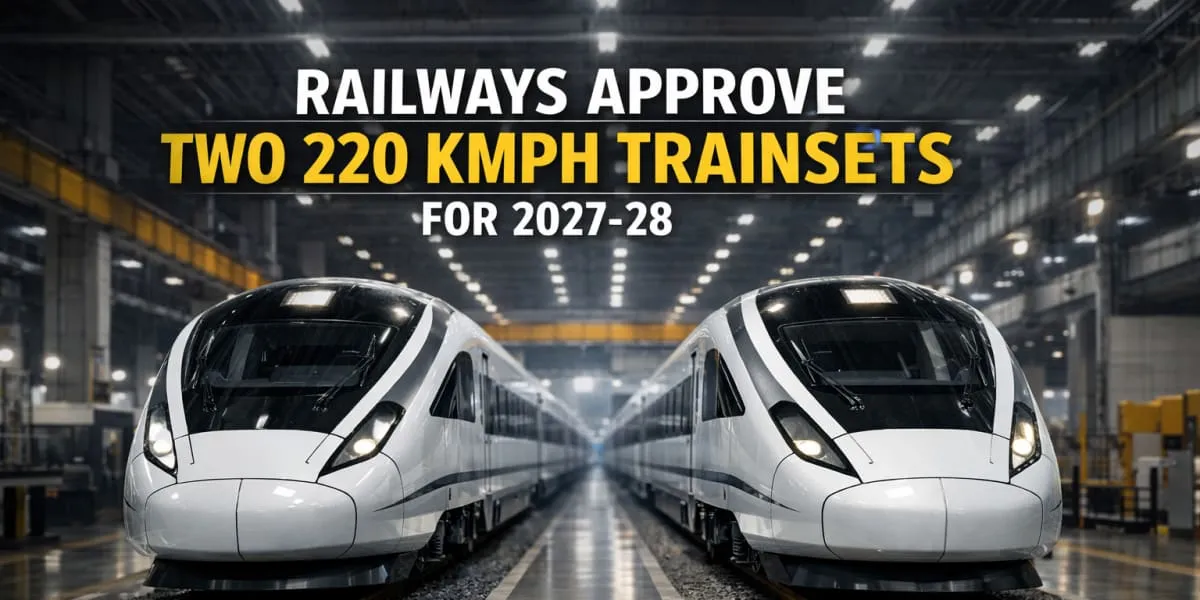
The Ministry of Railways has approved the manufacture of two new trainsets with a design speed of 220 kmph, marking the next phase of semi-high-speed rollout. The Railway Board has authorised the inclusion of two 16-coach trainsets under the Coach Production Programme for 2027-28, with production assigned to the Integral Coach Factory in Chennai. The move follows the deployment of Vande Bharat as the current fastest train with a design speed of 180 kmph and an expanding fleet of services.

Each trainset will be built as a broad gauge rake with a steel body and a maximum operating speed set at 200 kmph. The specification aims to balance higher design speed with practical operating limits on the current network. The two trainsets will offer uniform coach composition across 16 coaches per rake and are planned as part of efforts to scale up domestic trainset manufacturing capacity.

In October 2024, the Integral Coach Factory awarded a contract for high-speed trainset design and manufacture to Bharat Earth Movers Limited. The contract terms set the price of each car at Rs 278.6 million (mn) per car and the total contract value at Rs 8.6687 billion (bn). The contract includes design cost, one-time development charges, tooling and testing facilities.

Coach production will be spread across existing manufacturing units including the Integral Coach Factory, Rail Coach Factory at Kapurthala and Modern Coach Factory at Raebareli, which already produce mainline LHB coaches and various trainsets. Officials expect the 16-coach rakes to be manufactured under the Coach Production Programme in 2027-28 and to integrate with ongoing fleet modernisation and regional connectivity plans. The initiative is presented as a scaling step in high-speed train capability for Indian Railways.

The Ministry of Railways has approved the manufacture of two new trainsets with a design speed of 220 kmph, marking the next phase of semi-high-speed rollout. The Railway Board has authorised the inclusion of two 16-coach trainsets under the Coach Production Programme for 2027-28, with production assigned to the Integral Coach Factory in Chennai. The move follows the deployment of Vande Bharat as the current fastest train with a design speed of 180 kmph and an expanding fleet of services. Each trainset will be built as a broad gauge rake with a steel body and a maximum operating speed set at 200 kmph. The specification aims to balance higher design speed with practical operating limits on the current network. The two trainsets will offer uniform coach composition across 16 coaches per rake and are planned as part of efforts to scale up domestic trainset manufacturing capacity. In October 2024, the Integral Coach Factory awarded a contract for high-speed trainset design and manufacture to Bharat Earth Movers Limited. The contract terms set the price of each car at Rs 278.6 million (mn) per car and the total contract value at Rs 8.6687 billion (bn). The contract includes design cost, one-time development charges, tooling and testing facilities. Coach production will be spread across existing manufacturing units including the Integral Coach Factory, Rail Coach Factory at Kapurthala and Modern Coach Factory at Raebareli, which already produce mainline LHB coaches and various trainsets. Officials expect the 16-coach rakes to be manufactured under the Coach Production Programme in 2027-28 and to integrate with ongoing fleet modernisation and regional connectivity plans. The initiative is presented as a scaling step in high-speed train capability for Indian Railways.

Next Story
Infrastructure Urban

Jyoti Structures FY26 profit rises 56.5%

Jyoti Structures (JSL) recently reported strong financial results for the quarter and year ended 31 March 2026, driven by disciplined execution, cost management and steady progress across its order book.For Q4 FY2025-26, total income rose 44.2 per cent to Rs 2.41 billion from Rs 1.67 billion in Q4 FY2024-25. EBITDA increased 58.6 per cent to Rs 237 million, while EBITDA margin improved by 89 basis points to 9.84 per cent. Profit before tax grew 53.3 per cent to Rs 188.5 million, and net profit rose 51.9 per cent to Rs 181.4 million.For FY2025-26, total income grew 53.1 per cent to Rs 7.72 bill..

Next Story
Infrastructure Energy

Cat BEPU to Power Doppstadt Separator at IFAT 2026

Caterpillar’s Cat Battery Electric Power Unit (BEPU) has been selected by Doppstadt to power its SWS 6 Spiral Shaft Separator, which will be showcased for the first time at IFAT 2026 in Munich, Germany, from 4–7 May.The compact plug-and-play BEPU is designed to replace a diesel engine within the same space, using the same mounting locations and relative machine position. It integrates the battery, motor, inverter, onboard charging, cooling and controls, enabling OEMs to electrify existing chassis platforms without extensive redesign.Caterpillar and Cat dealer Zeppelin Power Systems have be..

Next Story
Infrastructure Urban

VECV sales rise 6.9% in April 2026

VE Commercial Vehicles, a joint venture between Volvo Group and Eicher Motors, recorded sales of 7,318 units in April 2026, compared to 6,846 units in April 2025, registering 6.9 per cent growth. The total included 7,159 units under the Eicher brand and 159 units under the Volvo brand.Eicher branded trucks and buses reported sales of 7,159 units during the month, up 6.6 per cent from 6,717 units in April 2025. In the domestic commercial vehicle market, Eicher sales rose 8.6 per cent to 6,797 units from 6,257 units a year earlier.Exports declined 21.3 per cent, with VECV recording 362 units in ..

Advertisement

Subscribe to Our Newsletter

Get daily newsletters around different themes from Construction world.

STAY CONNECTED

Advertisement

Advertisement

Advertisement