Southern Railway Sanctions Rs 2.3 Billion for EI Systems
RAILWAYS & METRO RAIL

Southern Railway Sanctions Rs 2.3 Billion for EI Systems

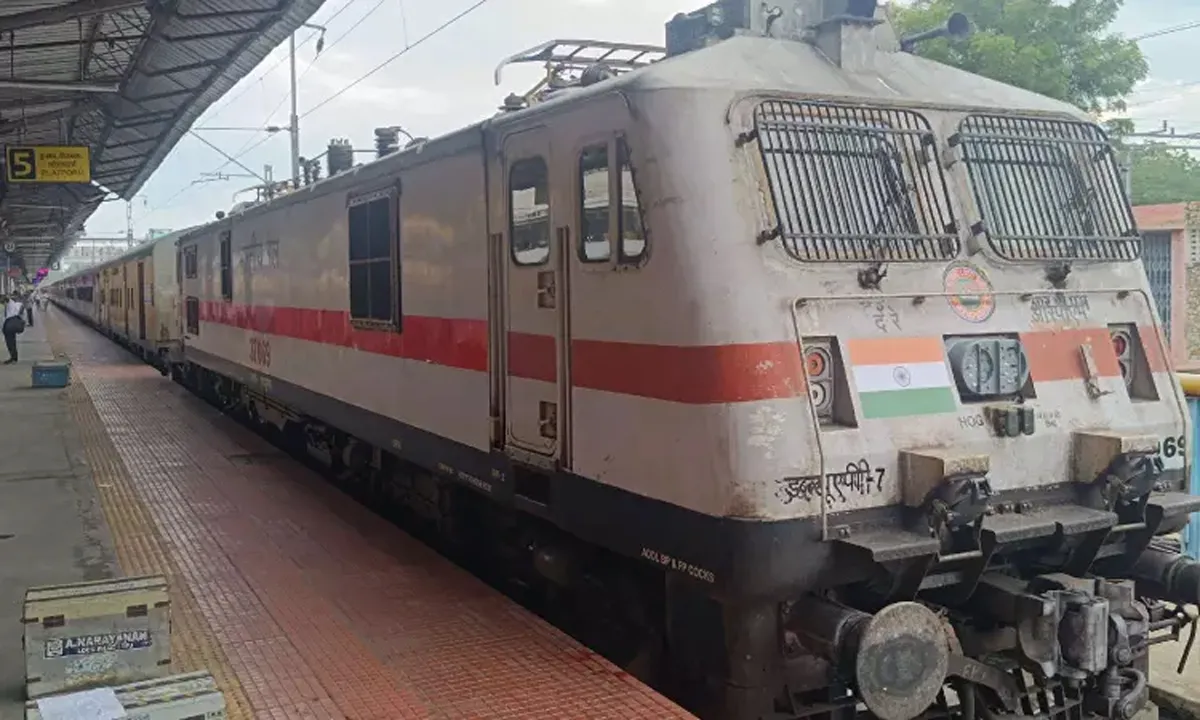
The Railway Ministry has sanctioned the installation of electronic interlocking (EI) systems worth Rs 2.3 billion at 20 stations on high-density and highly utilised routes in Southern Railway, where Kavach, Automatic Block Signalling (ABS), and Centralised Traffic Control (CTC) are being implemented.
The EI system is a modern computer-based railway signalling technology that uses electronic components and software to control signals, track points and related equipment. It replaces traditional relay-based systems with faster, more reliable digital control, increasing train capacity while enhancing passenger safety.
In the Chennai division, panel and route relay interlocking systems will be replaced with EI (indoor and outdoor) at 11 stations — Katpadi Junction, Latteri, Kavanur, Gudiyattam, Valathoor, Melpatti, Pachchakuppam, Ambur, Vinnamangalam, Vaniyambadi and Kettandapatti — at a cost of Rs 1.36 billion.
In the Salem division, EI systems will be installed at nine stations — Samalpatti, Danishpet, Karuppur, Virapandy Road, Magudanchavadi, Mavelipalaiyam, Sankaridurg, Anangur and Cauvery — in the Jolarpettai–Erode section, at a cost of Rs 1.09 billion.
The project has been approved under the Works, Machinery & Rolling Stock Programme (Pink Book) 2024–25, Southern Railway confirmed.
An RTI response received on 15 September revealed that EI has already been installed at 250 of 492 stations under Southern Railway, with the remainder to be upgraded in phases. “The proposal sanction is a good move. This is a major upgrade from Southern Railway. There should be clarity on whether automatic block signalling will also be upgraded,” said Dayanand Krishnan, a resident of Tambaram who filed the RTI.

The Railway Ministry has sanctioned the installation of electronic interlocking (EI) systems worth Rs 2.3 billion at 20 stations on high-density and highly utilised routes in Southern Railway, where Kavach, Automatic Block Signalling (ABS), and Centralised Traffic Control (CTC) are being implemented.The EI system is a modern computer-based railway signalling technology that uses electronic components and software to control signals, track points and related equipment. It replaces traditional relay-based systems with faster, more reliable digital control, increasing train capacity while enhancing passenger safety.In the Chennai division, panel and route relay interlocking systems will be replaced with EI (indoor and outdoor) at 11 stations — Katpadi Junction, Latteri, Kavanur, Gudiyattam, Valathoor, Melpatti, Pachchakuppam, Ambur, Vinnamangalam, Vaniyambadi and Kettandapatti — at a cost of Rs 1.36 billion.In the Salem division, EI systems will be installed at nine stations — Samalpatti, Danishpet, Karuppur, Virapandy Road, Magudanchavadi, Mavelipalaiyam, Sankaridurg, Anangur and Cauvery — in the Jolarpettai–Erode section, at a cost of Rs 1.09 billion.The project has been approved under the Works, Machinery & Rolling Stock Programme (Pink Book) 2024–25, Southern Railway confirmed.An RTI response received on 15 September revealed that EI has already been installed at 250 of 492 stations under Southern Railway, with the remainder to be upgraded in phases. “The proposal sanction is a good move. This is a major upgrade from Southern Railway. There should be clarity on whether automatic block signalling will also be upgraded,” said Dayanand Krishnan, a resident of Tambaram who filed the RTI.

Next Story
Infrastructure Urban

India Expands Semiconductor Training To 500 Institutions

Under the Chips to Startups programme of the India Semiconductor Mission, the Union minister responsible for Railways, Information and Broadcasting, and Electronics and IT reported notable progress in talent development. He indicated that over the past four years substantial steps have been taken towards a 10-year target of training 85,000 engineers in semiconductor design. World-class EDA tools have been deployed in 315 academic institutions across the country to provide students with practical exposure to chip design. These EDA tools are supported by leading global firms and are accessible t..

Next Story
Infrastructure Urban

Delhi Institutions Support India Semiconductor Mission

The Government of India has prioritised talent development through training, upskilling and workforce development under the Chips to Startups initiative of the India Semiconductor Mission, with officials noting progress in four years towards a 10-year target of training 85,000 engineers in semiconductor design. Electronic design automation tools provided by Synopsys, Cadence, Siemens, Renesas, Ansys and AMD have been deployed in 315 academic institutions, enabling students to gain practical chip design experience. Chips have been fabricated and tested at the Semiconductor Laboratory, Mohali, a..

Next Story
Infrastructure Urban

NHA Announces Winners Of NHCX Hackathon At IIT Hyderabad

The National Health Authority (NHA) has concluded the NHCX Hackathon under the Ayushman Bharat Digital Mission (ABDM) to stimulate innovation around the National Health Claims Exchange (NHCX). The winning teams presented their solutions at the NHCX Innovation Meet held at IIT Hyderabad during a two-day event in March 2026 that also served as the hackathon grand finale. The hackathon itself ran from 22 to 28 February 2026 and aimed to accelerate paperless, transparent claims processing across India. The event was organised with a range of ecosystem partners, including the Insurance Regulatory a..

Advertisement

Subscribe to Our Newsletter

Get daily newsletters around different themes from Construction world.

STAY CONNECTED

Advertisement

Advertisement

Advertisement