Uttar Pradesh Approves 74.3 km Link Road To Noida Jewar Airport
AVIATION & AIRPORTS

Uttar Pradesh Approves 74.3 km Link Road To Noida Jewar Airport

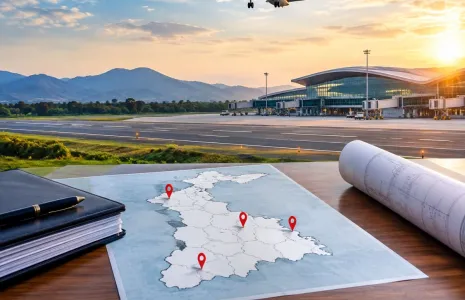
Uttar Pradesh has approved the construction of a 74.3-kilometre link road that will connect the Ganga Expressway and the Yamuna Expressway to the Noida International Airport at Jewar. The Uttar Pradesh Expressways Industrial Development Authority will manage the corridor, which is intended to speed travel between Agra, Greater Noida and Jewar and to reduce congestion on existing urban routes. The project is presented as a strategic transport investment to support regional economic growth and improve airport accessibility.

The new link road will begin at the Ganga Expressway near Bulandshahr and terminate at the Yamuna Expressway near Sector 21 Film City, creating a direct route that bypasses city traffic. It is expected to provide more convenient airport access for passengers travelling from Hapur, Meerut and Agra and to shorten journey times by eliminating long detours. The alignment will cross areas where current connections require lengthy diversions, and planners say the corridor will streamline movement for both passengers and freight.

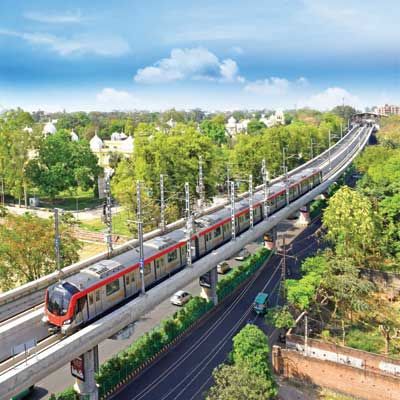
For commuters between Agra and Greater Noida the route should markedly reduce travel time, as it avoids congested intersections and suburban bottlenecks. The scheme includes a nine-kilometre elevated section designed to pass over densely populated areas and limit disruption to local traffic and settlements. By linking two of the state's longest expressways the road will form a significant transit loop and provide direct connectivity to industrial clusters numbered 28, 29, 32 and 33.

The approved land budget is Rs 12.04 billion (Rs 12.04 bn) and the estimated total cost is around Rs 40 billion (Rs 40 bn), with the land sanction granted in February 2026. The corridor will traverse 56 villages and is expected to transform the real estate market in nearby localities such as Tappal, Jewar and Greater Noida West, attracting developers and investors. Residential and rental demand is likely to increase as developers propose housing for airport staff and premium buyers seek high-rise units along the Yamuna Expressway.

Uttar Pradesh has approved the construction of a 74.3-kilometre link road that will connect the Ganga Expressway and the Yamuna Expressway to the Noida International Airport at Jewar. The Uttar Pradesh Expressways Industrial Development Authority will manage the corridor, which is intended to speed travel between Agra, Greater Noida and Jewar and to reduce congestion on existing urban routes. The project is presented as a strategic transport investment to support regional economic growth and improve airport accessibility. The new link road will begin at the Ganga Expressway near Bulandshahr and terminate at the Yamuna Expressway near Sector 21 Film City, creating a direct route that bypasses city traffic. It is expected to provide more convenient airport access for passengers travelling from Hapur, Meerut and Agra and to shorten journey times by eliminating long detours. The alignment will cross areas where current connections require lengthy diversions, and planners say the corridor will streamline movement for both passengers and freight. For commuters between Agra and Greater Noida the route should markedly reduce travel time, as it avoids congested intersections and suburban bottlenecks. The scheme includes a nine-kilometre elevated section designed to pass over densely populated areas and limit disruption to local traffic and settlements. By linking two of the state's longest expressways the road will form a significant transit loop and provide direct connectivity to industrial clusters numbered 28, 29, 32 and 33. The approved land budget is Rs 12.04 billion (Rs 12.04 bn) and the estimated total cost is around Rs 40 billion (Rs 40 bn), with the land sanction granted in February 2026. The corridor will traverse 56 villages and is expected to transform the real estate market in nearby localities such as Tappal, Jewar and Greater Noida West, attracting developers and investors. Residential and rental demand is likely to increase as developers propose housing for airport staff and premium buyers seek high-rise units along the Yamuna Expressway.

Next Story
Equipment

MYCRANE Crosses 1,000 Customers in India

MYCRANE, the global platform for crane rental and purchase, has achieved major commercial milestones in India, reinforcing the country’s position as one of its fastest-growing strategic markets. The company has surpassed 1,000 registered customers and 1,000 crane suppliers nationwide, while completing more than 100 paid orders.The growth reflects rising adoption of digital procurement solutions across India’s construction, infrastructure, energy and industrial sectors. Equipment sourced through the platform is supporting projects across the country, with several leading contractors and EPC..

Next Story
Infrastructure Urban

AMTOE 2026 Opens Global Machine Tool Sourcing Hub

The Asian Machine Tool Online Exhibition 2026 (AMTOE 2026) has officially opened as a B2B sourcing platform connecting global buyers with verified Asian suppliers across the machine tool and manufacturing sector. The exhibition will run until 31 October 2026 through a hybrid online and offline model, offering extended sourcing and business networking opportunities.Co-organised by AsianNet and TradeAsia, the event aims to strengthen links between Asian manufacturers and international importers while improving cross-border procurement efficiency and supplier matching.Since launching in 2022, AMT..

Next Story
Infrastructure Energy

Vedanta Lifts Renewable Energy Use by Over 50%

On World Earth Day, Vedanta Limited announced that its renewable energy usage rose by over 50 per cent year on year to 3.97 billion units in FY26, helping avoid 3 million tonnes of carbon dioxide emissions.The company said its portfolio of metals, minerals, power, and oil & gas continues to support advanced manufacturing, electrification, energy transition and clean technology. Aluminium, copper and silver remain critical for applications such as mobility, power transmission, renewable infrastructure and solar photovoltaics, while iron, steel and zinc continue to support energy infrastruct..

Advertisement

Subscribe to Our Newsletter

Get daily newsletters around different themes from Construction world.

STAY CONNECTED

Advertisement

Advertisement

Advertisement