Kazipet Rail Unit to Produce 200 Intercity Trains in Five Years
RAILWAYS & METRO RAIL

Kazipet Rail Unit to Produce 200 Intercity Trains in Five Years

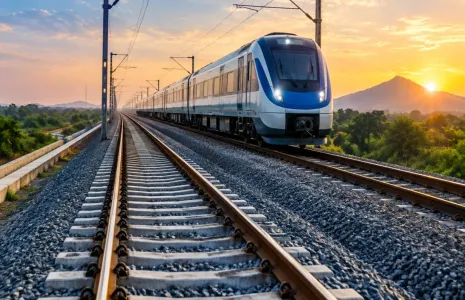
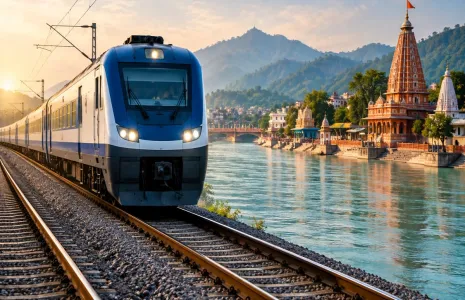
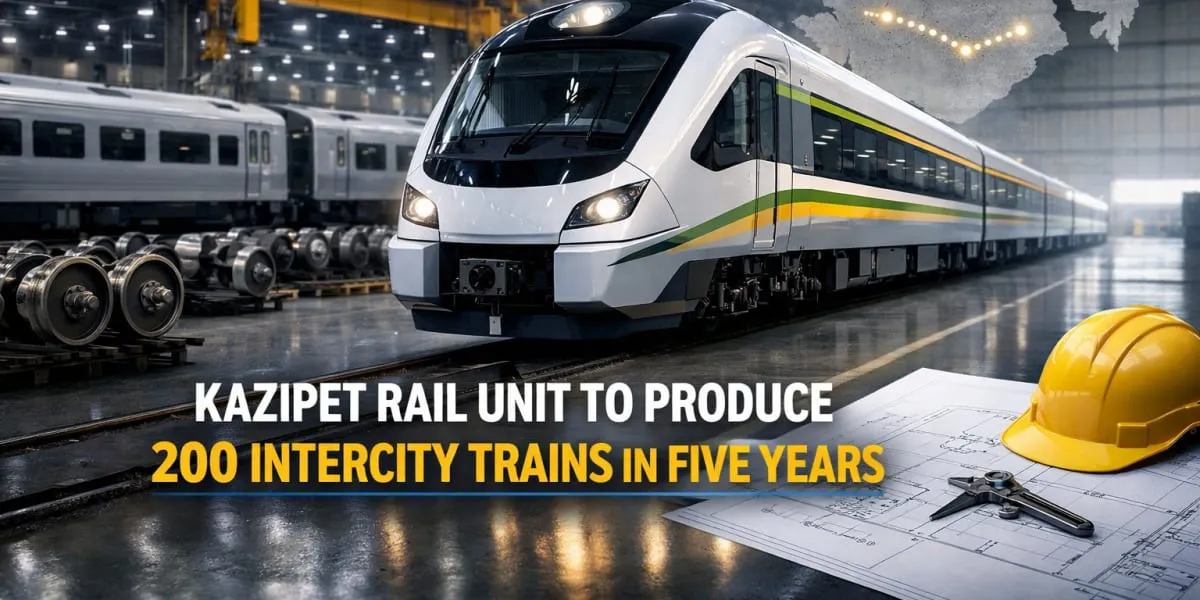
The Railway Minister Ashwini Vaishnaw reviewed plans to operationalise the Kazipet Rail Manufacturing Unit. The Ministry of Railways said the facility will initially manufacture 200 intercity trains over the next five years. The initial output is intended to support regional services while production ramps up at the unit.

The new trains are intended for short-distance travel with frequent stops and will be introduced across the country. Each service is planned to cover routes of about 300 km and to provide shuttle style connectivity between nearby towns and cities. Services are designed to cater to regular commuters and to integrate with existing local transport networks.

The ministry said the trains will be equipped with automatic door closing, superior ventilation and a safe coach design featuring a 20-coach configuration. Each coach will have two toilets, one at each end, and modern conveniences aimed at commuter comfort. Interior fittings are intended to focus on passenger comfort and accessibility for varied user groups.

Technical features cited by the ministry include modern jerk-free couplers and advanced bogies to improve ride quality, and designs to enable operation at speeds of up to 130 kmph. The trains will incorporate regenerative braking so that braking converts kinetic energy into electricity that can be fed back into the grid, enhancing energy efficiency and reducing carbon emissions compared with road transport. The ministry said the regenerative systems and other efficiencies are expected to lower operational costs over time.

The project is expected to provide an affordable option for short-distance intercity travel and is likely to shift a large amount of local traffic from roads to railways, the ministry added, noting benefits for students and daily commuters moving between towns. Production at the Kazipet Rail Manufacturing Unit is presented as a step towards greener and more connected regional transport over the coming years. Officials indicated that production schedules and deployment would be monitored and adjusted as required during the roll-out.

"Join industry leaders at RAHSTA Expo, India's premier platform for roads, highways and traffic infrastructure. Register now to explore innovations, network with experts and shape the future of mobility."

The Railway Minister Ashwini Vaishnaw reviewed plans to operationalise the Kazipet Rail Manufacturing Unit. The Ministry of Railways said the facility will initially manufacture 200 intercity trains over the next five years. The initial output is intended to support regional services while production ramps up at the unit. The new trains are intended for short-distance travel with frequent stops and will be introduced across the country. Each service is planned to cover routes of about 300 km and to provide shuttle style connectivity between nearby towns and cities. Services are designed to cater to regular commuters and to integrate with existing local transport networks. The ministry said the trains will be equipped with automatic door closing, superior ventilation and a safe coach design featuring a 20-coach configuration. Each coach will have two toilets, one at each end, and modern conveniences aimed at commuter comfort. Interior fittings are intended to focus on passenger comfort and accessibility for varied user groups. Technical features cited by the ministry include modern jerk-free couplers and advanced bogies to improve ride quality, and designs to enable operation at speeds of up to 130 kmph. The trains will incorporate regenerative braking so that braking converts kinetic energy into electricity that can be fed back into the grid, enhancing energy efficiency and reducing carbon emissions compared with road transport. The ministry said the regenerative systems and other efficiencies are expected to lower operational costs over time. The project is expected to provide an affordable option for short-distance intercity travel and is likely to shift a large amount of local traffic from roads to railways, the ministry added, noting benefits for students and daily commuters moving between towns. Production at the Kazipet Rail Manufacturing Unit is presented as a step towards greener and more connected regional transport over the coming years. Officials indicated that production schedules and deployment would be monitored and adjusted as required during the roll-out.

Next Story
Infrastructure Transport

L&T Achieves Third Bullet Train Tunnel Breakthrough

Larsen & Toubro (L&T) has achieved the breakthrough of Mountain Tunnel-07 (MT-07) on the Mumbai-Ahmedabad High Speed Rail (MAHSR) C-3 package, marking its third tunnel breakthrough within five months. Located in the Sahyadri range near Ambesari village in Dahanu Taluka, Maharashtra, the 417-metre-long tunnel was excavated over 516 days using the New Austrian Tunnelling Method (NATM) and 117 controlled blasts.The 12.6-metre-wide tunnel, designed to accommodate both up and down tracks, was constructed under challenging geological conditions with continuous monitoring and support systems,..

Next Story
Infrastructure Urban

Meghalaya Opens North East’s Largest Spice Plant

Union Finance Minister Nirmala Sitharaman recently inaugurated the Organic Spice Industrial Unit, PRIME-HUB, at Bhoirymbong in Meghalaya. The facility is being positioned as the North East’s largest organic spice processing plant and is expected to strengthen Meghalaya’s agro-industrial and organic farming ecosystem.The project was developed with an investment of Rs 300 million (mn) and is designed to process over 10,000 metric tonnes of organic spices annually. It will directly benefit 5,500 farmers across 112 villages, supporting improved livelihoods, value addition and market access for..

Next Story
Infrastructure Urban

Recykal Raises USD 23 Mn Bridge Round

Recykal, a Hyderabad-based technology platform for waste management and the circular economy, recently raised USD 23 million in a bridge round through a mix of primary and secondary capital. The round saw participation from existing investors and select new family offices.The fresh capital will be used to strengthen Recykal’s technology platform, accelerate its Deposit Return System (DRS) deployments, expand behavioural change solutions in waste management, and support international growth. In FY26, the company reported gross revenue of Rs 14.98 billion, up 53.2 per cent from Rs 9.78 billion..

Advertisement

Subscribe to Our Newsletter

Get daily newsletters around different themes from Construction world.

STAY CONNECTED

Advertisement

Advertisement

Advertisement